
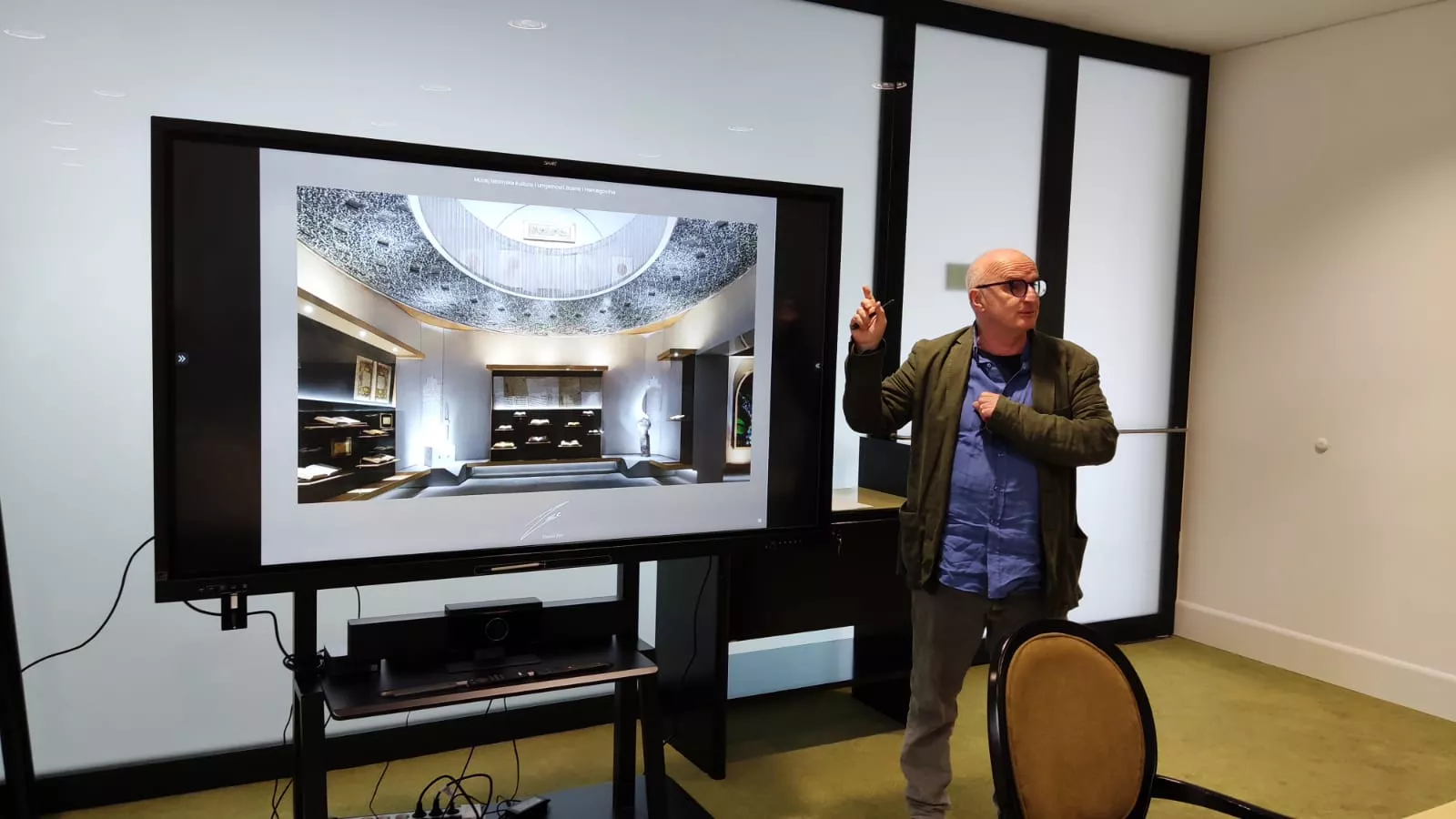
(Patria) - At the session of the Collegium of the Islamic Community in BiH today, a conceptual design for the adaptation of the Ulema Council building in Sarajevo was presented, with the aim of adapting the space for the needs of the Museum of Islamic Culture and Art.
The conceptual design was prepared by the Zec Project Studio, and Amir Vuk Zec and Hamza Agić presented the proposal for the future organization of the museum space.
The location of the Museum of Islamic Culture and Art on Isa-beg Ishaković's Quay carries great symbolism.
This historically important location is not only the founding place of the city but has also witnessed numerous historical events, including the construction of important buildings such as the mosque and Osman Šahidija's library, the first public library with a reading room in Sarajevo.
At the end of the 19th century, a new building was constructed for the needs of the Ulema Council, designed by the renowned Czech architect Karlo Paržik. With his architectural concept, he continued the tradition of interpreting the spirit of the past, making this location a symbol of historical and cultural heritage.
As a place that has shaped Sarajevo's identity, Isa-beg Ishaković's Quay represents an ideal environment for a museum that will explore and present the richness of Islamic culture in these regions.
The positioning of the Museum in this building aims to affirm cultural and historical identity and support continuity through spatial reinterpretation. Considering the need and intention, it is crucial to emphasize the imperative of preserving the cultural heritage and identity of the Islamic Community in this part of the world.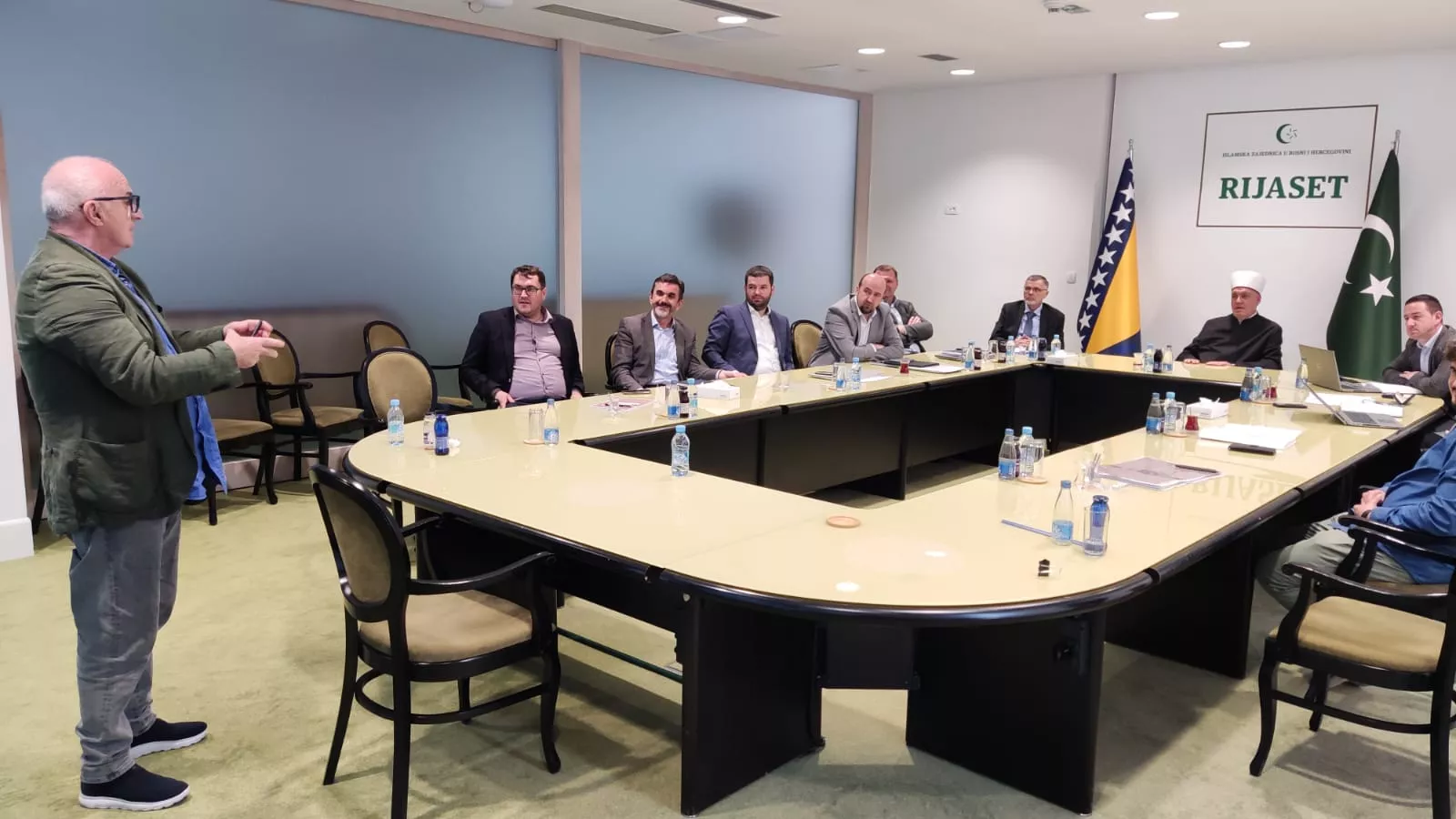
The initiative to establish the Museum of Islamic Culture and Art has existed for many years and represents a general public interest. This initiative was further spurred by the recent exhibition "Under the Sky of Clear Faith," organized at the end of 2023, which attracted tens of thousands of visitors.
The exhibited artifacts not only illuminated the rich history of Islamic culture but also became a source of inspiration for future researchers and young people, affirming an autonomous interpretation of their own history.
Throughout history, information about these regions has been largely mediated through the lens of other great empires and their archives. Now, Bosnia and Herzegovina has the opportunity to present its own story, encompassing all periods of human presence in this environment.
The decision to establish the Museum of Islamic Culture and Art also reflects the deep connection of Islamic thought with the historical context of Europe.
Reisul-ulema Husein ef. Kavazović expressed support for the presented conceptual design of the Museum of Islamic Culture and Art building, emphasizing that it represents an adequate response to the community's cultural needs.
He also stressed the importance of planning transparent communication with donors, which will demonstrate sincere intention and commitment in achieving this significant cultural undertaking.
The next step in realizing this project is to fulfill the administrative prerequisites to ensure its smooth implementation.
This project, as a symbol of self-confidence and affirmation of cultural identity, represents an important step towards preserving and promoting the rich cultural heritage of Bosnia and Herzegovina.
Komentari (0)
Prijavite se za komentiranje
PrijavaJos nema komentara. Budite prvi!
Minuta
Sve →Iz drugih kategorija

High Representative Not Elected: Germans, French and British Sabotaged Americans, New Attempt at End of June

ČOVIĆ WITHOUT MERCY: How Those Who Brought Ademović to Office Created a Political Hell for Him



Sunny Saturday, quite warm



Tragedy in Albanian resort: Two minors drown












