
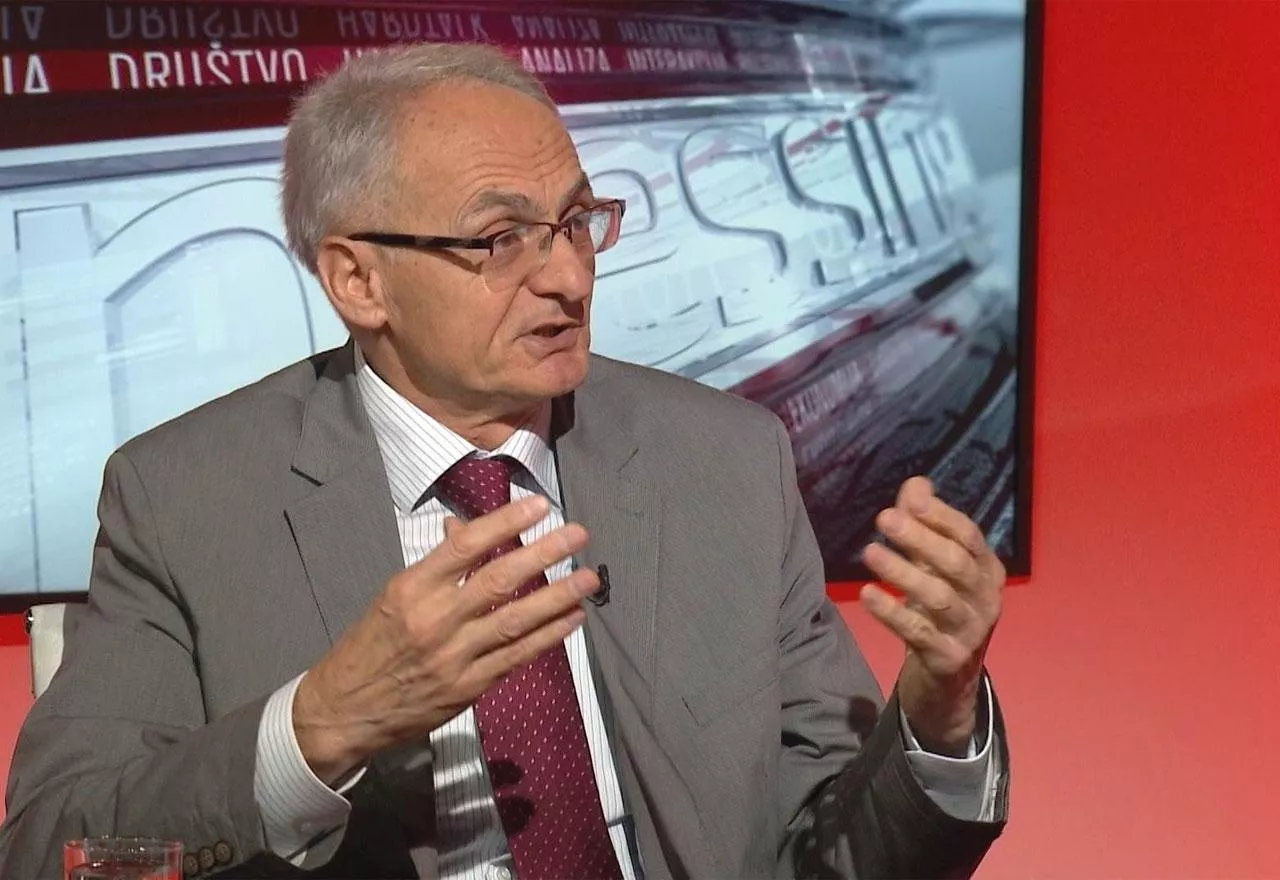
SARAJEVO, (Patria) - Branko Perić, a judge of the Court of Bosnia and Herzegovina, analyzed the situation in the judiciary in Bosnia and Herzegovina for the IFIMES Institute.
We are publishing his analysis, titled "The Judiciary in Bosnia and Herzegovina: How Politics Destroyed Independence," in its entirety.
1. A Brief Overview of the History of Judicial Reform
The establishment of an independent regulator in the judiciary was one of the most important steps in the reform initiated by the international community (OHR) in BiH, following a comprehensive analysis of the functioning of the judicial system. The process began with the imposition of laws on three high judicial and prosecutorial councils, which functioned as a single body and in whose work international members also participated[3]. The main goal was to eliminate the powerful influence of politics on the selection of judicial officeholders and to establish an independent judiciary. The next step was the signing of the Agreement on the Transfer of Competencies in the Field of Justice from the entities to the state and the establishment of the High Judicial and Prosecutorial Council/Board of BiH (hereinafter: HJPC). This laid the foundation for an independent state judicial system.
Under the mandate of the HJPC in the initial period of reform, the process of re-appointment of all judicial officeholders was carried out according to the best European standards and procedures, which included interviews with candidates, initial and continuous training, rationalization of the court network, computerization and networking of judicial institutions, renovation and construction of new premises for courts and prosecutor's offices, reform of the misdemeanor court system, establishment of a judicial documentation center, and a series of projects in the area of cooperation with the social community and court service users.
Eighteen years of the HJPC's functioning have been marked by incomprehensible controversies: impressive successes in redesigning and building the judicial system both in terms of personnel and technical infrastructure, and immense public distrust in the regulator's ability to manage the judicial system.
The judicial system has been subjected to sharp criticism from ruling policies and the public since its inception. From the public's perspective (NGOs, media), the independent regulator was seen as a center of "alienated power" and an institution that had no responsibility for the "reform of the judicial system"[6]. Sharp criticism came from the political sphere regarding the policy of prosecuting war crimes, judicial inefficiency, and controversial court decisions. The HJPC did not find a way to react and reduce the tensions between the judiciary and the public. This undermined public trust in the judiciary, providing more and more arguments to view the HJPC as a center of alienated power.
Serious problems with the functioning of the judiciary began in 2014. New members joined the HJPC, and the head of the institution, the president and one deputy, were elected from the lowest judicial level (basic and municipal court). The institution turned into a testing ground for mutual conflicts and communication problems with the public. Several controversial decisions provoked strong reactions from both the international community and the public (Conclusions on examining the war past of judges and prosecutors, the election of judges in the Municipal Court in Čapljina, the election of an HJPC member from Brčko, the renewal of mandates of HJPC members, the scandalous elections of the President of the Court of BiH and the Chief Prosecutor of the Prosecutor's Office of BiH, the decision to refuse cooperation with the parliamentary oversight committee). With the scandal involving corruption in the judiciary, in which the president of the HJPC, Milan Tegeltija, was implicated (the "potkivanje" affair), including the support of the president by all HJPC members and the decisions of disciplinary commissions that sent a message to the public that the president of the HJPC could not be held disciplinarily responsible, the institution's reputation and public trust in the judiciary were definitively destroyed. It became obvious that the independent regulator was unable to manage the judiciary and implement necessary reforms.
In regular reports from international institutions, as well as in reports from non-governmental organizations, limited progress in certain areas (money laundering, human trafficking, drug abuse, organized crime) or lack of response (corruption) has been pointed out for a long time[7]. The perspective of an independent judiciary was uncertain. The lack of political interest in stabilizing the system and the evident penetration of politics into the judiciary through levers within the HJPC distanced BiH society from the rule of law. The then-president of the HJPC resigned in December 2020, after prolonged public and international pressure. It was expected that the new composition of the HJPC would take clear and radical steps to stabilize the institution and the system. More than a year has passed since the new HJPC convened, but there are no results!
In mid-2021, a fierce and unexpected blow to the judicial system occurred: Milorad Dodik, a political leader from Republika Srpska (RS) and member of the Presidency of BiH, reacting to the imposed Decision of High Representative Valentin Inzko on prohibiting the denial of genocide, announced a boycott of state institutions and the return of entity competencies transferred to the state level[8]. The announced process of returning competencies began at the session of the National Assembly of Republika Srpska on December 10, 2021, when a set of Conclusions was adopted, including the Conclusion tasking the Government of RS to submit a Law on the High Judicial and Prosecutorial Council of RS to the National Assembly of RS for consideration and adoption within six months[9]. From the day this law is adopted, the Law on the HJPC will not be applied in the territory of RS. If Dodik's political plan is realized, the judiciary will return to its pre-reform phase, and the HJPC will cease to exist as an independent state institution managing the judiciary in BiH.
The HJPC of BiH did not react to such destruction of the judicial system and undermining of its independence. The impression was that no one took the political threats from RS seriously. Today, it is clear to everyone that the threats are serious and that Dodik created the crisis with the intention of gaining a negotiating advantage in the process of resolving accumulated problems in the functioning of various levels of government, believing that he could regain jurisdiction over the judiciary in negotiations.
It is difficult to predict how this political crisis will be resolved. Its escalation threatens the complete collapse of the judicial system. The brief analysis that follows aims to point out the basic causes of the judicial crisis and its key problems, in order to initiate a public and professional dialogue on priorities for resolution.
2. Deficiencies in the Reform Concept
2.1. The Problem of a Common Regulator
A large part of the judiciary's problems stems from the concept of an independent regulator. The HJPC is a single regulator for the judicial and prosecutorial systems. Such a model has opened up the issue of substantive judicial independence, which is tied to the court. Namely, the question arises as to why judges and prosecutors are equated in their level of independence when it is known that prosecutors are parties in criminal proceedings and, by the nature of their mandate, belong to the structure of the executive power? Can parties in a proceeding decide on the status of judges, and is this the best way to establish an independent judicial system?
The HJPC consists of 15 members, of whom 11 are judges and prosecutors, two are lawyers elected by the entity Bar Associations, and one member each is elected by the House of Representatives of the Parliamentary Assembly of BiH and the Council of Ministers of BiH[10]. It is more likely that such a structure discredits the independence of the regulator. On the other hand, placing prosecutors on the same level as judges undermines the principle of equality of parties in judicial proceedings. Judges and prosecutors regularly elect 5 members each to the HJPC. An exception is the Judicial Commission of Brčko District[11], which can elect either a judge or a prosecutor. Due to this arrangement, there can be more prosecutors (6) than judges (5) in the HJPC composition. This happened in the first term of the HJPC (2004-2008). The prevalence of prosecutors in the regulatory body directly calls into question the standard and guarantees of judicial independence.
Since the HJPC makes decisions by a majority of present members[12], who constitute a quorum (11), situations are possible where decisions on the status of judges are made by a majority consisting of prosecutors, or prosecutors and external HJPC members. This is an almost regular occurrence. The President of the Court of BiH was elected by a majority of 6 members, among whom were only two judges.
This problem needs to be urgently resolved. A solution is possible by completely separating the single regulator into a judicial and a prosecutorial council, as countries in the region (Slovenia, Croatia, and Serbia) have done.
The Draft Law on Amendments to the Law on the HJPC still envisages a single regulator model, which would include two independent sub-councils (judicial and prosecutorial) that would elect judges and prosecutors (status matters), while other matters would be decided jointly. Such a model may have financial justification, but it does not solve the fundamental problem of autonomy and independence. The "association" of judges and prosecutors in any form does not contribute to an objective standard of substantive independence and autonomy and should not be considered at all. Furthermore, such a model would open up a series of other internal financial and personnel problems. The fact that the dominance of individuals is always a determining factor of real power should not be overlooked, which is why such a model carries the potential for inappropriate and illegal influences on independence and autonomy.
Moreover, a single collective body implies complete equality of all members, which would mean that a prosecutor could also be elected president of the HJPC. Prosecutors and external HJPC members could secure a majority for such an election, which would be absurd. How could the fact that a prosecutor heads an independent institution that elects judges and guarantees judicial independence be explained!?
2.2. Accountability of Regulatory Body Members
The existing Law on the HJPC does not sufficiently elaborate the mechanism for effective accountability of HJPC members for performing their duties as members of the regulatory body. No legal provision establishes the obligations of a member in a way that would allow for accountability for non-performance. For example, there is no obligation to justify absences from sessions, nor an obligation to act on adopted decisions. Therefore, it is difficult to conclude when the conduct of a member of the regulatory body crosses into the zone of non-performance of duties that requires discussion at the level of the regulator and initiation of the accountability mechanism.
Provisions on accountability can be derived from Article 6, Paragraph 1, Point d), which stipulates the termination of a mandate if a member "does not perform their duties in a proper, effective, or impartial manner." While the legal provision allows for broad interpretation, it also leaves room for narrow and manipulative interpretation. Using the example of the HJPC president's behavior in the "potkivanje" affair, it was seen how the president's conduct was not treated as problematic or improper, despite being clearly contrary to the law[13]. The provision according to which a member will be dismissed "when they commit an act for which they do not deserve to hold office in the Council" (point f) is also quite unclear and problematic. What kind of act could that be? Or, more precisely, is it acceptable at all for a member of a regulatory judicial body to commit a criminal offense? There is no practice of regulatory bodies that would help in this regard. Also, the provision in point g) according to which a member against whom criminal proceedings are pending automatically loses their mandate if convicted to imprisonment, but only upon the finality of the conviction, makes no sense. This practically means that their mandate lasts throughout the criminal proceedings, which is contrary to the provision in point d).
These confusions require a new approach to the issue of accountability of regulatory body members and precise definition of obligations, forms of accountability, and procedures for determining accountability, including dismissal.
The question arises as to whom the members of the regulatory body should be accountable? Only to the institution or also to those who elected them? The existing concept recognizes only accountability to the regulator, which can make a decision by a two-thirds majority and only if there is a proposal from one-third of the members. Thus, five members are needed for a proposal, and ten for a decision. It is unclear why a two-thirds majority of members is required for dismissal, while a simple majority of the quorum of 11 members (six members) is sufficient for the election of judges and prosecutors, or for a decision in the third instance regarding disciplinary accountability of judges and prosecutors!? It seems that a simple majority would be more acceptable for the accountability of a regulatory body member.
Accountability to the electoral base could be limited to a proposal to initiate accountability proceedings, which would include a description of the conduct, qualification of the offense, and a proposed sanction.
3. Negative Trends (Practical Level)
3.1. Independence as a Point of Misunderstanding in the Dialogue between the Judiciary and Politics
The conflict between the judiciary and the executive power arose from a mutual misunderstanding of the principle of independence, which implies non-interference in individual and specific cases. This independence fundamentally applies to both the judicial and prosecutorial systems. The executive and legislative branches cannot agree that their goals are the same and that they bear joint responsibility for building an independent judiciary. It is often misunderstood that independence is not a privilege of judges and prosecutors, or judicial institutions, but a right of citizens! All three branches of power have a responsibility to respect this right of citizens.
Independence concerning actions in specific cases (judicial and prosecutorial decision-making) is often extended in practice to the exercise of administrative powers and case management[14]. A few years ago, the Chief Prosecutor of the BiH Prosecutor's Office was subjected to sharp criticism from politicians for refusing to appear at a session of the Expanded Parliamentary Security Committee regarding the case of the Parliament's blockade. In his response, the Prosecutor invoked the principle of independence and qualified the summons to Parliament as political pressure on the Prosecutor's Office[15].
This relationship between the management of judicial institutions and the executive and legislative branches could be more clearly defined in the Law on the HJPC and the laws on courts to avoid misunderstandings and conflicts.
The main objections of politicians related to the complete marginalization of the executive power (ministries of justice) that adopted the imposed model of an independent regulator. Politicians clearly could not understand why the HJPC was given such broad competencies and why the ministries of justice were left with almost no competencies in the organization and functioning of the judiciary, not even those concerning judicial administration[16]. The Law on the HJPC left the ministries of justice with only some minor, shared competencies[17]. On the other hand, the executive power has a decisive role in financing the judiciary[18]. The executive power and politicians raise a legitimate question: how can they manage the system and initiate legislative initiatives if they have no role or influence on the judicial system, and how can they finance something they do not control?
This controversy has strong political potential. In our legal tradition, ministries of justice played a key role in the organization of the judiciary, especially judicial administration. The transfer of almost all powers to an independent regulator has significantly marginalized the role of the ministry of justice and its responsibility for judicial outcomes. Such a radical solution required strong arguments and clear explanations. The absence of constructive public dialogue with the executive power (ministries of justice) deepened the tensions between the judiciary and politics.
The executive power will always have a decisive role in financing the judiciary and creating the judicial budget. There is no country that has given up this lever of power. The question is to what extent certain competencies for managing the system will be transferred to the regulator of the judicial system, or what the shared competencies will look like. Shared competencies also include shared responsibility, which is why ministers of justice should have an active partnership role in reform processes. Of course, it would be desirable for the judicial system to develop towards the complete transfer of competencies for the organization and functioning of the judicial system to independent bodies[19], but this must be a political strategy. To move in this direction, it is necessary for the judicial and executive powers to engage in dialogue and find common ground.
Regarding a misunderstanding between the legislative power and the HJPC, the US Embassy in BiH reacted with a statement stating: "Healthy democracies require checks and balances. It is not just about the right of parliament, but about the obligation for the judiciary to be accountable to the citizens of BiH."
It is clear that the judiciary is part of society and cannot remain outside any control. This relationship needs to be regulated normatively.
3.2. Corruption in the Judiciary
In recent years, the judicial system has been at the top of corruption lists. This has been contributed to by several criminal proceedings against judges and prosecutors, controversial appointments, as well as several judicial scandals. Criminal proceedings have been conducted against several judges and prosecutors in recent years, and several have been dismissed. The accusations against judges and prosecutors mainly concern abuse of office and violation of the law by a judge to obtain financial or other benefits for themselves or others.
Among the scandals that have attracted the most public attention and influenced the negative public perception are the "potkivanje" case[20], which involved the president of the HJPC, and the case of a judge from the Municipal Court in Sarajevo[21], suspected of violating the law to obtain financial benefits for another, who fled BiH during the investigation (an arrest warrant has been issued for her). The "potkivanje" case led to a series of suspicious procedures within the HJPC regarding the accountability of the HJPC president.
Despite cases that resulted in indictments against judges and prosecutors, effective trials that could restore public trust in the judiciary have been lacking. The case of a judge from the Court of BiH lasted over six years and ended with a final acquittal. The case of the Chief Prosecutor of the BiH Prosecutor's Office has been ongoing for five years and is not yet concluded.
The media have been daily reporting on scandals related to the judiciary, creating an image of crime on an unprecedented scale. One investigative article reported that the president of the HJPC was a member of three ad hoc arbitrations in disputes between two public companies, earning an annual salary of a judge. The president publicly admitted this, explaining that the HJPC had previously decided that participation in arbitration was not incompatible with the position of a judge. Such a decision was not shown to the public. Even if it existed, according to the Rulebook on Conflict of Interest, a judge could earn a maximum of 20 percent of their annual salary through part-time work.
It was reported in the media that the mandate of an additional judge at the Cantonal Court in Sarajevo was extended despite disciplinary proceedings against him, because when applying for a judicial position, he failed to disclose that he had been convicted twice, once for attempted rape. Some HJPC members publicly provided different information about this, which is unacceptable for the institution. The European Commission, in response to this media report, requested an urgent reaction[22] and suspension of the judge if the information proved true. After several days, the HJPC decided to suspend the same judge. In the case of a prosecutor who concealed that he had been finally convicted of copyright infringement, the Delegation of the European Commission in BiH also had to intervene. Only then was the prosecutor dismissed[23].
Recently, the media reported that an amount of KM 20,000 disappeared from the safe of the Una-Sana Canton Prosecutor's Office, which was seized as evidence in a criminal proceeding. Similar incidents with seized items in criminal proceedings have occurred multiple times. A fire broke out in the room where items seized in criminal proceedings were kept at the Basic Court in Banja Luka. It was never clarified how the fire started.
The European Commission and international organizations have repeatedly been forced to publicly react to HJPC decisions (e.g., the case of Conclusions on examining the war past of judges and prosecutors!). The institution's work is under constant monitoring by the Delegation of the European Commission in BiH and certain embassies due to controversial decisions and actions.
Individual and uncoordinated public statements by certain HJPC members also contributed to the poor public perception of the judiciary. Furthermore, the president of the HJPC and his two deputies filed several private lawsuits for defamation against several journalists, politicians, and their colleagues who criticized them, which was perceived by the public as an abuse of power and a threat to the standards of an impartial court.
3.3. Penetration of Political Influence
Politics has always been interested in influencing and controlling the judiciary. They did so through police services, which are under their direct control, and through the election and appointment of judicial officeholders.
When politics lost the ability to influence the election and appointment of prosecutors and judges, this interest became more pronounced. In our circumstances, it is particularly emphasized because entity politics cannot always influence police and other services working for the state-level judiciary.
The story of political influence on the judiciary has long been present in political and media circles, as well as within the judicial community, concerning the Prosecutor's Office of BiH and the Court of BiH. Politicians, mainly from Republika Srpska, have publicly stated that these two institutions are under the control of the international community and Bosniak politics[24]. The media have publicly claimed that the interests of two Bosniak political parties (SDA and SDP) are intertwined within the Prosecutor's Office of BiH.
Several investigations and court proceedings were conducted before the Prosecutor's Office and the Court of BiH against high-ranking politicians[25]. Most of them ended with acquittals. Some of them were finally convicted by the Court of BiH with suspended sentences for criminal offenses within the jurisdiction of the entities (negligent work in office!).[26] Such cases had special priority in trials. In some, the political background of the prosecution was indeed visible[27]. All of this created a public conviction that politics has a strong influence on the judiciary.
Matters escalated in recent years with the renewal of the mandate of the HJPC president and the election of the president of the Court of BiH, and then the Chief Prosecutor of the Prosecutor's Office of BiH. The media have reported multiple times that the agreement of three political leaders was behind these events. Such media claims cannot be proven, but they cannot be absolutely ruled out either. Both elections were accompanied by a series of controversies related to the selection criteria, especially the leadership experience and professional competencies of the elected candidates. It is interesting that both the Chief Prosecutor of the Prosecutor's Office of BiH and the President of the Court of BiH faced disciplinary proceedings. The Chief Prosecutor was dismissed, and the President of the Court of BiH was acquitted.
4. Messages from Traumatic Experience
From the brief analysis of the reform process and the trials of independence, it can be reasonably concluded that the ruling policies have carried out a successful operation to destroy the judiciary from within, exploiting the weaknesses of the independent regulator concept. In essence, the operation consisted of corrupting individuals and interest groups within the HJPC with the aim of bringing politically close judicial officeholders into management positions in the judiciary. Since politics always favors the worst and most incompetent, the judiciary has become a system of incapable and irresponsible individuals. This created space for internal corruption, violation of laws and ethical codes, abuse of procedural powers, and faking work through good statistics but poor results.
Today, there is no doubt that HJPC President Milan Tegeltija spent six years implementing a political project of internal undermining of the judicial system and the HJPC institution. After resigning from his position as a member and president of the HJPC, Tegeltija moved to the position of legal advisor in the Cabinet of the member of the Presidency of BiH, Milorad Dodik. A year after this transfer, Milorad Dodik organized a boycott of state institutions and announced the return of transferred judicial competencies. It would be naive to believe that Milan Tegeltija was the only political operative installed on a special mission in the HJPC. How was it possible for 15 HJPC members to participate in this destructive project for six years? There is no reasonable answer to this question. It can only be concluded that there is a serious problem with their integrity, i.e., with the effective and responsible functioning of collective independent bodies. The accountability of HJPC members to the institution, the accountability of the independent regulator to the legislative power, and the accountability of the judiciary to society must be the backbone of the future reform process. This judicial problem deserves special attention.
The personnel structure of the HJPC includes people from various fields and with different interests. Judges and prosecutors, by nature, do not have many common interests. Lawyers with prosecutors and judges, either. Members elected by the legislative and executive branches have an interest in being a transmission of political influence. Their common interests can only be related to corruption and influence peddling, which seems to have been the rule. This problem is not easy to solve in a society that has lost its moral foundation. One could move towards separating the judicial and prosecutorial regulators and eliminating members from the legal profession.
It seems that serious consideration should be given to the structure of an independent regulator in which judges or prosecutors would form the majority, and the rest would be only representatives of the legislative and executive branches. Narrowing the circle of interested groups and limiting membership to representatives of the three branches of state power would facilitate the decision-making process, enable mutual control of the legality of exercising powers, and distribute social responsibility among the key factors of state power. In this way, the necessary dialogue between the three branches of power on judicial reforms and problems would be established, as well as a system of accountability to society. Today, the HJPC is seen by citizens as an alienated center of judicial power, and the entire judiciary as a system without social control and accountability.
About the author:
Branko Perić has held numerous positions in the judiciary: judge, president of a court, prosecutor, and lawyer. In the period from 2001 to 2003, he was a member of the Central Election Commission of BiH. Since 2003, he has been a judge of the Court of Bosnia and Herzegovina, and from 2004 to 2008, he was a member and president of the High Judicial and Prosecutorial Council/Board of BiH (HJPC).
Komentari (0)
Prijavite se za komentiranje
PrijavaJos nema komentara. Budite prvi!
Minuta
Sve →Iz drugih kategorija

High Representative Not Elected: Germans, French and British Sabotaged Americans, New Attempt at End of June

ČOVIĆ WITHOUT MERCY: How Those Who Brought Ademović to Office Created a Political Hell for Him



Sunny Saturday, quite warm



Tragedy in Albanian resort: Two minors drown












