
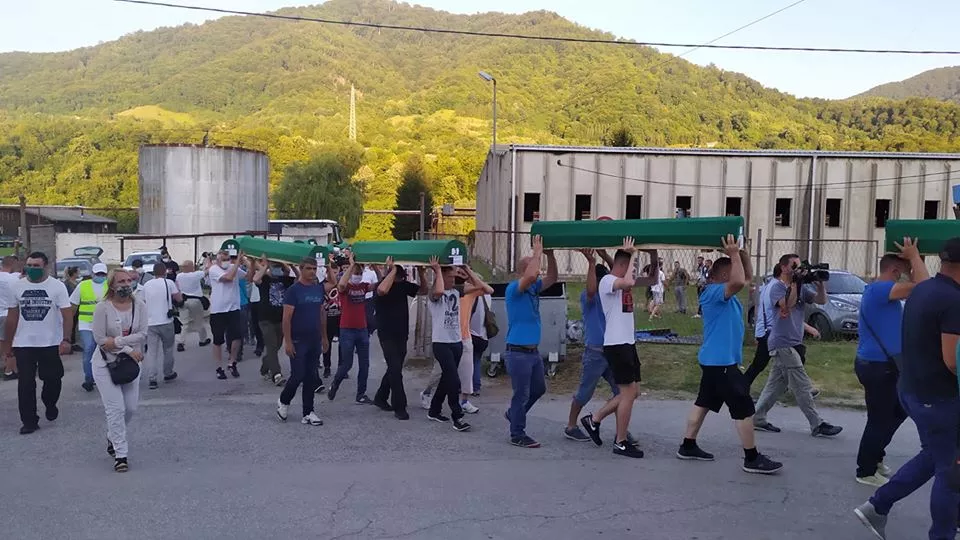
SREBRENICA, (Patria) - Today, by releasing Nina Ćatić's audio report from Srebrenica on July 10, 1995, the Srebrenica Memorial Center marked World Radio Day. This was also an opportunity to recall several important moments in radio reporting just before the fall of Srebrenica and the genocide.
“At 3 PM on July 8, Radio Bosnia and Herzegovina provided a comprehensive report on the extremely critical situation in the protected zone of Srebrenica, which Karadžić’s forces had been brutally attacking and shelling for three days, causing massive destruction, killings, and injuries, with people also dying of hunger. Radio 99 that same day broadcast a statement from UNPROFOR representatives, who requested close air support over Srebrenica after Karadžić’s forces overran one of the Dutch ‘blue helmets’ observation posts,” were the news reaching the Bosnian and world public just three days before the fall of Srebrenica.
“On July 9, Radio BiH reported that Chetniks had captured 15 Dutch soldiers near Zeleni Jadra and killed one. At 3 PM, Radio Bosnia and Herzegovina presented a dramatic audio report from its correspondent in Srebrenica, who stated that the Chetniks had crossed the border of the demilitarized zone of Srebrenica, that UNPROFOR was withdrawing, that the remaining ‘blue helmets’ were fleeing, and that the population faced a massive massacre,” the reporting continued.
“On July 10, radio news from Srebrenica concerned appeals for help from foreign officials and calls to prevent the genocide against Bosniaks living within the UN protected zone. Prime Minister Silajdžić sent a letter to NATO asking why there was no reaction when civilians and UNPROFOR were attacked, despite an explicit promise of intervention if such an event occurred. Radio stations reported that Prime Minister Silajdžić questioned whether the UN had requested intervention and, if so, why NATO was not responding, as an all-out attack on the protected and demilitarized zone of Srebrenica was underway. Radio BiH reported in all its news broadcasts that its correspondent from Srebrenica reported that the city's defenders were fighting at the city gates while the Dutch offered no resistance. Diplomatic sources in Brussels reported that NATO was ready for air action, but that it would depend on a UN request,” radio reports from July 10 stated.
In one of the interviews, Milenko Vočkić, wartime director of Radio Bosnia and Herzegovina, described those days.
“We were under blockade. We didn't know exactly how many people were in Srebrenica, how much military force was there, or with what strength the attack was being carried out. When we received information about the fall of Srebrenica, a terrible silence fell over the entire team working there. I was there when we received Nina Ćatić's last report, after which she never reported again. It was a voice that conveyed everything with its tone. We were deeply affected by that report for a long, long time,” Voćkić recalled.
“Srebrenica is turning into the largest slaughterhouse. The dead and wounded are constantly being brought to the hospital. It is impossible to describe. Every second, three deadly shells fall on this city. Seventeen dead and fifty-seven seriously and lightly wounded have been brought to the hospital. Can anyone in the world come and see the tragedy befalling Srebrenica and its inhabitants? This is an unprecedented crime being committed against the Bosniak population in Srebrenica; the population in this city is disappearing,” were the words of Nina Ćatić's last report on July 10, 1995, for the program of Radio Bosnia and Herzegovina.
On the occasion of International Radio Day, the Srebrenica Memorial Center today pays tribute to radio journalists and everyone involved in reporting on the siege and genocide in Srebrenica from the beginning of the war until its fall on July 11, 1995, as well as later, through their tireless work in spreading the truth about the genocide.
Komentari (0)
Prijavite se za komentiranje
PrijavaJos nema komentara. Budite prvi!
Minuta
Sve →Iz drugih kategorija

High Representative Not Elected: Germans, French and British Sabotaged Americans, New Attempt at End of June

ČOVIĆ WITHOUT MERCY: How Those Who Brought Ademović to Office Created a Political Hell for Him



Sunny Saturday, quite warm



Tragedy in Albanian resort: Two minors drown












