
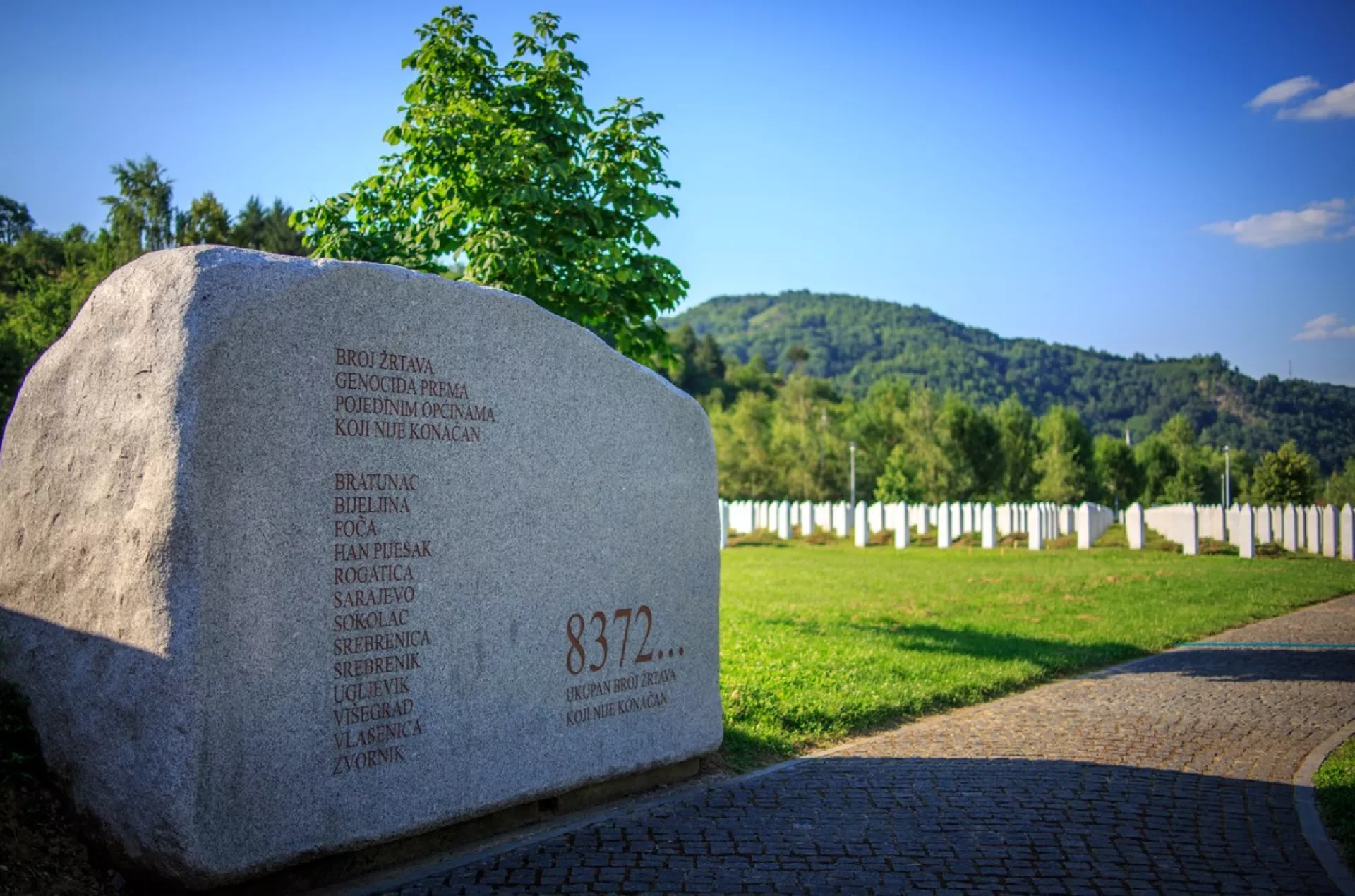
• Genocide denial functions as an instrument and strategy in the hands of the presidents of two neighboring countries, Serbia and Croatia, as a means of hegemony and expansionist policy towards Bosnia and Herzegovina.
• U.S. Ambassador-at-Large for War Crimes Issues David Scheffer: "The presidents of the two countries, Vučić and Milanović, are sowing falsehoods about the genocide in Srebrenica..."
By: Fuad Đidić
In an interview with CNN, David Scheffer, former U.S. Ambassador-at-Large for War Crimes Issues, spoke with Christiane Amanpour on Friday about the political motives behind genocide denial in Bosnia and Herzegovina.
When asked by the renowned reporter about Vučić's reasons for denial, Scheffer also mentioned Croatian President Zoran Milanović, who, despite a mountain of legal evidence, according to the ambassador, denies the genocide in Srebrenica with the same fervor.
Ambassador Scheffer, an outstanding expert on the Srebrenica genocide, states that these "two biggest leaders in the Balkans are sowing falsehoods about the genocide." Those who deny genocide are either profoundly ignorant or use denial to gain influence and votes among their own constituents, Ambassador Scheffer stated.
However, Ambassador Scheffer points out that the denial of genocide and political manipulation of genocide are not the only issues with the aforementioned leaders. For him, the most problematic aspects are the denial of the legal qualification of genocide, the rejection of the UN Resolution adopted in May of last year, and the Law prohibiting genocide denial.
The actions stemming from genocide denial are "alarming" because they undermine the foundations of the international legal order, as well as the domestic order, which, according to the ambassador's assessment, is a "threat to the country's stability."
On the same day, while listening to this CNN interview, graffiti appeared on portals, in both English and Latin script: "The only genocide in the Balkans was against Serbs," which appeared on July 11th in Knez Mihailova Street, in the very center of Belgrade.
Slogan in the very center of Belgrade
This was a clear message to the world that justified everything the U.S. ambassador told Christiane Amanpour about the existence of politically motivated genocide denial by both the President of Serbia and the President of Croatia.
However, Ambassador Scheffer only told half the truth on this occasion, hinting at or omitting the other half. This slogan from Belgrade, which "Women in Black" erased in several places in Belgrade, reminded, or even announced, the true and complete story about the denial of genocide.
What does the analysis of the aforementioned "Belgrade graffiti" actually reveal to us, and what is the other half of the "suppressed" truth about the real motives behind genocide denial?
Genocide denial is not merely a moral deviation of the chauvinistic political mind in the countries led by the two leaders mentioned, nor is it just a "fight for votes" among a populist electorate, as Ambassador Scheffer stated.
Furthermore, the entire essence of what the Serbian Orthodox Church (SPC) thinks on one side, and a part of the Catholic clergy among Croats, along with their national academic elites, whether within the laboratories of SANU or HAZU, on the other side, is not contained within that denial.
It is much, much more.
Behind this well-calculated strategy of distorting the narrative lies a capital investment.
It is, in fact, the promotion of expansionist policy towards BiH, or in other words, the strengthening of the policy of hegemonic pretensions towards BiH.
This policy of hegemony or territorial appropriation for the interests of either "Greater Serbia" or "Greater Croatia" culminates in the well-known, fierce defense of the "ethnic" as the exclusive principle of the country's constitutional structure. Therefore, these political elites with "collaborators in BiH" consider the annulment of the "Kovačević" verdict, which opened hope not only for a new and different vision of the country but also for the consistent application of the Law on Genocide Denial, their greatest victory.
The acknowledgment of the truth about the genocide in Bosnia would certainly politically shake Serbia or Croatia – it would shatter the myths of "pure race," "national chastity," and "national innocence" there, and defeat the false narrative that the genocide or the joint criminal enterprise was "a great crime" allegedly only in response to the military activities of "Bosnian Muslims."
However, one thing is indisputable: "genocide denial" functions as an instrument of hegemony of the "Serbian world" or as an instrument of "Greater Croatia."
Despite the differences in the primary political starting points of Vučić and Milanović, we paradoxically find a high degree of agreement and loyalty to the fascist ideologies of Milošević or Tuđman between them.
With his statements about "a hundred Serbs for one Muslim," Vučić has fully affirmed his ideological loyalty to Milošević's fascism, while Milanović, with his statements about "soap and perfume," suggested the need to "cleanse Muslims," and through this figurative slogan, has fully affirmed his own consistency with Tuđman's ideology of "extreme racism towards Muslims in Bosnia" (Ambassador Peter Galbraith, "Diplomatic Diary," August 1995).
No matter how much they later defend themselves against the meaning of these "harsh statements" and avoid their political responsibility before the European public, both leaders prove their consistency in denying genocide by rejecting the Resolution on the Srebrenica Genocide from May 2024, thereby sending a message that they are by no means abandoning the continuity of the ideology of "cleansing the Muslims" of Bosnia.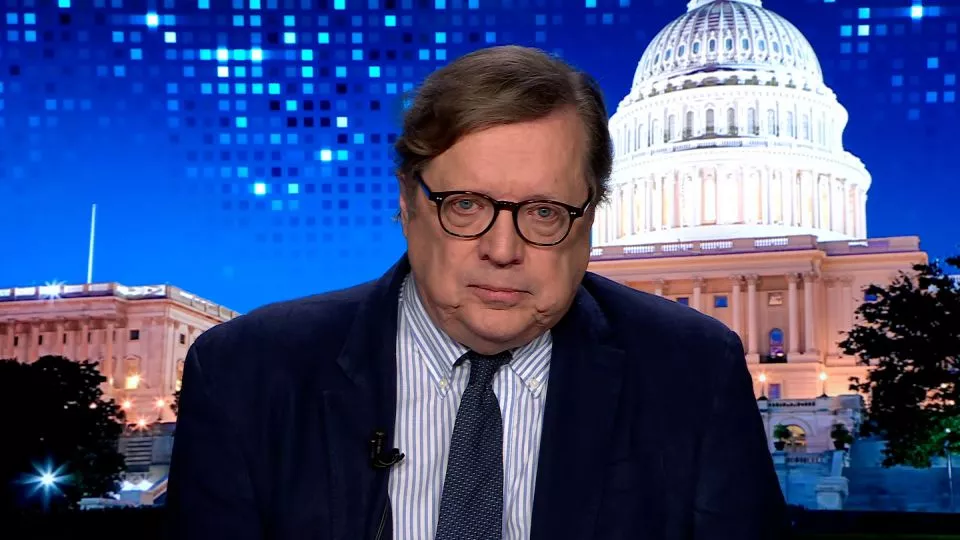
Scheffer with Christiane Amanpour
Ambassador Scheffer, as well as the entire Western political thought, has failed, however, to detect that behind the denial of genocide in Bosnia lie the dangerous political goals of Serbian-Croatian expansionism and the obsession with the outright partition of Bosnia and Herzegovina. Hence this consistent adherence to genocide denial, as it above all means preserving their own colonial ambitions in BiH for the leaders of Serbia and Croatia.
The recognition of genocide would cause a strong shock, especially in Serbia, as it would require "national catharsis" and also an obligation for "denazification" of politics and public opinion, and changes in the education system.
The recognition of genocide also brings about a change in the strategy of "Greater Serbia" and a change in the strategy of the "Serbian world." The very thought of abandoning genocide denial today in Serbia or Republika Srpska is like "red-hot iron," which no one dares to approach even by a millimeter.
Dodik himself has stated on several occasions in this regard: "We acknowledge Srebrenica as a 'great crime' but never as 'genocide'." With the recognition of genocide, the myth of their own "racial purity" would begin to burn, and thus the policy of racial superiority according to which Bosniaks are "secondary citizens" for whom only "apartheid" can be intended.
Ambassador Scheffer, as well as the entire Western political elite, must be aware of the full truth and the real reasons for genocide denial. It is the expansionist policy of Serbia and Croatia, which has found its second, hidden expression in genocide denial.
In the dangerous times we live in today, "recognition of genocide" is not just a moral or human act, nor is it merely a metaphor or symbol for reconciliation and mutual forgiveness. On this 30th anniversary of the Srebrenica genocide, it is important to emphasize that the recognition of genocide is not a symbolic demand at all, but a fundamental condition for the integrity, security, and stability of Bosnia and Herzegovina.
The West must understand this.
Komentari (0)
Prijavite se za komentiranje
PrijavaJos nema komentara. Budite prvi!
Minuta
Sve →Iz drugih kategorija

High Representative Not Elected: Germans, French and British Against Americans, New Attempt at End of June

ČOVIĆ WITHOUT MERCY: How Those Who Brought Ademović to Office Created a Political Hell for Him



Sunny Saturday, quite warm



Tragedy in Albanian resort: Two minors drown












