
By: Amra Vrabac
Currently, the BiH Border Police is short of 700 people, and by the end of the year, due to the retirement of a larger number of police officers, this number will exceed 1000.
For those in the know, this is not new information, and the BiH Border Police Union and the Union of Unions of Police Bodies in BiH have been trying for months to initiate amendments to the Law on BiH Police Officers, which would temporarily stop the outflow of personnel, primarily police officers.
In December 2023, the Union initiated amendments that would allow police officers, at their own request and with a medical certificate proving their psycho-physical fitness, to continue working as police officers until the age of 60.
In the same period, the BiH Minister of Security, Nenad Nešić, visited the Border Police and discussed the filling of personnel capacities with the director, Mirko Kuprešaković. Nešić visited the BiH Border Police again on June 6, but six months was not enough for the proposed amendments to the Law on BiH Police Officers to be included in the parliamentary procedure. In February of this year, Patria sent several questions to the spokesperson of the Ministry of Security on this topic, but we never received an answer, even though Nešić is someone who very often makes statements and even reacts to Patria's articles.
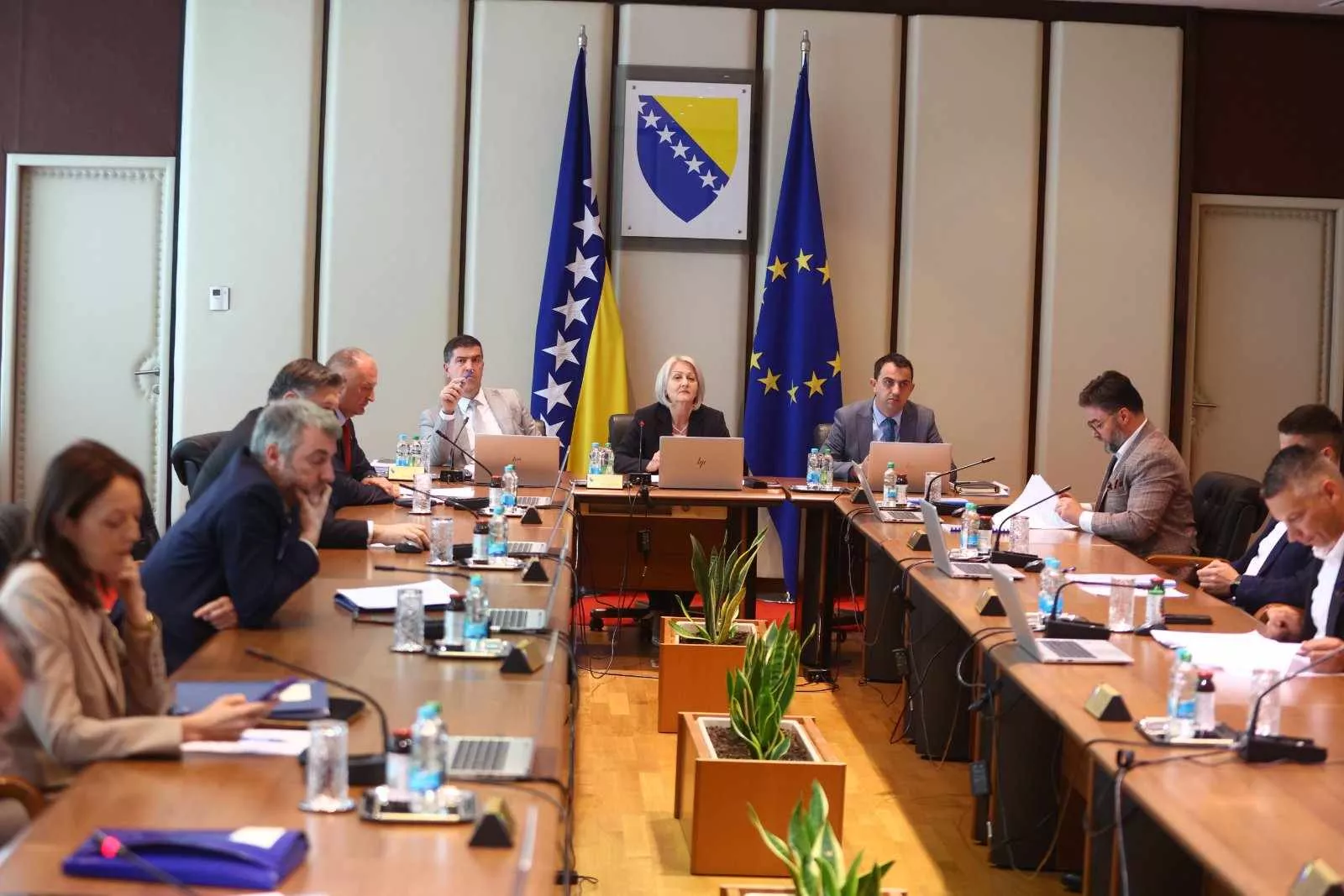
Only at the session on June 10 did the Council of Ministers of BiH adopt the plan for admitting cadets to three state police agencies for 2024, while the Council of Ministers did not take any stance on the alarming situation in the BiH Border Police. The plan envisages 150 cadets in the BiH Border Police, 50 in DKPT, and 30 (15 junior inspectors and 15 police officers) in SIPA.
Numerous Problems
In July of this year, at the invitation of the BiH Border Police Union, the president of the European Police Union (EPU), Rainer Wendt, visited Bosnia and Herzegovina. In addition to his role as president of the EPU, he also holds the position of president of the largest German police union, DPoIG, and Ms. Jacqueline Hirt, managing director of the European Police Union. Representatives of the EPU were informed of all the problems faced by the three state agencies (Border Police, SIPA, and DKPT).
Based on the information they received and their insight into the situation in the police agencies, Wendt sent a letter to several addressees after the visit: the Chairperson of the Council of Ministers of BiH, Borjana Krišto, Minister Nešić, BiH Minister of Finance Srđan Amidžić, BiH Minister of Justice Davor Bunoza, Director of the Indirect Taxation Authority Zoran Tegeltija, as well as the Delegation of the European Commission in BiH.
The aforementioned letter will be sent to the European Parliament and the German Government, addressing the poor social dialogue between employers and the Union, the poor infrastructure at border crossings, the huge number of police officers missing from the agencies, especially the BiH Border Police, and the delay in amending legal procedures that should improve the situation regarding personnel, procurement of uniforms, and the collective agreement.
The BiH Border Police Union stated on their Facebook page that amendments to the Law on BiH Police Officers have been prepared on at least three occasions, but have been stopped by political representatives.
Weak State Police During the Migrant Crisis
The former head of the BiH Border Police Union, Dragan Krvavac, who retired at the end of July, claims that the Border Police is being systematically destroyed. We could not hear such qualifications while Zoran Galić was the head of the BiH Border Police for two terms, during which time major corruption scandals occurred during the admission of cadets, which are still under investigation by the BiH Prosecutor's Office, as well as questionable promotions, and the BiH Border Police was depleted of personnel.
Galić headed the BiH Border Police until February 2023, when he was succeeded by Mirko Kuprešaković.
In addition to the ongoing migrant crisis, Patria's sources claim that the situation at the border crossings themselves is alarming, where sometimes there is no control when entering BiH.
“Everyone talks about BiH, but tell me which minister has taken care of a state institution, the Border Police, SIPA, any of them. We are now only dealing with border crossings, migrants, and nothing else. We should be dealing with corruption, organized crime, high-value goods,” Krvavac told Avaz.
It should also be noted that the material status and salaries of police officers at the BiH level are the lowest in the entire country. Cantonal police officers, as well as those in FUP and MUP RS, have higher salaries than state police officers.
Precisely because of the lack of personnel, a certain number of police officers from MUP RS and other agencies have joined the BiH Border Police in border surveillance and preventing the entry of migrants.
Krvavac particularly emphasized that the national balance in the BiH Border Police is disturbed to the detriment of Croats, and that there are almost no officers of Croat nationality due to retirement.
Čović Awaits the Council of Ministers of BiH
At the sessions of the House of Peoples of the BiH Parliament, delegate Kemal Ademović repeatedly highlighted the problems faced by the BiH Border Police, but his initiative to increase the capacity of the Agency for Education and Training from 150 to 250 places, which would increase the number of cadets who could undergo training simultaneously and start working as soon as possible, was not heard. The member of the leadership of the House of Peoples of the BiH Parliament, Dragan Čović, stated that this is the responsibility of the Council of Ministers of BiH, but Krišto clearly did not listen to him.
However, if we look at how two laws in the FBiH, namely the Law on Internal Affairs and the Law on Police Officers, are being amended expressively and urgently to also solve the problem with the retirement of personnel, it is clear that there is no political will at the state level for such a thing.
Judging by the past behavior of the Council of Ministers of BiH, as well as the leaders of the political parties that shape policy, space is clearly being created for the strengthening of entity and cantonal police forces, while state institutions are being depleted both financially and in terms of personnel, ultimately leading to their complete collapse.
Komentari (0)
Prijavite se za komentiranje
PrijavaJos nema komentara. Budite prvi!
Minuta
Sve →Iz drugih kategorija

High Representative Not Elected: Germans, French and British Sabotaged Americans, New Attempt at End of June

ČOVIĆ WITHOUT MERCY: How Those Who Brought Ademović to Office Created a Political Hell for Him



Sunny Saturday, quite warm



Tragedy in Albanian resort: Two minors drown












