
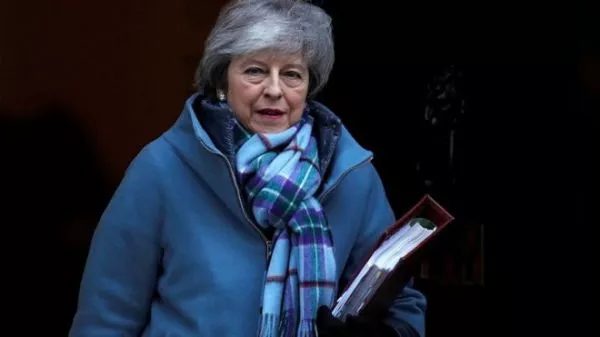
Prime Minister Theresa May suffered a new political blow when MPs voted on Monday evening to take control of the House of Commons over the UK's exit from the European Union, in an unprecedented move aimed at finding a majority for any exit option, Patria reports.
In a vote where 329 votes were 'for' and 302 'against' an amendment supported by MPs from various parties, the government of Prime Minister Theresa May suffered a defeat.
The Prime Minister stated that she 'does not guarantee that she will accept their decision'.
Thirty Conservative MPs voted against the government, including three ministers. Richard Harrington, Alistair Burt and Steve Brine resigned from their ministerial positions, with Harrington accusing the government of 'playing roulette with the lives of Britons', writes the British newspaper The Guardian.
The Prime Minister offered MPs a series of votes on alternatives to Brexit. She believes that allowing MPs to take over the House of Commons agenda would represent an 'unwanted precedent'.
Labour leader Jeremy Corbyn emphasised that the government must approach the process seriously, and that 'the government has failed, and this House must, and I believe, will succeed'.
It is expected that MPs will seek to reach a consensus on how to proceed, including a 'confirmatory vote' by the public on the MPs' proposal, which the Prime Minister had previously stated she does not want.
In a series of so-called 'indicative votes', MPs will be able to vote on several options, which will likely include a vote on a 'softer Brexit' and a second referendum. These votes are conceived as a test of parliamentary will to see what commands a majority. However, the amendment does not specify the format of the vote and how it will function.
Prime Minister May emphasised that she is sceptical about the process because there is no guarantee that it will produce a majority for any course of action, and that she will not allow the government to simply agree with the outcome. 'A vote could lead to a result that cannot even be negotiated with the EU,' May warned MPs.
What are indicative votes
Indicative votes by MPs on a certain number of options are intended to 'take the pulse' of parliament regarding forming a majority for a specific option.
All those who supported the option of indicative voting believe it is the only way out of the current political deadlock.
Although the government controls the daily activities of Parliament, MPs on Monday evening supported a proposal by a group of colleagues including Labour's Hilary Benn and Conservative Sir Oliver Letwin to take over the schedule.
As already announced in the media, this process will include plans for Brexit by MPs, such as a customs union with the EU, writes The Guardian.
Komentari (0)
Prijavite se za komentiranje
PrijavaJos nema komentara. Budite prvi!
Minuta
Sve →Iz drugih kategorija

High Representative Not Elected: Germans, French and British Sabotaged Americans, New Attempt at End of June

ČOVIĆ WITHOUT MERCY: How Those Who Brought Ademović to Office Created a Political Hell for Him



Sunny Saturday, quite warm



Tragedy in Albanian resort: Two minors drown












