
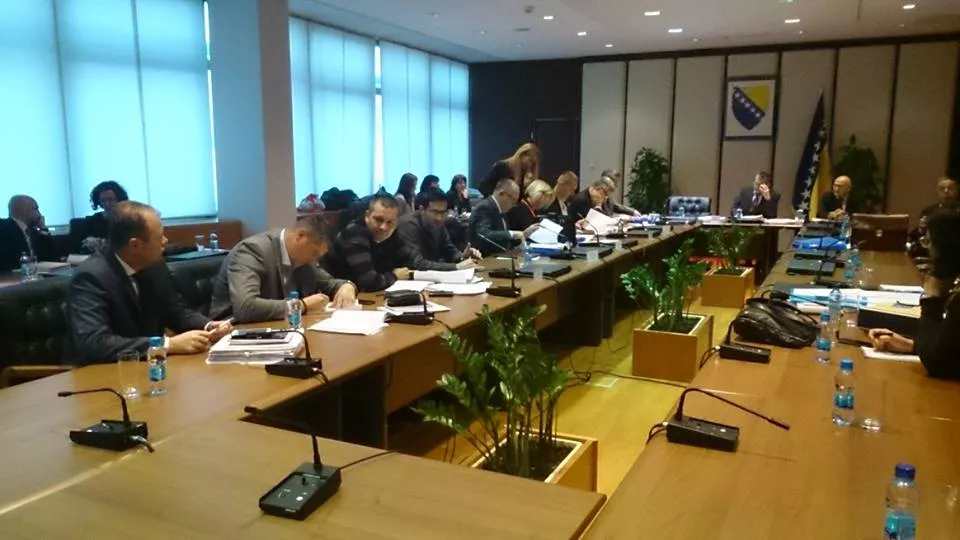
A session of the Interdepartmental Working Group for drafting the Election Law of Bosnia and Herzegovina was held in Sarajevo today, where, among other things, the group's working methodology was discussed, and agreement was reached that decisions will be made by a two-thirds majority of present members, provided there are two votes from each of the three constituent peoples, writes the Bosnian news agency Patria.
Incidentally, this group has 12 members, three of whom are members of the Central Election Commission, while the rest are delegates and deputies from both houses of the Parliamentary Assembly of Bosnia and Herzegovina and ministers from the Council of Ministers of Bosnia and Herzegovina.
Tonight, as stated by Branko Petrić, the chair of this group, the work of the Interdepartmental Group officially began, and at the start of its work, it opened Chapter 1 of the Election Law of Bosnia and Herzegovina.
Judging by the atmosphere during the group's work, things will not go smoothly, as already in Chapter 1, where matters are clear, disagreements arose among group members.
Additionally, Petrić asked members whether they agreed that political parties and the academic community should submit their proposals on possible solutions to certain legal provisions. Borjana Krišto disagreed with this, followed by all other members, who considered it would only lead to an accumulation of paperwork, given that certain political representatives are already in the working group.
What is interesting and sparked debate is Chapter 1.7 and 1.7a, which deal with passive and active voting rights, including the prohibition of candidacy and voting for convicted war criminals. Ognjen Tadić commented on this, saying he would allow everyone the right to vote, as he sees it as a form of resocialization. Other group members, such as Hazim Rančić, responded that this is a constitutional provision and there is nothing controversial about it.
Incidentally, the process of drafting this law will have to proceed much faster, as the deadline for this is February 2016, in order to have enough time for its adoption and publication in the Official Gazette, so that it can come into force in May, six months before the announcement of local elections next year. It is known that no amendments can be made outside this deadline, i.e., six months before the elections.
Komentari (0)
Prijavite se za komentiranje
PrijavaJos nema komentara. Budite prvi!
Minuta
Sve →Iz drugih kategorija

High Representative Not Elected: Germans, French and British Sabotaged Americans, New Attempt at End of June

ČOVIĆ WITHOUT MERCY: How Those Who Brought Ademović to Office Created a Political Hell for Him



Sunny Saturday, quite warm



Tragedy in Albanian resort: Two minors drown












