
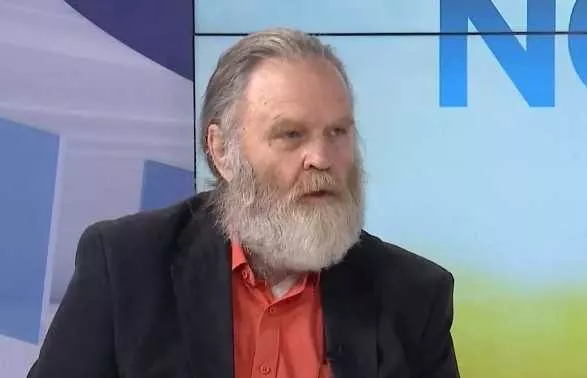
By Sead Alić
It is tasteless to talk about anyone based on their name or surname. Everyone has the right to proudly bear their surname, but also to change it if they don't like it. Likewise, the fact that individuals, and sometimes entire nations, have migrated from one part of the world to another should not be considered negative.
The civilized world should accept the fact that individuals and nations seek refuge from unacceptable laws or any form of segregation, isolation, or apartheid. Europe's current fear of 'people with strange names' flowing in from Arab countries or the Middle East raises the question of measure – should these people be assimilated or integrated? Or will settlers, as in the novel by French writer Michel Houellebecq, perhaps take over entire countries.
Houellebecq's novel Submission, among other things, tells the story of a professor who witnesses the victory of an Islamic party in a democratic election in France, and the consequences that follow. His novel, as well as his statements, have fueled the already present Islamophobia on European soil. A kind of consensus has been established: Representatives of another faith, culture, or civilization must not be given the opportunity to come to power in a European country through democratic means (numerical superiority).
But is this a principle that should apply to all countries in the world? Or is it universally valid only for European countries? Is it perhaps possible elsewhere, through numerical superiority, i.e., democratically, or perhaps even by force of arms – to fight for a territory where people of a different faith, culture, and civilization will settle? Settlers are a problem. In Europe. They bring their God from the East. And we have our God from the East.
Could a writer like Michel Houellebecq, and how would he – describe the settler conquest of Palestine? How would he explain that all the important figures of the Zionist entity on the land of Palestine are actually settlers? How would he explain that after European Islamophobia (which largely raged, carried on the wings of global media owners), Judeophobia is now re-emerging in the world (as a consequence of the genocidal policy of neo-colonialism in Palestine)?
One Eastern God of a monotheistic religion has appeared at the door of the house of another Eastern God of another monotheistic religion. When we bring the matter down to the level of the protagonists themselves, the question could also be posed, for example: How much sensitivity could Mr. Grün, born in Poland in 1886 (then Russia), have had for the needs of Jews who, in his youth, lived peacefully alongside Palestinians of other faiths, sharing similar fates and ways of life.
Probably little. But the winds from the West led him to embrace the project of producing a new kind of Judaism, one that does not care for peaceful life in Palestine and that moves towards establishing a state for all who are willing to accept Judaism as their faith and Zionist orientation as their program of action. Mr. Grün knew that his surname was not quite in the spirit of Judaism, so he adapted it to the ideology he would embrace.
In 1910, he renamed himself David Ben-Gurion. His new surname is a symbolic but also a cautionary reminder of the first century and the Jewish uprising against the Roman Empire.
One of the leaders of that uprising was Ben-Gurion. Nomen est omen. In Operation Agatha, the Pole Grün (who had changed his name) was arrested by the British, who then governed Palestine, and accused of terrorism. Does that say anything about the character of the state that Mr. Grün himself proclaimed on May 14, 1948?
This could be supported with considerable historical facts today. Or, for example, Mr. Shertok, who was born in Ukraine (formerly Russia). He studied in Istanbul, participated in World War I on the side of the British – and this helped him in talks with the British about establishing a new state. The Ukrainian, Mr. Shertok, had long been preparing for the role of the second prime minister of the newly established state on the land of Palestine (after the Pole Grün). He changed his surname to Sharett.
It sounded less Ukrainian or Russian, and more Jewish. Mr. Shertok came to Palestine (along with thousands of followers of the same version of the Eastern God, and nowhere is Michel Houellebecq to ask the question about the Eastern God who was revered in the region of Palestine. Houellebecq is also absent to speak about the settler takeover of power in someone else's country.
The third prime minister of the newly established state on the land of Palestine, Mr. Shkolnik, came to Palestine from Uzhhorod (the Ukrainian part of Austria-Hungary). He changed his surname to Eshkol. With that surname, he could advance more successfully than if he had been presented as Mr. Shkolnik from Uzhhorod. It is not nice to judge anyone by their surname or change of surname. But, this is something that has actually become a trend. Behind these changes of names and surnames, there might be some hidden intention. Perhaps things are becoming clearer today with the figures from Gaza and the stories about the torture of the West Bank.
Here is another interesting, presidential story: Mrs. Mabovich was born in 1898 in Kyiv (the Ukrainian part of the Russian Empire). She also changed her surname. But she did not take her husband's surname, Morris Meyerson. Mrs. Mabovich shone with a new surname – Meir. The Ukrainian from the Russian Empire, Mrs. Mabovich, became the fourth prime minister, or rather the first female prime minister of the state that the Zionists established in the territory of Palestine.
Common sense would probably ask if there was anyone among the politicians who had lived in Palestine for generations and who perhaps knew the relationships between Arabs, Christian believers, and Jews better. Why wouldn't someone like that come to power, but instead, settlers or their first generation (with adjustments to their names and/or surnames for the goal behind it)? The Rubitzov family also settled in Palestine from Belarus.
This Belarusian family produced the fifth prime minister of the state which, it is now obvious, has set itself the task of taking care of settlers, reducing the number of Palestinians in their country, seizing land, houses, orchards, and the dignity of the people of Palestine (those who did not have the fortune to be part of the conquering neo-colonial Zionist idea). Mr. Rubitzov changed his surname to Rabin.
With that surname, he could more credibly build his military career in a country that changed the name of the city where he was born (al-Quds) to Jerusalem.
The surname Rabin, of Mr. Rubitzov, also associated him with a Jewish priest, which could have provided him as a soldier, and the military forces he commanded, with the aura of fighters for a holy cause. Yitzhak Rabin – that sounded much more appropriate for the combination of religious, military, and political power in a land that was yet to be conquered for future settlers.
Michel Houellebecq is still nowhere in sight. Perhaps because most of the important publishing houses have long been in the hands of people with changed surnames, so a novel about the Middle Eastern Submission would not even see the light of day, let alone produce Judeophobia.
Since Yitzhak Rabin was willing to talk to the Palestinians, he was killed. He was killed by members of the Zionist movement. There is nothing to negotiate with those who are to be exterminated. Thus, the Nobel Peace Prize went to Mr. Rubitzov, who was not on the hard-line Zionist path of denying a people, or on the path of slow but persistent taking of both land and lives of Palestinians. At the very least, he wanted to talk, or at least that's how it was presented.
The family of one of the next prime ministers of the settler state in Palestine is a family that, before coming to the USA, bore the surname Mileikowsky. The history of migrations for this family mentions Lithuania, Poland, and Russia. The Mileikowsky family would already undertake the first preparations in the USA for the career of their son Benjamin. The son would indeed, upon birth, bear his father's new surname – Netanyahu.
Son Benjamin is the second Israeli prime minister born in the territory of present-day Palestine. For the arrival of one of the future prime ministers, the city of Jaffa changed its name to Tel Aviv. A welcome for a person who would sacrifice the face of Judaism for remaining in power or hiding from the verdicts awaiting him.
Before his military career, Netanyahu studied in America. His work for the American publishing house "Jonathan Institute," which was founded in Jerusalem, is interesting. The research area of this publishing house is particularly interesting. It was terrorism and Israel's foreign policy. Time will tell how much Netanyahu, upon coming to power, united these two concepts and operated intensively within their frameworks.
I am not going in order, but as names of people who, by changing their names and surnames, or places of residence, prepared for the 'democratic' takeover of a country, emerge from the darkness. Moshe Dayan's father and mother came to Palestine from Ukraine. The father is from Zhashkiv, a village near Kyiv. He was one of the founders of Kibbutz Degania Alef, where the family settled and where the future soldier of the Zionist army, Moshe Dayan, was born.
Since he excelled in the military forms of occupying Palestinian territory, he rose to the position of Minister of Defense. By defending Israel, he conquered much territory of neighboring countries in the 1967 war, as well as East Jerusalem, which marked the beginning of the cleansing of al-Quds of its non-Jewish population.
Older people remember his appearance, which (due to losing an eye in his youth) resembled a pirate lost in some unknown land more than a serious politician who, after his military career, would participate in many negotiations about the fate of Palestine. (It is not correct to judge a person by their appearance, but it is not at all correct to take over a country from one people either. Ask Michel Houellebecq. The name Mieczysław Biegun, today, probably means nothing to anyone.
And it is about a person who, with his terrorist group, carried out a series of terrorist attacks not only on Palestinian settlements but also on the institutions of the British army. The most famous of the terrorist actions of this future prime minister of Israel is the attack on the King David Hotel, which killed more than 90 people. Among them were British soldiers. Irgun was then a terrorist group for the British. So, they were terrorists.
Perhaps the classification of that group has changed in the Western world, but that group established methods that Zionists still adhere to: They occupy territory, seize houses, harass Palestinians, imprison them without any justification, make their lives impossible (if they leave them alive at all), and react drastically to any rebellion. Mr. Mieczysław Biegun clearly found a way to hide the method of terrorism within the method of state terrorism, which is much closer and more acceptable to Western civilization than individual terrorism.
As a person with a terrorist background, Mieczysław Biegun was an ideal candidate for the Nobel Prize. He was awarded for signing papers that merely concealed the further advance of settlers in taking over Palestinian land. The agreement was signed – the conquest could continue.
Of course, this is about Menachem Begin, a person who also 'brought his name closer to Zionist goals'. He was born in Belarus and was one of a series of the most significant figures in Israel who mostly came from the European or Austro-Hungarian part of Europe. Mieczysław Biegun was born in Brest, which is now part of Belarus.
The story continues: In 1959, a young Mr. Brog also joined the Zionist army. The older soldiers probably addressed him as Mr. Frog, so the young soldier with great ambitions changed his surname to Lightning. He became Ehud Barak. He advanced rapidly in the special unit of the IDF, and in 1999, he became prime minister of the settler state, which could only exist thanks to the special methods of special forces.
The Brogs are of Polish origin. His father and mother are from a place called Przemyśl. The name of this place has not been changed yet.
We are nearing the end. Not because there are no more such examples, but because even this is enough to ask some fundamental questions. Before them, here is another example. The author of the famous Allon Plan, by which the Zionists retained the western territories of Palestine after the 1967 war, was actually Yigal Paicovitch. Since his Russian surname means nothing in Hebrew, Yigal decided to become someone else. He became Oak, or Yigal Allon.
Walter Benjamin once recorded an important sentence: Man communicates with God through his name. He was, of course, thinking of a spiritual connection, the language through which the human spirit enters the world... In any case, he was not thinking of people who, after becoming Oak, Lightning, or Rebel against the Roman Empire – would think that God himself gives them the power embedded in their name.
In conclusion, questions for Michel Houellebecq: Is Zionism in Palestine not carrying out much more terrible things than what he described in the novel Submission? Is anything being written about the danger of settlers in Palestine?
Komentari (0)
Prijavite se za komentiranje
PrijavaJos nema komentara. Budite prvi!
Minuta
Sve →Iz drugih kategorija

High Representative Not Elected: Germans, French and British Sabotaged Americans, New Attempt at End of June

ČOVIĆ WITHOUT MERCY: How Those Who Brought Ademović to Office Created a Political Hell for Him



Sunny Saturday, quite warm



Tragedy in Albanian resort: Two minors drown












