
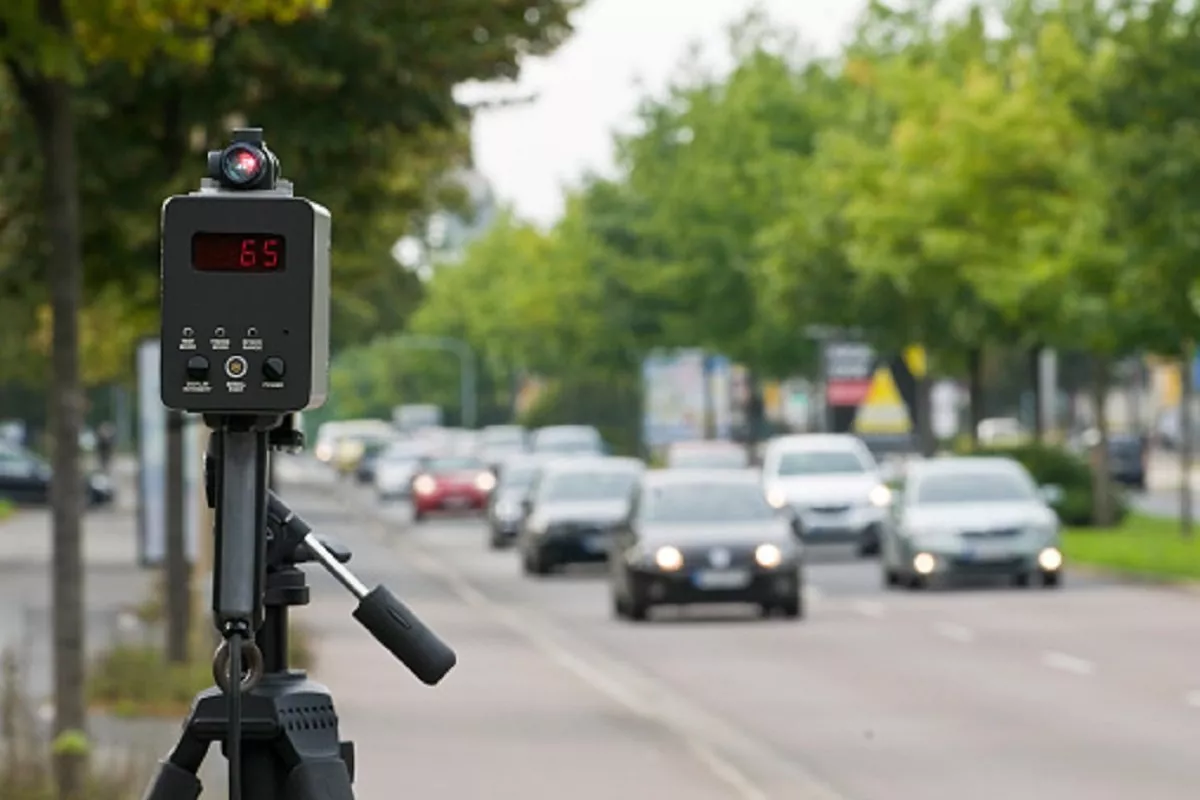
(Patria) - Many drivers have at least once been surprised by a speed camera, causing them to brake suddenly and wonder if they will be fined. Over the years, technology has advanced, and police are monitoring speed in more and more locations. However, many questions leave drivers in doubt.
The most debated issues are at how many meters they record, whether it's too late to brake when you see them, whether they will flash if you exceed the speed limit, and how much you can exceed it by. Therefore, we asked the police for all the details about fixed road cameras.
Inappropriate speed is one of the four main causes of traffic fatalities, and the police see radars as a possible solution to this problem. Locations are chosen based on risk analysis of specific road sections and in cooperation with the local community.
These devices use electromagnetic waves to measure vehicle speed, enabling precise traffic monitoring. Modern versions can monitor multiple lanes simultaneously and record vehicles from both directions, and the police have revealed at how many meters they record drivers.
"The devices detect vehicle speed at distances from 10 to 100 meters. In addition to speed, the cameras also record other data necessary for vehicle identification (license plate, vehicle type, traffic lane, direction of travel, date and time, device serial number, GPS coordinates, etc.).
Therefore, a driver can receive multiple fines because, in addition to speeding violations, fixed measurement devices can indirectly establish violations of improper mobile phone use and failure to use a seatbelt while driving," they explained.
Police officers further added:
"The tolerance limits for the measurement devices are ± 3 km/h for speeds up to 100 km/h, and ± 3 percent for speeds above 100 km/h. When determining speeding violations up to 100 km/h, police officers calculate a safety margin of 10 km/h, and for speeds over 100 km/h, this safety margin is 10 percent."
Drivers are often confused about whether they will receive fines if the camera did not flash, i.e., whether the radar recorded them. The Ministry of Internal Affairs explained that there is no longer flashing; instead, discreet infrared lighting enables this light show, and violations are recorded in a way that will not disturb drivers. Therefore, drivers can no longer rely on the light effect to know if a fine will arrive at their address.
Similarly, if they have exceeded the speed limit, bad weather conditions will not save them, as speed measurement devices are designed to operate in all weather conditions. Here's what happens after drivers exceed the speed limit and the camera imperceptibly records them committing the offense.
"After a vehicle is photographed, the data is sent via communication channels to the Ministry of Internal Affairs' Information System. Based on the vehicle's license plate, the personal data of the vehicle owner and their residential address are obtained. Based on the collected data (place and time of the offense, vehicle speed, speed excess, material and penal provisions of the offense, fixed device identifier, license plate, owner's data), a Notice of Offense is generated and sent by mail to the vehicle owner.
The time of fine delivery from the determination of the offense varies from one police administration to another, but efforts are made to complete it as quickly as possible. The offender cannot be fined before receiving the Notice of Offense," they emphasized.
The media was interested in whether radar errors could occur and what officers do in such cases.
"Speed camera errors are rare. If they do occur, the problem is usually with vehicle identification (e.g., due to another vehicle obscuring the vehicle, an invalid license plate).
In a relatively small percentage of cases, compared to the total number of photos taken, due to the reflection of the radar beam, the vehicle's speed may be measured incorrectly. Police officers are warned about such situations and know how to recognize them. We note that each device undergoes a calibration and certification process annually at an authorized service center."
Besides radar errors, drivers sometimes use various tricks to cover their license plates and avoid fines, which police officers penalize during traffic control. But what about motorcyclists, and can they avoid speeding tickets?
"If the license plate is recorded on a motorcycle, the procedure is the same as for all offenders. If the front of the motorcycle is recorded and it is possible to determine the identity and conduct a criminal investigation, a fine will be imposed. Precisely because of such cases, fixed cameras are combined with handheld cameras in enforcement actions," the police responded, as reported by "Index".
Komentari (0)
Prijavite se za komentiranje
PrijavaJos nema komentara. Budite prvi!
Minuta
Sve →Iz drugih kategorija

High Representative Not Elected: Germans, French and British Sabotaged Americans, New Attempt at End of June

ČOVIĆ WITHOUT MERCY: How Those Who Brought Ademović to Office Created a Political Hell for Him



Sunny Saturday, quite warm



Tragedy in Albanian resort: Two minors drown












