
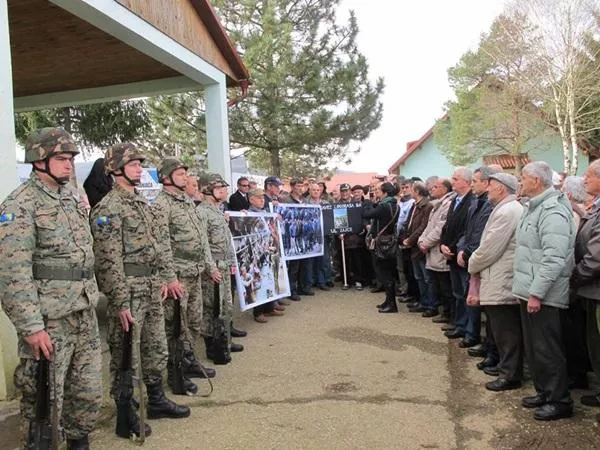
A commemorative gathering was held today on Mount Manjača near Banja Luka to mark the 19th anniversary of the closure of the camp through which 5,000 detainees passed, and which began functioning as a camp on 15 May 1992, writes the Bosnian news agency Patria.
Today's gathering was attended by surviving detainees from all over Bosnia and Herzegovina, Sarajevo, Mostar, Brčko, Tuzla, Donji Vakuf, Jajce, Sanski Most, Ključ and Prijedor.
The President of the Association of Detainees in Bosnia and Herzegovina, Jasmin Mešković, said that he wants to pay tribute to all detainees in Bosnia and Herzegovina and remember all the torture and suffering they endured. There is still no legal framework to regulate the rights and obligations of detainees, which indicates a poor attitude of institutions, authorities and politics towards detainees, Mešković said.
- We want to send a clear message that the evil that happened from 1991 to 1995 is the product of a crazy policy and we must work on discovering the truth and preventing its repetition - he said.
He pointed out that those responsible for the formation of camps in Bosnia and Herzegovina must be held accountable and that no one in Bosnia and Herzegovina has yet answered for crimes in the camps.
- We want to place memorial plaques only in those places where there is evidence and verdicts that the crime actually happened there. The truth is one - Mešković said.
The President of the Regional Association of Detainees Banja Luka, Sabahudin Garibović, said that they are here today to remember all those who lost their lives in Manjača.
In the Manjača camp from 1991 to 1992, and then in 1995, the military forces of the Republika Srpska held prisoners, first Croatian civilians and soldiers during the Homeland War in Croatia, and then Bosniak civilians and soldiers during the war in Bosnia and Herzegovina.
The detainees in Manjača were mostly Bosniaks, some Bosnian Croats and only a few Bosnian Serbs. A mass grave with the remains of 540 victims, believed to be detainees, was found in the immediate vicinity of the camp.
The detainees were held in large, overcrowded cattle sheds, where they spent most of the day sitting or lying down. The detainees lay on bare concrete, and the stench made it hard to breathe. There were no showers or running water. The detainees used buckets for their needs. Due to malnutrition, many lost drastic amounts of weight and their health was permanently damaged.
It is estimated that between 3,000 and 8,000 people passed through the camp. The number of killed is unknown.
Komentari (0)
Prijavite se za komentiranje
PrijavaJos nema komentara. Budite prvi!
Minuta
Sve →Iz drugih kategorija

High Representative Not Elected: Germans, French and British Sabotaged Americans, New Attempt at End of June

ČOVIĆ WITHOUT MERCY: How Those Who Brought Ademović to Office Created a Political Hell for Him



Sunny Saturday, quite warm



Tragedy in Albanian resort: Two minors drown












