
Written by: Amra Vrabac
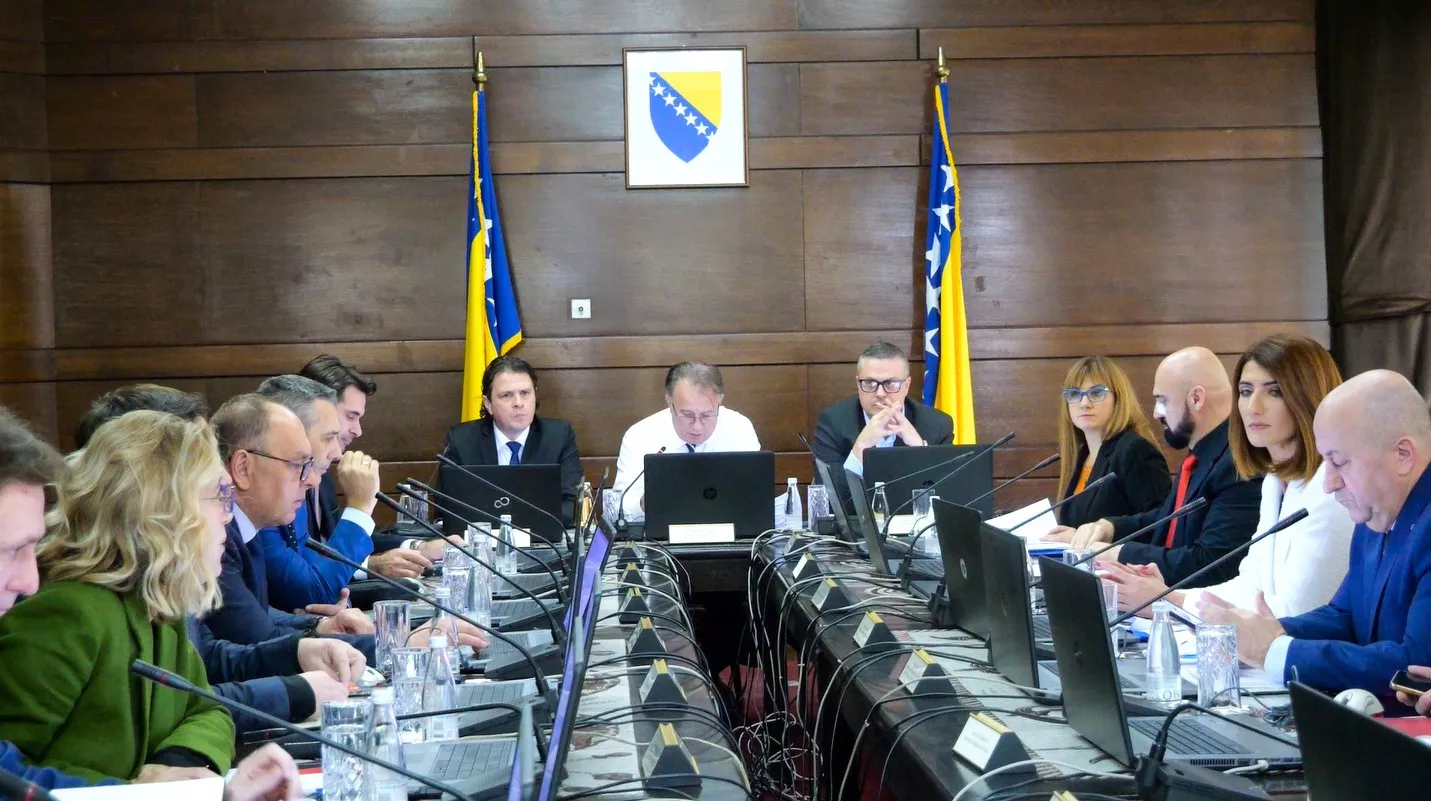
The next session of the Economic and Social Council for the territory of the Federation of Bosnia and Herzegovina will be held on Wednesday, January 22, in the building of the Government of the FBiH. It will be only the second session after the FBiH Government on December 30, 2024, adopted a decision on the minimum wage for 2025 in the amount of 1,000 KM. Employers who do not belong to activities that have a preferential rate of wage contributions of 1,000 KM will have a total burden of slightly more than 1,700 KM.
At that session, the Government should present to unions and employers measures that will ease the financial impact due to the increase in the minimum wage and associated taxes.
Federal Prime Minister Nermin Nikšić said in an interview with Vijesti.ba that the additional burden for employers after the adoption of the decision on the minimum wage will amount to 460 million KM. He said that about 12,000 workers have the lowest wage of 619 KM, and about 170,000 workers have a wage from 700 to 1,000 KM. Thus, some employers will have a difference of 381 KM, and others a smaller one depending on the wage they have been paying so far.
„Everything that goes into the budget goes to PIO/MIO, that is about 256 million KM, and that money is intended for pensions,“ said Nikšić.
Although Nikšić claims that the collected money that employers will now pay due to the wage increase, the FBiH Government will not be able to spend on public consumption, he forgot to mention that what employers pay will ease the burden on the Government, which during 2024 had to pay an additional 511 million KM for PIO/MIO alone. That money that the Government will no longer have to give for PIO/MIO will obviously be spent on something else. And it should be recalled that the wages of employees in the public sector of the FBiH will also increase because the base has been increased from 425 to 480 KM. Nikšić's own salary alone, under the new base, increases by an additional 550 KM.
The decision on the minimum wage additionally burdens employers to increase other wages as well. If a worker had a base salary of 1,000 KM until now, they will seek an increase, and employers are aware of this. In this context, the FBiH Government will offer a new regulation at the session of the ESC, which Nikšić explained:
„We have opted with a new regulation to allow all those who prove with a pay slip for November 2024 and for January 2025 that they paid their worker who had a salary above 1,000 KM, one hundred, two hundred, three hundred marks higher salary, to exempt that from additional contributions,“ said Nikšić.
However, what remains a question at this moment is which employer is ready to go for a wage increase without any relief.
Nikšić said that certain activities such as crafts, trades, mines, textile industry that pay contributions at preferential rates will continue to pay in that manner and with the increase in the minimum wage.
Perhaps the newest information that Nikšić revealed is that the process of relieving taxes and contributions will begin at the start of 2026.
"We all wish to enter the process of reducing contributions. The fact is that it is important to reduce contributions, but it cannot gain priority over the fact that we must maintain a stable pension fund, and if you will, a health fund as well. We cannot enter into an adventure of reducing contributions, until we are sure that we will have an adequate response and adequate revenues that will enable not only maintaining pensions and stabilizing the fund but also increasing pensions. That is why the order of steps is important. We will specify to the social partners what we will do from July 1 (the law on fiscal transactions), what we plan to do from January 1, 2026," said Nikšić.
He emphasized that the Law on Fiscalization and the decision on the minimum wage are not a fiscal reform but prerequisites for fiscal reform.
"Profit tax and non-taxable dividend should also act in that direction. It is not our desire to relieve on one side, and burden on the other. We will talk with social partners and employers," said Nikšić.
Komentari (0)
Prijavite se za komentiranje
PrijavaJos nema komentara. Budite prvi!
Minuta
Sve →Iz drugih kategorija

High Representative Not Elected: Germans, French and British Sabotaged Americans, New Attempt at End of June

ČOVIĆ WITHOUT MERCY: How Those Who Brought Ademović to Office Created a Political Hell for Him



Sunny Saturday, quite warm



Tragedy in Albanian resort: Two minors drown












