
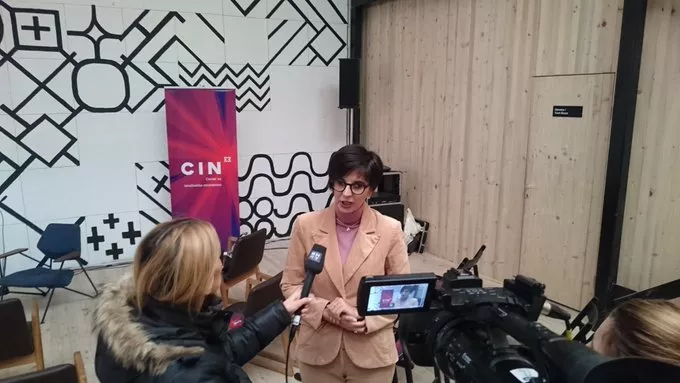
SARAJEVO, (Patria) - The world as we know it is flooded with media information, and regardless of the form of reporting, the credibility and truthfulness of reporting is rarely analyzed and critically examined. What influence politics has on the creation of media news and to what extent the media actually contribute to tensions in society by not respecting the journalistic profession, was best explained by Professor of the Faculty of Political Sciences at the University of Sarajevo, Lejla Turčilo, in her book "Views on Media and Society".
The author explained in detail that today's media are certainly closer to politics than to the public, and that superficiality in reporting certainly brings pressures, but also a certain amount of tension in Bosnian society.
“The media in BiH, judging by all the above, in the triumvirate: politics - media - public, are certainly closer to the pole of the political elite than to the pole of the public. In other words, they are more a lever of power than a lever of democracy. In this context, the connection between media owners and political and economic elites, the lack of transparency of ownership, and political clientelism and instrumentalization of the media are particularly dangerous (even fatal) for democracy,” explains Turčilo in the book.
Turčilo emphasizes the media's placement of sensations, which in turn simultaneously increases the conscious-unconscious tension among citizens, and explains how journalism and the media have actually become more superficial, and that analysis and criticality, as the basis of everything, are being lost.
“Journalism is increasingly becoming an activity of entertainment production, its purpose and its rules are changing: everything is more superficial, everything is more optimistic, everything is more devoid of criticality, and there is also a rather ruthless attitude towards facts that were once considered sacred. The very act of “informing” presupposes daily exposure to a barrage of sensations, none of which have priority, and most are a bare construction of the media themselves,” states Turčilo.
She adds that it is also in the interest of corporations to place “more digestible texts”, and that quantity is actually important.
“The wizards of media corporations preach “content production,” in which one should first recognize the denial of authorship, and “content” is something like popcorn or chocolate: easily digestible, but completely optional. Since quantity is sought, cheap labor is hired, with average literacy, which is now frighteningly low. The whole story, in fact, becomes very, very cheap,” concludes Professor Turčilo.
Komentari (0)
Prijavite se za komentiranje
PrijavaJos nema komentara. Budite prvi!
Minuta
Sve →Iz drugih kategorija

High Representative Not Elected: Germans, French and British Against Americans, New Attempt at End of June

ČOVIĆ WITHOUT MERCY: How Those Who Brought Ademović to Office Created a Political Hell for Him



Sunny Saturday, quite warm



Tragedy in Albanian resort: Two minors drown












