
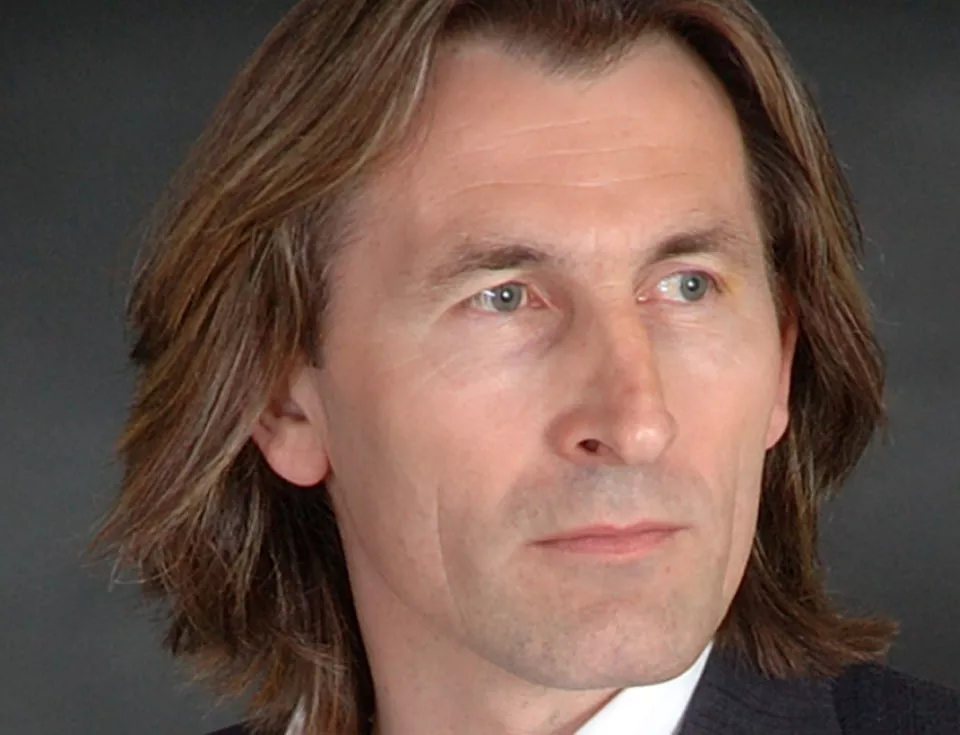
Nihad Krupić, writer and publicist, author of two books: “Ram za sliku moje Bosne“ and “Moja zemlja je srebrena“, leader of the BH community in Vancouver, Canada, one of the initiators and participants in the founding of the Congress of Bosniaks of North America in 2000 in Chicago and the Congress of Bosniaks of the World in 2011 in Sarajevo.
A former BiH footballer, humanitarian, and donor to many initiatives in BiH and North America, an excellent connoisseur of the situation in BiH and the Bosniak diaspora in North America, a member of the Steering Board of the Congress of Bosniaks of the World and the media representative for this global Bosniak organization.
PATRIA: The Congress of Bosniaks of the World is an organization that has shown exceptional dedication to our people in the diaspora. More and more reputable Bosniaks are joining the Congress, creating a truly strong body that will firmly unite the BiH diaspora. What are the main goals of the Congress and its methods of operation?
KRUPIĆ: The Congress of Bosniaks of the World has been in preparation for years. Carefully and strategically. The leader of this project was prim. dr. Muhamed Saračević, Sarajevo's wartime Minister of Health, who was elected the first president at the Founding Assembly of the Congress of Bosniaks of the World in 2011. In all of this, it was easiest to write the statute, platform of action, goals, and program, because paper tolerates everything, and the written form can always be perfected.
However, we who worked on the concept of the KBS wanted an organization that would not serve a leader but the community, and whose activities would not be limited to verbal statements that would stir up the public at times, cause debates and even conflict, and then disappear without any impact into the new troubles that accumulate in Bosnia day by day. We took into account all segments of activity in which this global non-governmental organization could succeed in gathering honorable Bosniaks from around the world and effectively influence processes in Bosnia and Herzegovina through its work and projects.
Although a Bosniak organization, the KBS, in all its documents, defines the goal of Bosnia and Herzegovina as a state of citizens, not ethnic communities, a state that will belong to the European Union and be under the protection of NATO. The question has always been whether we will have allies in all of this among those who represent the state of Bosnia and Herzegovina and its institutions, whether at home or in diplomacy.
Expectations were high because we believed, then and now, that the greatest patriotic task of every Bosniak on Earth is to work towards removing the consequences of aggression, genocide, ethnic cleansing, mass rape, and all other horrors embodied in the name Republika Srpska. And especially to strengthen the statehood of Bosnia and Herzegovina. And of course, as you all know, we were mistaken in this. Our political representatives, in some nihilistic trance, as if bewitched, have begun to enjoy their positions, even in the Banja Luka assembly, sitting in offices on whose walls hang the Serbian tricolor without any BiH state insignia, walking through halls decorated with Orthodox symbols like medieval monastery walls.
Therefore, with a degree of disgust at everything that many Bosniak politicians have allowed themselves, we embarked on a strong patriotic project called the Congress of Bosniaks of the World, which we founded on July 16, 2011, at the Dom Mladih in Sarajevo, with the presence of 83 delegates and over 150 guests from 22 countries.
Since we are masters of duplication, even of things that resemble each other like two peas in a pod, just a year later, around the same date and in the same place, the "World Bosniak Congress" was created, or more commonly known as the Congress of former reis-ul-ulema Mustafa ef. Cerić. Their statute and other documents are almost identical to ours, but there is a big difference in their methods of operation, financing, and the organization's structure, which has practically been in the shadow of a strong leader, Mustafa Cerić, since its inception. This greatly disappointed and surprised us, because Mr. Cerić, as our religious leader, was informed about the project's preparation from the beginning and even sent his representative to our Founding Assembly, who greeted the gathering on his behalf. We had two options then: to enter into open rivalry with an organization that is our duplicate, or to do our own work and let time and our projects speak for themselves. We did not want to feed the public with mutual media torment and decided to work in peace. And so, almost five years after the founding of our organization, in the last two years, we have managed to open a main office in Sarajevo, attract honorable and honest Bosniaks; workers, intellectuals, public figures, heroes of the Army of the Republic of BiH, generals, colonels, brigadiers, captains.
In the last two documents: "Resolution on the 20th Anniversary of the Dayton Agreement" and "What KBS Thinks About January 9th," we have succeeded in establishing ourselves as an organization with a clear stance on the Dayton Agreement and what has emerged from it.
Our membership is currently growing, and I can happily say that in addition to the North American Bosniak community, the Bosniak Association from Australia, led by president Safet Alispahić, a member of the KBS Steering Board, and Mr. Munib Ramović, a member of the KBS Main Board, has fully joined the Congress of Bosniaks of the World. They have formed a KBS branch for Australia and New Zealand and elected the leadership of that branch; Munib Ramović (Melbourne) – president, Safet Alispahić (Sydney - New South Wales) – vice-president, Muhamed Merdžanić (Perth - Western Australia) – vice-president, Murat Mušović – secretary, Ramo Prentić – treasurer, and Board Members: Huso Tvrtković, H. Redžić, and Ćazim Kulin.
This year, on July 16, the Electoral Assembly will be held in the Parliamentary Assembly of BiH in Sarajevo, and we believe it will further stabilize the organization.
I must emphasize, with a touch of humor, that the Congress of Bosniaks of the World, like the other Congress, also has a Mustafa and a Cerić. Mustafa Hajrić, a successful businessman in Germany and BiH, is the president of the Steering Board, and Ahmed ef. Cerić, a captain of the Army of RBiH, now an imam in Florida, is a member of the Main Board... The vice-president of the Steering Board is Ahmet Sejdić, a general of the Army of RBiH and a "golden lily," the general secretary is Muris Pozderac, also a member of the Army of RBiH, the president of the Main Board is Džemo Hot, also a senior officer of the Army of RBiH, a member of the Supervisory Board is General Sulejman Vranj and a great donor and ambassador of general good deeds from Gusinje, Hadži Ragib Čekić, the financial director is Azem Dervišević Zenga, the youngest wartime commander of Sarajevo, now living in Boston, Safet Alispahić, a member of the Steering Board, now living in Australia, the quiet and honest Suad Tica, president of the Bosniak community from Jacksonville, is a member of the Steering Board, Refik Akova from Turkey is a member of the Steering Board, and many other KBS members who have proven that dignity and pride cannot be trampled.
It is an honor for me to stand shoulder to shoulder with such people, and that is why I am extremely proud and happy to be one of the initiators of the founding of the Congress of Bosniaks of the World.
I recommend to your readers to visit our website, read more about KBS, or call and visit our main office in Sarajevo. If they find our organization's concept of work suitable, they can become members. The KBS main office is also open for meetings, forums, and media presentations for representatives of all patriotic BH organizations.
PATRIA: According to the data available so far, over a million Bosniaks make up the Bosniak diaspora. Mostly, it is a new diaspora; about 760,000 Bosniaks fled to Europe, Australia, and the USA to escape killing and genocide. That was twenty-three years ago, so few people consider that our people there have had children and grandchildren, and that this population has at least doubled, and has not lost its identity.
KRUPIĆ: Here I must be honest and say that identity is very difficult to preserve. Especially in overseas countries. Time takes its toll. My wife Melina and I came to Canada in 1994 with our two sons, Adnan and Sanjin. We had two more sons there, Emir and Kenan. From the beginning, we were involved in the work of our community. My wife ran the Bosnian School for almost 20 years and taught many children our language. Seven days ago, I had my first grandson; he was named Mehmed after his grandfather, who lives a beautiful Hajj life with my mother in our family home in Bosanska Dubica. All of this is in the service of preserving our identity, because we were driven out and humiliated to such an extent that we learned much more about ourselves far from our homeland.
In these 23 years of exile and life in the diaspora, we have gone through several phases, and they depended on where the Bosniak diaspora was located, in Europe, America, or Australia.
In the last five years, the Bosniak diaspora has begun to define itself as one of the most progressive the world has ever seen. Recently, an analytical text was published in St. Louis, where Bosniak immigration was defined as the most influential of all immigrations in the history of this great American city. On the other hand, we have economic, political, scientific, and state emigration. I must remind the public that during the visit of US Secretary of State Hillary Clinton to BiH and her meeting with the members of the BiH Presidency, Dr. Ali Lejlić, an American diplomat whose parents are from BiH, was in her delegation.
In another example, in the delegation of the European Union that visited BiH last year was Amna Ibrišagić, a representative of the state of Sweden, who was expelled from her native Sanski Most. Today, at Harvard and other major universities around the world, we have doctoral students and professors from BiH. Young business people, children of BiH refugees, some of whom are successful businessmen whose companies are worth millions of dollars. And they all have Bosnia and Herzegovina in their hearts. They have not lost their identity; rather, they have added an international dimension to their Bosniak-BiH identity and now belong to the whole world.
I believe that at this moment, there are more than a million Bosniaks outside their homeland, connected to Bosnia and Herzegovina with their hearts, souls, heritage, and assets.
One of the envisioned projects of the Congress of Bosniaks of the World is to professionally and scientifically study the profile, number, economic, and all other power of the Bosniak diaspora in the world. At the end of this question, I must state one more truth: when I speak of the Bosniak diaspora, it is the same as saying the BiH diaspora, because a very small percentage of Bosnian Orthodox and Catholics identify as members of the BiH diaspora... Those honorable ones who still consider BiH their homeland have remained loyal to their BiH identity. And together with Bosniaks, they promote the cultural and other heritage of Bosnia and Herzegovina at all events.
PATRIA: What is the real power of the BiH diaspora? How would you describe the influence of the Bosniak diaspora on Bosnia?
KRUPIĆ: The political power of this diaspora within our country is almost negligible because many processes within Bosnia and Herzegovina have reduced the diaspora's voting participation to a minimum. However, the North American diaspora, in particular, has succeeded through strong lobbying in the US Congress and Senate, as well as in the Canadian Parliament, in influencing the adoption of several resolutions on the Srebrenica genocide.
As the president of the BH Cultural Center in Vancouver, I, along with the committee, lobbied for two consecutive years to have May 22, the day BiH was admitted to the UN, declared Bosnia and Herzegovina Day. And believe me, the governments of the USA and Canada recognized the legal, ethical, and human reasons for which we requested this.
We derive almost no benefit from BiH diplomacy in this part of the world. We greet each other courteously, and that's all... They don't understand us, and we don't understand them. These resolutions from Ottawa, Washington, to London and Brussels mean nothing to BiH politicians because they have never managed to use them to strengthen the statehood of Bosnia and Herzegovina. This raises the question of whether we even have politicians of a statesmanlike profile.
The second power of the diaspora is economic, and it is growing day by day. For several years, data has been published stating that the diaspora brings about seven billion KM into BiH annually, and this figure is ten times higher than some foreign investments. If this is true, I believe that at least five billion of these seven billion are halal. So, this is money sent to relatives, friends, humanitarian organizations, individuals, and it does not contribute to economic progress because it is spent daily and is not a long-term business investment.
The diaspora, especially in the first ten years after exile, sent and brought huge amounts of money without asking who it was for or why. Today, it's a different story; the diaspora no longer sends money to state agencies because they don't trust them. Just as the Japanese government didn't trust them when the Japanese ambassador personally delivered donations during the floods in Maglaj and its surroundings and gave them directly to those without roofs over their heads.
That was a great humiliation for our state officials, who apparently don't mean much to them either...
Real investments from the diaspora will start coming to Bosnia and Herzegovina when it joins the European Union because someone must protect the invested capital. We earn our money here with difficulty and need some guarantee for future investments. What is very encouraging are the great sporting achievements of our children born outside BiH, in the diaspora... My sons Emir, 13, and Kenan, 16, are among the most promising young basketball players in Canada. They win tournaments, and are usually the best players. Kenan has already received an offer from a Canadian university for a full scholarship as the youngest player in history. These children of ours, and we with them, will be able to do many good things for the state of BiH. Especially when BiH politicians stop playing politics and become serious.

The Krupić Family: Vancouver, Canada 2015, Kenan named best young player in BC Canada, with sons Adnan, Sanjin, Kenan, and Emir, and wife Melina.
PATRIA: You have cultural communities all over the world; how much is there interaction and gathering of the Bosniak world in the diaspora?
KRUPIĆ: The most numerous and organized Bosniak communities are the mosques (džemati), and there are also quite a few successful cultural clubs. In North America, the Islamic Community of Bosniaks has done in 23 years of its activity what no other religious community has done in the history of this continent. Mosques and Islamic centers worth millions have been built, thus becoming the core of preserving our religious, and I can say, national identity. There are also successful cultural centers like the one in Boston or Vancouver, where work is done to preserve BiH traditions and culture... Social gatherings, festivals, folklore, sports... The active participation of our community members is, on average, up to 20 percent. This is, of course, not a large number, but the results are significant. It is enough to mention that all the children who have gone through these communities have stayed on the right path, are successful in college and work... This is actually the greatest success we are proud of. Since I have had the opportunity to travel and get to know the world from Europe to North, Central, and South America, to distant Australia, New Zealand, Japan, and India, I am a witness that BiH and its people hold a special place in the hearts of ordinary people in these countries. It was nice to see a story about Edin Džeko, Sarajevo, and Bosnia on Brazilian national television the day before the Argentina-Bosnia match. We are part of that better world. We are everywhere and are accepted with respect.
PATRIA: When talking about Bosniaks, loyalty to the countries where they are accepted, and complete respect for their laws and order are indispensable. Like in the past, when people cared about what the neighbors would say about us, today we care about what the whole world will say about our "honor."
KRUPIĆ: When I listened to the Canadian anthem in 1997 with my family among a crowd of immigrants after receiving Canadian citizenship, I cried like a child. From deep sadness for my Bosnia. I never imagined then that I would love Canada so much. I fell in love with the order, work, law, respect, and help that this country gave us when we were driven from our homes by force. I fell in love with Canada because it accepts people from all over the world and immediately tells them, welcome, and we all came from somewhere.
Recently, Syrian refugees were personally welcomed at the airport by the young Canadian Prime Minister Justin Trudeau. I love Canada because it financially supports our and other ethnic organizations to have their festivals, cultural events, and thus present their rich cultural heritage. Because you can see a Canadian parliamentarian in public transport, in a park, or any other public place with their family and children without any protection, escort, or privileges. The other day, while having coffee with my long-time friend Raj Chouhan, a member of the BC provincial parliament, he told me something I will never forget. "As a Canadian politician, I have a salary that is several times lower than what I earned before. I am a politician because I want progress for the people and the country I live in, and it is an honor for me and my family that I was elected to represent the Canadian people. As a poor boy from India, I am honored by my position, and that honor will remain with my family even after my death."
And I dream that our Bosnia will one day have such politicians and that there will be order and peace in it, even if I never see it again. And our people have truly become a better part of the communities in the countries where they live. The Bosniak or BiH community, from Europe to Australia and America, is at the bottom of the list in terms of illegal or criminal activities, and this is recognized and accepted with enthusiasm by state officials and ordinary people alike. Our diaspora's honor is certainly preserved.
PATRIA: Knowing the planetary power of the Bosniak diaspora, it is a miracle that this country has not utilized it in any way. Such financial power, intellectual power, and often political strength remain unused. This country thus shows that it lacks serious Bosniak political leaders who would create a real connection for such a force to BiH as the homeland of all of us, as our center of the world. Now, this step is also expected from your side.
KRUPIĆ: We recently had an example in Sweden where Aida Hadžialić, a young woman born in Foča, was elected Minister of Education, while at the same time in our country, Bosniak parliamentarians, one of whom is a general of the Army of RBiH, voted for the high position in higher education of the Chetnik duke Nikola Poplašen. Then I, and many in the diaspora, wonder if these Swedes are naive and don't know what education is, so they gave this department to some Bosnian woman from the backward Balkans, or if our people who voted for Poplašen are completely lost...
In America, there is the Bosnian-Herzegovinian American Academy of Arts and Sciences, whose president until recently was my friend Dr. Esad Boškailo, born in Počitelj and now living and working in Phoenix, Arizona... Every year, they hold at least one seminar in BiH. They bring several top experts in medicine from America... And it happens that they are not even received by the lowest-ranking cantonal minister.
Therefore, we who live abroad are aware of all the chaos that reigns in BiH and are not in the least to blame for it... In BiH's political, academic, media, and all other governmental and non-governmental organizations, there are almost no innocent people; everyone bears responsibility for the mire into which our society has fallen. On several occasions here in Canada, I have bought and thrown away TV sets with Bosnian channels. Precisely because, by watching political programs, I was polluting my body with the garbage that our politicians speak.
Conflict has become a means of communication in BiH reality, and everything is based on it. If you are not in conflict, then you are not interesting. Work is mostly done on things that do not concern you and from which you only suffer harm. Bosniaks in the diaspora have learned the most important rule: "Do not do what does not concern you and from which you gain no benefit, only harm." This is actually the first step towards progress and a healthy community.
Unfortunately, this political establishment in BiH is not mature enough to deal with the challenges of statesmanship. That kind of politics does not exist at all and is replaced by sycophantic and submissive relations towards countries that some of our politicians favor.
Today in Bosnia, we have presidents of local branches of political parties who receive 200 votes in elections, and that is enough for them to enter one of the cantonal, federal, or RS assemblies, and immediately, on average, they receive an income of 800 marks per month, which is a lot of money for doing nothing and being accountable to no one. In my native Bosanska Dubica, renamed Orthodox-Krsno as "Kozarska Dubica," the SDA president and the chief imam, who is coincidentally or intentionally his son-in-law, sit at the head table on the occasion of the municipality's Krsna Slava (patron saint's day). Without a shred of shame.
The vice-president of the genocidal entity is a Bosniak who must take an oath to work on strengthening the para-state whose military and police apparatus beat him, imprisoned him, killed his family, and who knows what else. I guarantee with my life, in that genocidal entity called RS, the status of Bosniaks today would be the same if they had not had a single representative in the political bodies of RS in these 20 years since Dayton. Sometimes it all seems like a bad joke or a good prank by the Sarajevo surrealists or the guys from Cazin led by Pupan.
Members of the Presidency receive around 200,000 votes and are accountable to no one and ask no one anything. They have become so arrogant that I fear how our people might react.
The culmination of this abuse of the people, the state, and the city is the attempt to close the hospital of the war heroes "Prim. dr. Abdulah Nakaš" and open the University Clinical Center with only one candidate for director. I am greatly surprised because I know that the people of Sarajevo have never feared anyone. Is there so much fear in Sarajevo that no one else has applied for the position of director!? Did Sarajevo's Valter die, or is he just lying low, silent, and enduring?!
PATRIA: Do you get visitors from your homeland?
KRUPIĆ: We in the North American diaspora used to fly up to five hours by plane and drive ten hours by car to meet with our state, cultural, and religious leaders. We spent tens of thousands of dollars to bring them. Them, their wives, and their entourages, chiefs of staff, and who knows who else. Today, there is almost none of that... Whoever the diaspora invites and pays for their trip today, believe me, is worth it, and they should be a model for Bosnia.

Rio, Brazil - The day before the Argentina-Bosnia match
I came with my sons to the last census, the results of which are still secret. I didn't want to miss this opportunity. I have always made sure to have BiH documents because my address is where it was before the 1992 exile.
From my house in Bosanska Dubica, 14 people were expelled, and after 20 years, on the day of the census, I registered 19 household members... I spent nearly $10,000 for that moment. I did not give up my honor and dignity. And many of our people did the same. We from the diaspora would like to have honest and capable politicians or diplomats and be proud of them, but unfortunately, we don't. Whether we will have them depends on people's awareness... The political processes in our country do not promise any alternative, and that is what is worrying. The damage is mostly to those who live there and choose their own downfall in the elections. Yes, their own downfall. These politicians, for us in the diaspora, mean almost nothing because they have no results, no plan, no strategy, and no knowledge to lead BiH towards political and economic progress. I wish it were different, but it is not.
PATRIA: Many malicious people fabricate alleged conflicts between the diaspora and people in the homeland. Perhaps there are some temporary misunderstandings, but essentially, it is a fabricated conflict, introduced from the outside. We are a divided nation. Families are divided, halved, like a torn body. Why would there be conflict?
KRUPIĆ: If you take the comments on the most read BH portals as gospel, then that conflict exists and is worse than anything else. However, I think it is minor in reality. We are here, and you are in Bosnia. Many times we would like to be in Bosnia, and you are probably here. And no one is perfectly content. Many are not in control of their life situation. Frustrations stem from that. I once wrote in an article that I come to my homeland to renew both my soul, and most of our people in the diaspora think the same. I remember as a child when my gastarbeiter neighbors came from Austria and Germany and built new houses, bringing the first cassette players and playing music loudly.
We, as modern people, want to listen to Bijelo Dugme, Parni Valjak, Teška Industrija... and they widen their eyes at us, exclaiming: "Give me sevdah, damn your rock!"
Our first thought was how backward they were and out of touch. Now the situation is the same with us from the diaspora when we come to Bosnia. We want sevdah, we want ćevapi, sudžuk, sauerkraut, peppers, coffee with rahatlokum. Because all of this has been torn from our hearts and souls, from our embrace...
Antagonism arises from pure dissatisfaction with one's position. When I come to my family home and sit with relatives and friends who live in Bosnia, I see their distress and deep dissatisfaction with all social trends, and they truly see no end to it all. Our fighters are so humiliated that my heart aches when I see how they live now. Politicians, religious officials, and those who invent conflicts live well, because they navigate best in that environment. It is a shame to use social internet networks and engage in primitive conflict with former friends. These social networks are like pouring oil on the fire in the general chaos.
Now, how is it with us here in the diaspora?... There have been conflicts, divisions, and fortunately, they are disappearing. There is still a group of people who have learned from that system to have privileges, from company apartments to high salaries for not working...
For years, these people have created a lot of negativity here in the diaspora, and I see it in Bosnia as well...
I was sickened when, in 2007, at the Diaspora Days in Sarajevo, I heard that some world association was asking the Chairman of the Council of Ministers of BiH, then Nikola Špirić, for 25,000 marks to hold its congress. And of course, they didn't get it because Nikola didn't see enough non-Bosniaks there. I told them openly, don't come to Bosnia without money. Especially if you want to promote yourselves.
To joke a little and tell a true story from Sanski Most. There lived a waiter named Zikrija. Many children, low salary, wife not working. Then the Vietnam War started, and money was collected through stamps. So, they came to him to ask for money, and before he reached for his pocket, he asked the bookkeeper from his company: "Well, why would they need our money?" She replied: "To buy weapons and defend themselves from the Americans." And then came Zikrija's famous statement, still retold in Sana today: "My dear, if they don't have money and anything to fight with, let them surrender. They won't get even a bullet from Zikrija, let alone a rifle."
In other words, if the diaspora doesn't have the money to come to Bosnia and do something good, let them not come and ask for anything. Let them surrender and lose the war where they live, just as Zikrija said.
Therefore, the diaspora and the homeland are in conflict only in the minds of the immature, who do not know what to do with themselves. We from here have given a lot for our homeland without asking for anything in return, and that will not stop. We cannot create the political and other circumstances for the ordinary person in Bosnia and Herzegovina, but we can certainly honestly help each of them without any self-interest. And believe me, our children will continue to do the same.
In the end, money is also important for maintaining dignity. It is not for nothing that the old saying goes, "Whose soup you eat, whose glory you celebrate." I earn my money not by sitting and writing texts and books, but by doing hard work... I have never come to Bosnia without money to share with the people who are my homeland. And I don't know a single honorable Bosniak in the diaspora who doesn't think that way. We are a torn body, but with one soul. That soul has always been poisoned, and especially today, because we are witnessing an unprecedented special war against Bosnia and Bosniaks.
I know for sure that there is enough defiance in us towards the Balkan historical revisionists and enough love for our homeland that the scenario of Bosnia's disappearance will never come to pass. Bosnia and Herzegovina is indeed the most important country in the Balkans. The Prime Minister of Turkey is not right when he recently said in Belgrade that Serbia is the main country in the Balkans. Serbia has always been the main country for creating unrest in our region, and that must stop forever. It is important to work on the process of strengthening the statehood of Bosnia and Herzegovina together with all who love it. And that is the primary task of the Congress of Bosniaks of the World. Those who would divide Bosnia do not love it. And let such people put their share of houses, yards, fields, and forests up for sale and find another country. We who love Bosnia will buy it.
Finally, let me state one more true fact: at least 10,000 Bosniaks currently live in the diaspora who can buy ten or more dunams of land in Bosnia at any moment. So, calculate for yourself what percentage of the homeland that is and how many such Bosniaks there will be in ten or more years. Therefore, nothing will be taken away from Bosnia. Everything will remain where it was before. Those who love it should enjoy it; those who don't should leave. Canada, Australia, and New Zealand are large and empty. The difference between them and us here is that we are here because we loved our country, and they are here because they hate it and would prefer it didn't exist.
Komentari (0)
Prijavite se za komentiranje
PrijavaJos nema komentara. Budite prvi!
Minuta
Sve →Iz drugih kategorija

High Representative Not Elected: Germans, French and British Against Americans, New Attempt at End of June

ČOVIĆ WITHOUT MERCY: How Those Who Brought Ademović to Office Created a Political Hell for Him



Sunny Saturday, quite warm



Tragedy in Albanian resort: Two minors drown












