
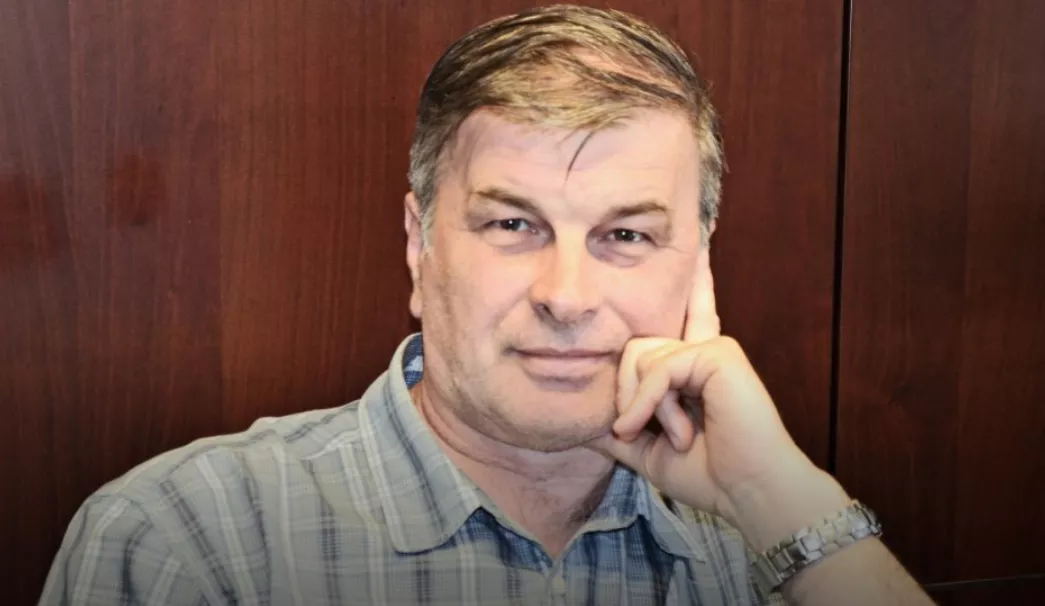
Interviewer: Armin Aljović
Neven Šantić professionally started working in journalism in 1983. First at Radio Rijeka. He is a long-time journalist, columnist, and editor of 'Novi list'. He is the author of two books. Since last autumn, he and his colleagues have launched a regional media project. Media Daily, which he edits today, is a medium for journalists. In an interview with the Patria agency, he talks about his first impressions after Media Daily appeared on the market at the beginning of May this year. He talks about the state of the media and the state of journalists "in these our regions."
Opposition media have, in a way, always been less attractive. It can be said that this is also because they walk a tightrope in every respect. You spent about 21 years as an editor and columnist for Rijeka's 'Novi list'. That newspaper is not exactly popular with the HDZ, which, apart from a few excursions by the SDP, has been in power the longest in Croatia. What is it like to be a journalist whom the government does not view with too much sympathy?
- When Novi list decided to step onto the national media scene at the beginning of the nineties, under the editorship of the unfortunately prematurely deceased Veljko Vičević, we promoted the concept of an open, not an independent, newspaper. Everyone depends on something or someone, including a newspaper, if nothing else, then on the intelligence of its editors and journalists. We took the pluralism and media freedoms enshrined in the Constitution seriously and decided to open the newspaper to everything that was happening around us and to everyone who had something to say, including people from the HDZ. And they had enough space, which they used, even when teeth were grinding. We were never an opposition medium; those who, by some "right" of theirs as rulers, considered themselves to have a patent on "truth" or the defense of the so-called "higher interests" perceived us as such or deliberately branded us as such. At the same time, while providing open space in the newspaper for all opinions, we criticized everything that needed to be criticized in our columns and commentaries to the maximum extent, guided primarily by the defense of certain values (democracy, pluralism, human rights, freedom...) rather than cheering for or against a specific political option. In any case, if you want to be a journalist and not a PR agent, you must be aware from the start that those in power (as well as those in opposition, who are no less politically vain) will not look upon you with great sympathy if you don't blow their horn, and you live with that, you get used to it.
Rijeka is considered the strongest bastion of the left in Croatia. In Bosnia and Herzegovina, this can be said for Tuzla. How much did that environment itself influence Rijeka to produce some of the greatest critics of right-wing policies, like you, Boris Pavelić, and other Rijeka journalists?
- Although neither colleague Pavelić nor I, nor many others who wrote or still write for Novi list, were born in Rijeka, that environment in the nineties certainly helped us to endure and survive even when the government tried to manipulate privatization or impose tax burdens to break the newspaper and us who worked there. As we would say, it was easier to breathe there than elsewhere in Croatia, like Dalmatia or Slavonia, where the pressure on journalists and the media was much more malignant. Of course, the pleasant climate for work, which many colleagues in Croatia and the region envied us, was not harmed by the fact that the SDP in the nineties was too weak at the national level to try to bring us under its control, although there were such attempts.
Since May, you have been running a new portal - Media Daily. You used to write for ordinary readers, and today you write for journalists. Is Media Daily a medium for the media?
- That's right. Over coffee with Zoran Kovačić, the initiator and financier of the project, last autumn in Zagreb, the idea began to take shape for a portal that would be exclusively dedicated to the media on a regional level, to what is happening in and around them. We believe that the exchange of experiences and monitoring the dynamics of media and media ownership in these regions is important for everyone who is indirectly or directly involved in the media. So far, the reactions from colleagues have been very good, which makes us more than satisfied after only a month and a half of work.
Journalist Radmila Karlaš, in her latest column for Media Daily, presents an article titled "Journalists Used to Know Each Other." This is no longer the case today. You also mention the chaotic situation in the media in one of your articles. Can a society be considered mature without strong and independent media? Where do you see a solution?
- No, a society without strong, independent, and I would add, open media is not only immature but completely subordinate. It is a society in which all kinds of manipulation are possible, in which demagoguery flourishes. We used to live in a society where a good part of freedom was sacrificed for the existential security of the majority of the population, and today, in each of our countries, the flag of (national) freedom is waved while people increasingly rummage through dumpsters and lose their homes. This then reflects on the media. Few are able to resist the call of politics, especially since the old media architecture, and with it journalistic professionalism, is collapsing after the advent of the internet and social networks. In developed democratic societies, which are also eroded by the global crisis but incomparably less so than in our regions, solutions are found in institutional support for news media (serious newspapers, portals, television, and radio stations). However, in our regions, this very institutional factor, let's call it that, is the creator of this chaotic situation and the main media manipulator, and let's not run away from the truth, many media owners and quite a few journalists are making every effort to undermine themselves. Nevertheless, as long as there are journalists who care about the profession and citizens who do not accept the existing situation, efforts should be made to find solutions, both for the media and for our societies, which are riddled and infected with corruption and authoritarianism.
Journalism today lives off marketing. This is, in a way, unnatural. An advertisement is essentially the negation of critical journalism. You have decided to try to live exclusively from readers?
- Just as donations from public funds limit your room for maneuver, I repeat once again, especially in these regions where the traditional and undemocratic slogan "either I'll get you or you'll get me" prevails in political culture, so do those who pay for advertisements believe that they should be exempt from criticism. In each of our environments, we have cases where media practically commit to large advertisers that they will not be harmed, no matter what they mess up, meaning that nothing bad will be written or said about them. I remember that Novi list could not get a single advertisement from Konzum or Agrokor for years because a few articles criticized the company's behavior and especially Ivica Todorić. The same Todorić who is now lecturing on democracy and the rule of law from his London sanctuary, and who is now most attacked by the very media that used to eat out of his hand until recently. That is why we decided to take the harder path. To appeal to a relatively small but select audience to enable the financing of the portal and its independence (and openness) through subscriptions. Of course, we will not refuse advertisements either, but whoever advertises will know what kind of portal it is and that we are not subject to influence. In short, our survival depends on how many of our colleagues from these regions will assess that, when they look at what we offer, it is worth paying for the portal for information related to the business we are in.
You have created a portal for the region. Media Daily is read by media workers from Slovenia to Macedonia. If you had only focused on the Croatian market, the project would probably not have been financially sustainable. The same applies to the economy. Companies cannot survive if they focus only on the domestic market. It seems that when it comes to this part of Europe, only politics is not opening up to others and different ones?
- Politics is a problem in itself (and for all of us, of course), classical economics has its own laws, and if you have a good product, it's easy to cross borders, but when it comes to media and all other activities where language is used (theater, literature...), our markets are individually too small to survive without subsidies or donations, any kind of help. We will see how this large, but for example, compared to the German, Italian, or British, let alone larger countries, still too small market, will react. We hope that the "goods" we offer will be well-received.
Komentari (0)
Prijavite se za komentiranje
PrijavaJos nema komentara. Budite prvi!
Minuta
Sve →Iz drugih kategorija

High Representative Not Elected: Germans, French and British Sabotaged Americans, New Attempt at End of June

ČOVIĆ WITHOUT MERCY: How Those Who Brought Ademović to Office Created a Political Hell for Him



Sunny Saturday, quite warm



Tragedy in Albanian resort: Two minors drown












