
By: Armin Aljović
The international community's appeals that Srebrenica must never be repeated to anyone, could prove futile and hypocritical, after the media in Bosnia and Herzegovina revealed that some of the highest officials of the European Union support Milorad Dodik, the president of SNSD, the winning party of the Bosnian Serbs, who advocates for the dissolution of the country.
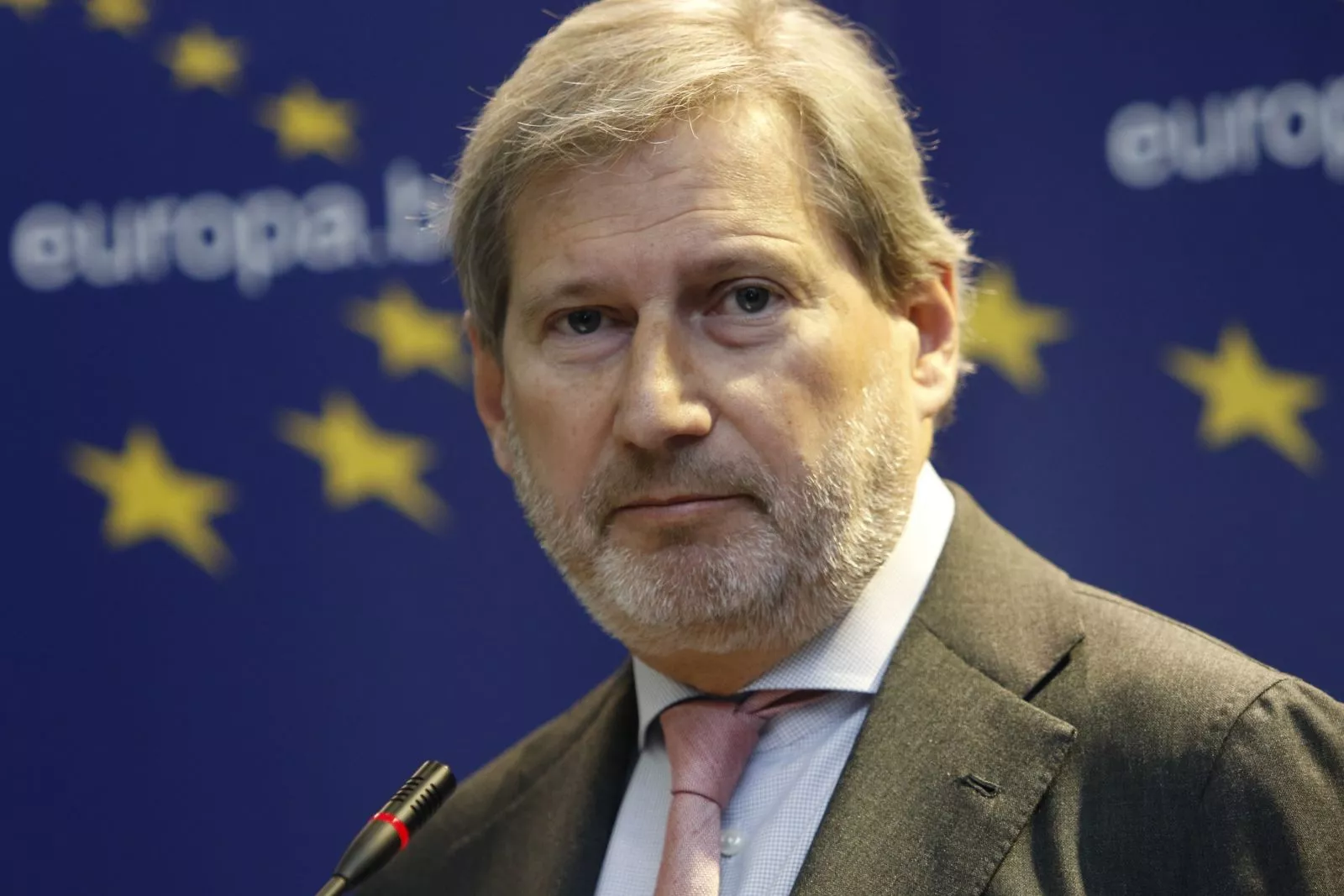
Journalist from Banja Luka, Slobodan Vasković, published an article this week in which he accuses the highest officials of the European Union - such as Enlargement Commissioner Johannes Hahn - of lobbying in Brussels for Dodik's policy of dissolving Bosnia and Herzegovina.
It speaks of tens of millions of KM that Milorad Dodik, suspected of corruption and international crime, as well as spreading Russian influence in the Western Balkans, pays to reputable lobbying firms and European officials for his right-wing policy.
“Johannes Hahn, the European Commissioner for Enlargement, tried to bring members of the BiH Presidency to Brussels to convince them to form a government - appoint a mandate-holder in accordance with the 'principles' of Milorad Dodik,” claims Vasković, adding that the other two members of the BiH Presidency, Željko Komšić and Šefik Džaferović, rejected such a proposal. Such behavior by Hahn is no surprise to Vasković, who claims that Hahn is one of Dodik's main lobbyists in Brussels.
'Johannes Hahn, the European Commissioner for Enlargement, is the main lobbyist for Milorad Dodik in the European Union. Along with Hahn, there is also Miroslav Lajčák, the Slovak Minister of Foreign Affairs and former High Representative in BiH,' claims Vasković, noting that Lars Gunar Wigemark, head of the EU Delegation in BiH, who is just finishing his mission in Sarajevo these days, also lobbies for Dodik.
Although Dodik himself claims that Bosnia and Herzegovina will not be hit by another war, which in the '90s claimed thousands of lives and displaced millions of people, he openly speaks about annexing the Republika Srpska to Serbia, an entity in Bosnia and Herzegovina, recognized only as an administrative unit within Bosnia and Herzegovina, when the war in BiH was stopped in 1995 by signing the Dayton Peace Agreement.
In recent months, Dodik has entered into an open conflict with the USA and other Western countries precisely on the point of the country's security, after he blocked Bosnia and Herzegovina's path towards NATO membership.
Analysts explain that BiH's entry into NATO would mean the end of the idea that Republika Srpska could be annexed to Serbia, which is the real reason for Dodik's refusal for BiH to become a NATO member, while all his other excuses are just platitudes.
Alarming data was also published on Friday by the online magazine Žurnal, reporting on the last session of the Peace Implementation Council (PIC) in BiH, when the request of the British Embassy in Sarajevo was rejected, which asked the International Community to send a clear message to Milorad Dodik that the destruction of BiH institutions 'will not be forgiven.'
The PIC consists of 55 countries and organizations that in various ways support the peace process in Bosnia and Herzegovina since the signing of the Dayton Peace Agreement in 1995 - providing financial resources, contributing troops to EUFOR, or directly conducting operations in Bosnia and Herzegovina. However, some European countries, which are members of the PIC, today openly side with Dodik, even though two years ago he was placed under strong sanctions by the United States of America.
Citing the minutes of the last PIC session, Žurnal published an article stating that Dodik's announcements that, after September 5, he would review the functioning of state institutions were discussed, after which representatives of Great Britain requested that Dodik be warned - both publicly and privately that 'his moves will not be forgiven,' and that the focus of the messages should be on protecting BiH institutions. Contrary to the views of Great Britain, the representative of the French Embassy was benevolent towards Dodik.
'The French Embassy in BiH advocates for a more moderate stance towards Milorad Dodik,' it was stated in the minutes of the PIC session.
Besides France, a benevolent policy towards Milorad Dodik and his announcements was advocated by representatives of the Italian Embassy and the Delegation of the European Union in BiH, whose policy was also agreed with by the Embassy of the Russian Federation. On the other hand, the embassies of the USA, Great Britain, Germany, Spain, the Netherlands, Japan, and Turkey are united when it comes to BiH's NATO path and the protection of state institutions.
Analysts recall that many European officials showed their true face during the war in Bosnia and Herzegovina, when they delayed stopping the conflict, while almost 25 years later they are making the same moves, leaving Dodik and other right-wingers in the country to drag citizens into a new conflict.
Hahn's support for Dodik is all the more concerning when, just a few months earlier, the European Parliament adopted a resolution on the genocide in Srebrenica, calling it the greatest crime on European soil since World War II, which Dodik, on the other hand, calls a fabricated crime, 'nothing more than a myth of the Bosniaks.'
Or, the behavior of the French Embassy in BiH is unclear, which also supported Dodik, even though Paris itself two years ago got a street named "Rue de Srebrenica" with the explanation: "En mémoire des massacres pérpétres en juillet 1995 contre les Bosniaques" – „In memory of the victims of the massacres committed against Bosniaks in July 1995."
Komentari (0)
Prijavite se za komentiranje
PrijavaJos nema komentara. Budite prvi!
Minuta
Sve →Iz drugih kategorija

High Representative Not Elected: Germans, French and British Sabotaged Americans, New Attempt at End of June

ČOVIĆ WITHOUT MERCY: How Those Who Brought Ademović to Office Created a Political Hell for Him



Sunny Saturday, quite warm



Tragedy in Albanian resort: Two minors drown












