
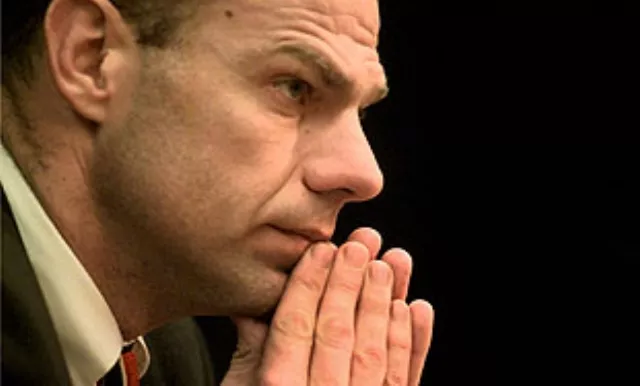
Muhamed Sacirbey was born in Sarajevo in 1956. He is a lawyer by profession. During the most difficult war period, he was the Minister of Foreign Affairs of Bosnia and Herzegovina, and then twice the Ambassador of Bosnia and Herzegovina to the United Nations. Sacirbey currently lives and works in New York. In an exclusive interview with the Patria News Agency, Sacirbey talks about the critical war days for the survival of Bosnia and Herzegovina, the negotiations in Dayton, and whether he would accept being the head of BiH diplomacy again.
PATRIA: I believe you were targeted from multiple sides during your diplomatic work for BiH. For the most part, you were an obstacle to the enemies of Bosnia due to your powerful human connections that you managed to build. They feared you. On the other hand, there were unarticulated and mostly superficial Bosnian politicians, for whom it was important to sacrifice some people just so they could take over their successes.
SACIRBEY: It is good that you show understanding, especially regarding those from the Bosnian political milieu whom you say 'feared' me. Perhaps some believed I had even greater ambitions, but I refused President Izetbegović's offer to succeed him. I did not have such a hunger for more power, nor was I even an official member of the SDA. The fact is that I saw myself as too 'American' and not 'Bosnian' enough to presume to personify BiH or to understand all the bad or good in the way political and social interactions in BiH unfolded at the time. Those who saw me as a potential rival assumed I was just as 'hungry' for power as they were. Those who supported my continued involvement and even escalation in BiH politics may have been disappointed by my lack of desire to continue.
Regardless, I saw my role more as advisory and assistive, rather than leading. Or, if leadership was to be part of my role, I believed it should be as an example, not as an imitation, but always as a personality who should be open and accessible to Bosnians and Herzegovinians.
For example, at the U2 concert on September 23, 1997, the message from local BiH rock bands and the Islamic choir who participated on the same stage was that everything is open and possible in BiH, and that diversity, consistent with BiH's tradition, was present on stage. I think such a message is even more needed now, and that this understanding is shared by a large number of ordinary citizens of BiH today – that is something I greatly respect, as well as the perseverance and defense of BiH during the war.
PATRIA: Richard Holbrooke begins his book 'To End a War' with a description of your personality, primarily that you were 'the best defender at Tulane University, tenacious, strong, and capable.' He also wrote that you loved and fiercely defended the country of your birth and your parents. Much later, a kind of conflict simmered between you. For instance, you once stated that he promised Milošević Goražde, Srebrenica, and Žepa? How do you see that relationship today?
SACIRBEY: Ambassador Holbrooke has passed away, and during his lifetime, I spoke more directly and perhaps more sharply about his role in the betrayal of Srebrenica, Žepa, and Goražde. Now his widow, Kati Marton, has confirmed this betrayal on Dutch national television (as it has been confirmed by others with direct knowledge, given that I initially expressed my doubts in 1999 in a speech before the United Nations, when I only had parts of the evidence, but no less than deserved a response).
However, Mrs. Marton stated that Richard was against this 'deal' which included Mitterrand, Major, and, I assume, Clinton.
I have no doubt that the 'deal' was designed by the then French general Janvier, who was the 'extended arm' of the biased Mitterrand (who called our then ambassador to France, the refined and moral Nikola Kovač, a 'traitor to the Serbs'). To what extent such a 'deal' was designed by Holbrooke or others in the Clinton administration is still unclear today, and Richard blamed Tony Lake in one interview.
Nevertheless, Holbrooke was one of those who acted based on this agreement, and Goražde would have been 'sacrificed' if it weren't for the defenders of Goražde and us in diplomacy who pointed out the dangers as early as August 1995. In my case, it was at a meeting with Holbrooke and his team at Split airport when I first smelled the possibility of a dirty betrayal.
(Holbrooke, on the eve of that Split meeting, spoke in the corridors about Goražde needing to belong to the Serbs, so it was suspected he had promised it to Milošević. Sacirbey, on his own initiative, went before the journalists and said he had a duty to announce that Mr. Holbrooke also agreed that Goražde was no longer on the negotiating table. The journalists immediately relayed the information to their newsrooms. 'Goražde on the table' is recounted as an anecdote among the highest-ranking American diplomats, causing bursts of laughter, editor's note).
Most importantly, neither Holbrooke during his lifetime, nor others within that circle, did enough to correct or at least mitigate the consequences of that betrayal by supporting the reintegration of BiH for all BiH citizens.
On a personal level, I faced a growing problem with Ambassador Holbrooke because he viewed BiH and the resolution of the war more in the context of his personal ambitions than in terms of the rights and/or interests of BiH citizens, or within the strategic interests of the US and the Euro-Atlantic community. Richard found it increasingly difficult to manage his own personal ambitions even while exaggerating my talents and success at Tulane University.
I was good enough to earn a scholarship to pay for my own education, I was a fierce competitor, but the recognition Richard gave me significantly exceeds the success as he described it. However, I was part of a team that first integrated talented African Americans where discrimination prevailed, and for that openness, as a team, we achieved great success on the field, becoming highly ranked in the US.
PATRIA: Exactly one month ago marked the anniversary of the death of three American diplomats, Robert Frasure, Nelson Drew. You are even, through your wife, family-connected to the late Joe Kruzel. You were definitely a respected man and a well-connected person on the American and European political scene. How do you see your, I can freely say, immeasurable diplomatic work for Bosnia and Herzegovina today? Do you regret anything left undone and unfinished?
SACIRBEY: What brought me closer to people and made me accepted also led to me being perceived as a threat; I was more American in terms of my values and my willingness to speak out against the betrayal of those values. Some European diplomats' tactics of feeding Balkan inferiority complexes did not work on me due to my American character. As for American diplomats, some knew that by their actions they were not only underestimating BiH but also betraying American values.
Of course, what has happened since then, from Ukraine to Syria, shows how underestimating BiH has had far-reaching consequences – some have directly knocked on the doors of European and American cities that were perceived as being above nationalism and hatred, which contaminated the former Yugoslavia. Desintegration has become a trend, and Donald Trump has become the new bearer of the message of the future.
PATRIA: You experienced terrible persecution. In my opinion, this happened because you were a serious witness against Milošević at the Tribunal and because you could have been the key person in representing BiH's lawsuit against Serbia and Montenegro. You paid a terrible price, humiliation, and long house arrest. Trying to answer this, I once wrote that political Sarajevo was not up to the games played against you by the enemies of Bosnia. Tell us, did your persecution have anything to do with your testimony before the Hague Tribunal against Milošević? Or was your full engagement before the International Court of Justice (ICJ) hindered in this way?
SACIRBEY: On a personal level, I feel it was an honor to serve BiH, or especially those citizens of BiH who fought, sacrificed, or at least managed to remain in anonymity. Even those who left BiH as refugees were frustrated by their inability to do more to prevent suffering in their homeland, the suffering of their friends and family. Ultimately, I had the opportunity to make a small difference.
So, if you see me as someone who was deceived, then for BiH and its citizens, unfortunately, even harsher terms can be used, regarding much greater injustice inflicted, whether in terms of post-Dayton implementation or the proceedings before the International Criminal Court.
I believe I could have made a positive impact, but BiH was sacrificed for profit, prejudice, or a combination of these two facts. Furthermore, the portrayal of its defenders and leaders also needed to be changed to rewrite history, so that we would all be depicted as religious fundamentalists, extreme nationalists, and/or corrupt politicians. Since the history of the betrayal of Srebrenica and other parts of BiH has now become clearer, I must recall how President Alija Izetbegović was almost immediately accused of this 'deal' behind which many international leaders sought to hide their own guilt.
Although President Alija Izetbegović and I differed on some things, it was mainly due to our different generational perspectives and significantly different life experiences. I believe he also wanted a freer, more democratic, and reintegrated BiH than the one we have now, although our visions certainly differed. However, the existing system that allows everything from outright fascism to ethnic/religious patronage to various ideas of real or fabricated corruption is a creation of the Dayton Agreement and, especially, more than ever before, its vertical implementation. Instead of aggressively seeking to change what is wrong at the core of this unnatural system and the functioning of its institutions, we see a constant attempt at revisionism.
PATRIA: What was the result of those terrible accusations against you after all? The persecution began in 2000. In January 2002, the BiH Government issued an arrest warrant for you. You were arrested in March 2003. How do you explain those events today? You claimed that someone from the BiH Government was behind all those accusations. It was clearly stated here that this person was Zlatko Lagumdžija. Why did the outgoing President Alija Izetbegović not clearly and unequivocally stand up in your defense against this story of misappropriating funds?
SACIRBEY: I think I have spoken about this countless times, and repeating the answer over time only adds credibility to the whole story. From my previous answers (above), you can assess what I think about the motives for my persecution, and I believe these motives came more from outside than from BiH itself. Most importantly, there are many sins one can be accused of, with or without basis, but what I find hardest to bear is seeing myself as a victim seeking sympathy.
In Alexandre Dumas's novel and film 'The Count of Monte Cristo,' which I have always valued, the most important lesson is that redemption is not in revenge but in rising above those who want to trap you, not only with their accusations but also with their game of attack and response. Life offers the opportunity to do more good for yourself and others, rather than being defined by revenge. If you must fight, fight for the future, not for the past.
PATRIA: It has been confirmed to me from confidential sources that, contrary to the accusations of some enormous spending of funds, you spent your own 600,000 dollars on the business you conducted for Bosnia and Herzegovina.
SACIRBEY: I never boasted about it, I only defended myself with that fact when I was accused. My contributions in funds for BiH's needs were significant, but there were also other funds from various ethnic groups that supported BiH, in addition to humanitarian aid. However, I fondly recall the first diplomatic office of BiH in New York City, which was my office on 6th Avenue.
During the first two years and more of our significant diplomatic efforts at the UN, we received no support from Sarajevo; we were self-sustaining and depended on the support and voluntarism of certain individuals.
PATRIA: Did the Bosnian team communicate with you during the preparation of BiH's lawsuit against Serbia and Montenegro and the subsequent presentation of evidence? How did you receive the ICJ ruling from 2007? How much justice or injustice is in it?
SACIRBEY: The 'genocide case' against the Serbian government (which also formally included Montenegro) remains unsatisfactory from the perspective of justice and legality. More importantly, we must emphasize the issue of existing genocide and the further development of the results of that crime, rather than a remedy for it or its annulment.
As someone who initiated (together with Professor Boyle) and continued towards the same goal as a representative of BiH, I must emphasize the various and often very suspicious efforts to 'kill' this case, which sometimes came from Belgrade and even from Sarajevo, but, disturbingly, also from international political leaders. Hence, the decisions regarding the case are a reflection of politics rather than justice or law.
Political leaders from BiH sought my advice on this matter, and I provided both encouragement and new perspectives. In its pursuit of justice, BiH, including its victims, may need to seek a platform in the United Nations Commission on Human Rights, even in new proceedings before the International Criminal Court and other appropriate national and international institutions, but the ICJ cannot be allowed to simply close the (case). Therefore, strong political and legal leadership will be required.
BiH is still treated as a disabled country
PATRIA: Were you consulted about a possible revision of the lawsuit before the ICJ? It was also said that you would be the best and only powerful representative of that lawsuit, and that the fear of this possibility caused panic among the enemies of BiH, which then cost you numerous slanders and personal horror. The deadline for revising the lawsuit expires on February 27 next year. Does this country even have time to potentially revise the process at the World Court of Justice?
SACIRBEY: I believe my previous answers reflect my views on your question. However, let me emphasize that, in addition to legal skills, there must also be political leadership. I would emphasize that the issue of 'genocide' then and its continuation today in BiH remains unresolved. And while I strongly support the normalization of relations between BiH and Serbia, as well as Montenegro and all neighbors, the situation within BiH cannot be characterized as normal, nor even in compliance with international norms and laws.
BiH is still treated as a disabled country, i.e., as dependent rather than as a country with enormous potential to be a contributing member, and even a necessary ally to the Euro-Atlantic family in today's world of great challenges.
I am willing to contribute without titles or positions
PATRIA: If someone offered you again to be the Minister of Foreign Affairs, head of a diplomatic mission, or ambassador of BiH, what would you think and how would you react?
SACIRBEY: Do you think such a thing hasn't been offered to me already?! The future is for new talents and brave people. I am willing to contribute without titles or positions. The time of war is over, and the need for improvisation is less, so people are now needed who see the internal obstacles and possible external enemies more clearly. Here, I would emphasize that it is important for the leadership in BiH to clearly see the international community's attitude towards BiH, and why it is important to change their mentality as well as ours.
PATRIA: Have you ever thought about writing your memoirs? All the peace negotiators who mention you in their memoirs speak of you most often with open respect. I suspect you are already working on those memoirs. I am sure it would be something that would greatly benefit the diplomacy of the young state of BiH.
SACIRBEY: I have written a lot in the past few years, but not very systematically. Perhaps those who wish to learn from our mistakes and successes can explore some of it – I think I have been very open and objective. In any case, perhaps the time will soon come for something more comprehensive and systematic, at least in terms of recording history.
Komentari (0)
Prijavite se za komentiranje
PrijavaJos nema komentara. Budite prvi!
Minuta
Sve →Iz drugih kategorija

High Representative Not Elected: Germans, French and British Sabotaged Americans, New Attempt at End of June

ČOVIĆ WITHOUT MERCY: How Those Who Brought Ademović to Office Created a Political Hell for Him



Sunny Saturday, quite warm



Tragedy in Albanian resort: Two minors drown












