
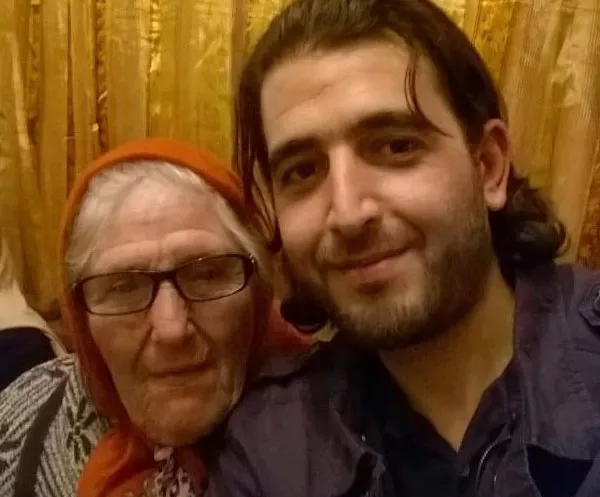
As far back as 1887, saving their lives, twenty-three families from Mostar left their country via the Montenegrin port of Bar. These people arrived in Tunisia and established the first Bosniak colony there, which still exists in that country today.
Talking to my friend Hafedh Hamza, a Tunisian from Metline, I received information that there is an entire neighborhood in that city where descendants of the early settlers from Mostar, whom he called "Mostari", live. I received this information with doubt, wondering how it was possible, until I came into contact with Hamdi Zaghbi. He confirmed this information to me, introducing himself as a descendant of the Mostari clan, promising to introduce me to his grandmother Fatima, who could provide me with information about that distant exodus and the strange fate of the displaced Mostar residents.
We Left a Long Time Ago
Grandma Fatima was an elderly woman in her late eighties. Her psychophysical condition was excellent. She spoke fluent and clear Arabic, with French and Bosnian interjections, while her grandson Hamdi dutifully served as a translator into English in this unusual communication.
From the woman's story, I learned that she is the youngest and only living daughter of her father Latif, who was a baby when he came to Tunisia with her grandfather Sakib.
They had to leave Bosnia for safety a year before it fell under Austro-Hungarian rule, because priests of other confessions threatened them that once the Turkish rule ended, they would all be killed. The journey from Bosnia was very difficult, as they had to go to the "third" region, as she called the Montenegrin port of Bar. There they paid a lot of money thinking they would reach Turkey, but, by a twist of fate, they ended up in Tunisia. Seeing that they had been deceived, they looked for a way to return immediately, either to Bosnia or to continue to Turkey, but the then-vizier of that region decisively rejected their requests, giving them the best plots of land for building houses and for agriculture, thus ensuring their stay in Tunisia.
They Refused English Ducats
From Grandma Fatima's further story, which resembles an exciting movie script, it was heard that a neighborhood – a mahala – was founded shortly thereafter, where exclusively people from Mostar lived. This neighborhood had about twenty houses, and only the Bosnian language was spoken there at the time. People then and long after called their language Bosnian. During World War I, they did not want to go to Turkey when a large English ship was looking for soldiers to fight on their side in the famous and bloody Battle of Gallipoli.
They were offered piles of ducats just to join the English. In contrast, in the mid-thirties, the people from Mostar voluntarily went to assist Omar Mukhtar's forces in Libya in the fight against fascist Italy. Also, Grandma Fatima said that there was a custom in the village of inter-family connections, meaning that people from the first generation married girls from the same neighborhood. In this way, the people from Mostar feverishly tried to preserve the Bosnian language.
This custom changed precisely when she was born, because Arabs began to "steal" girls from the Mostar neighborhood, as they were famous for their beauty.
- One of them stole me too - Grandma Fatima recalled.
They Visited Mostar Only Once
Towards the end of this long conversation, Grandma Fatima mentioned that her father's friends from the Mostar neighborhood formed a delegation that managed to go to their beloved city. This happened after the death of the then-vizier of Metline, who had bound them to Tunisia with his good deeds. When the people finally arrived in Mostar in 1903, they returned desperate from what they saw. They informed their fellow Mostar residents in Metline that the situation in Bosnia was very bad and that they should forget about returning to their Bosnia. Mass killings of Bosniaks were happening on the roads, and komitas were raiding cities and homes.
The people in the neighborhood were sad about the almost shattered dream of return. They then brought souvenirs from Mostar, which are still carefully preserved today in a house in the neighborhood. That house is their museum, where legacies of other peoples who came to that city during the Ottoman Empire, primarily Greeks and Albanians, have also been added.
Hamdi, the grandson of the long-emigrated Mostar residents, admitted to me that he carries a great desire in his heart to visit the roots of his great-grandfather, although he claims to be an Arab-Tunisian. Only from his parents' stories is he enthusiastic about Mostar, and he hopes to have the opportunity to visit it soon and see for himself that ancient and enduring love that has lasted for almost 130 years.
(Written by: Muhamed Kovačević)
Komentari (0)
Prijavite se za komentiranje
PrijavaJos nema komentara. Budite prvi!
Minuta
Sve →Iz drugih kategorija

High Representative Not Elected: Germans, French and British Sabotaged Americans, New Attempt at End of June

ČOVIĆ WITHOUT MERCY: How Those Who Brought Ademović to Office Created a Political Hell for Him



Sunny Saturday, quite warm



Tragedy in Albanian resort: Two minors drown












