
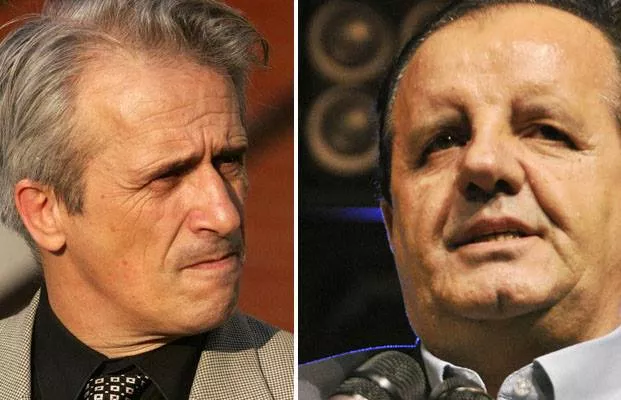
Bosnia and Herzegovina, twenty-two years after the war, has not resolved basic intelligence dilemmas. Since the end of the war, our, let's conditionally call them, military authorities have continuously suspected and accused each other. Thus, Army General Mustafa Polutak recently stated: "Distance yourself from Radončić's politics, he has no limits in attacking BiH."
After that, Zaim Backović Zagi, one of the veterans of the defense of BiH, reacted in public.
He recalled that as a reserve officer in the Artillery Regiment in Kiseljak, he tried to win over General Polutak and persuade him to redirect some of the armament from this unit to the defenders of BiH. Polutak reacted fiercely and rejected Backović's proposals, even threatening to arrest him. After everything, he also remembered Polutak, who, he claims, "walked around the Logistic Center of the Army of the Republic of Bosnia and Herzegovina in Visoko, while he and his family were starving in besieged Sarajevo." Backović says that at the beginning of the war, Polutak handed over infantry weapons from the barracks in Kiseljak to the HVO, and artillery to the Chetniks in Lukavica.
There is no doubt that many officers were in fear and pledged loyalty to their own country. Many of them never stood by the fate of their people. It is suspected that there are still double agents within that former officer corps.
Polutak spoke from a political position, and that in itself is problematic. We sought the opinion of Zaim Backović, who did not respond to calls, considering it would be more convincing if he also mentioned his party leader Sefer Halilović, and what he knows about the disappearance of gold from the safe of the General Staff of the Army of the Republic of Bosnia and Herzegovina, which included the diamond-studded brooch of his grandmother, which the family donated for the defense of BiH. Incidentally, the theft of gold was also addressed in the book "Liars and Murderers" by Fikret Muslimović.
Halilović was an artillery officer like Polutak, and then, a few years before the war, he transferred to the Counterintelligence Service of the JNA. His best man Petar Simović, also a JNA intelligence officer, gave him the intelligence codename – "Boris".
Regardless of the fact that he left the JNA early, there are many incriminating facts about that separation. One of Halilović's reports to KOS is dated September 9, 1991. In one of his confessions to the security service of the Army of the Republic of Bosnia and Herzegovina, he claimed that on September 13, he submitted a request to the JNA for mutual termination of employment. So, four days after a thorough report on the movement of Croatian units in Đakovo, Halilović requested termination of employment with the JNA.
Sefer Halilović only handed over his former intelligence network in 1993, after tensions and conflicts with rogue units in Sarajevo. There are too many officers who have never explained their connections within the JNA system to the security agencies of BiH. All members of the JNA had to do this, regardless of their military profession, especially those from KOS. This treats counterintelligence officers like court witnesses who are not allowed to contact the "accused," i.e., members of their former network. Precisely because of this deficiency, BiH today fears residents who once worked in intelligence. This is not the case with Serbia and Croatia, which have retired and removed such individuals from public life and political processes. The guidelines of powerful European intelligence services state that residents seek publicity through which they naturally operate.
Lustration has never been raised among our intelligence officers, as it has been for members of the secret police services of former Yugoslavia. Of all the countries of former Yugoslavia, only in Bosnia and Herzegovina can former members of the secret police and intelligence officers legally head political parties.
Such a situation still represents a serious security deficiency for Bosnia and Herzegovina, more precisely for Bosniaks, who are the only nation in the Balkans without their own intelligence service. Only such a service could control the chaotic situation in public life, which has been equally intensely fostered in this country from the first day after the war until today. Modernization of security systems would permanently remove many actors from the scene. At least we wouldn't have to listen to the political speeches of some generals.
Komentari (0)
Prijavite se za komentiranje
PrijavaJos nema komentara. Budite prvi!
Minuta
Sve →Iz drugih kategorija

High Representative Not Elected: Germans, French and British Sabotaged Americans, New Attempt at End of June

ČOVIĆ WITHOUT MERCY: How Those Who Brought Ademović to Office Created a Political Hell for Him



Sunny Saturday, quite warm



Tragedy in Albanian resort: Two minors drown












