
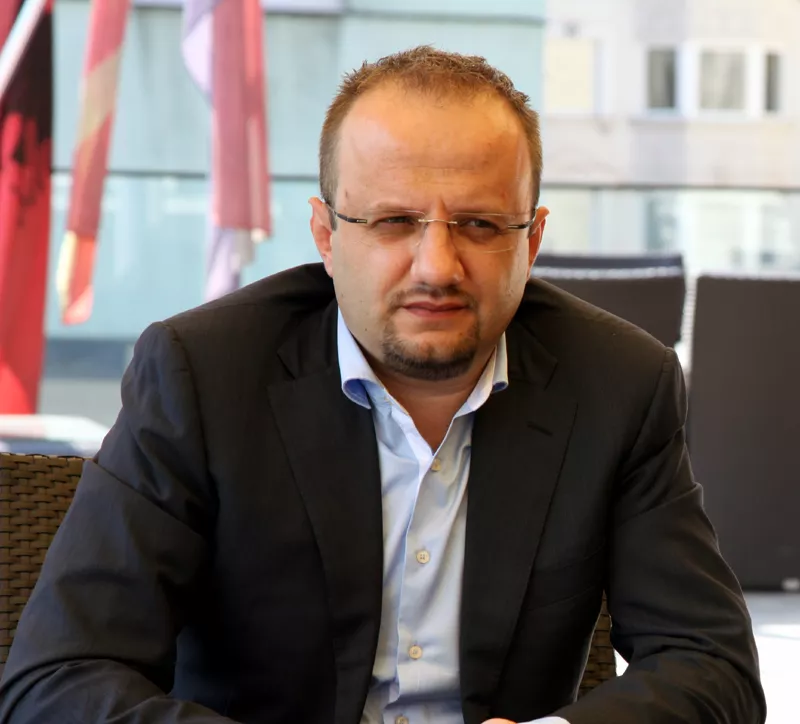
More than half of the Muslim world today is in conflict or under tensions – in a state of turmoil, confusion, chaos – the breaking of basic connective lines of societies, analyzed for the Bosnian news agency Patria (NAP) by Mirnes Kovač, a political analyst from Sarajevo and an international expert on the Middle East and the Balkans.
For him, he says, the most difficult situation is in Libya, Egypt, Syria and Iraq. And problems in these countries could very easily spread further to the region.
As for Palestine, he fears that the latest crimes against civilians in Gaza will be fuel for even more radical groups that will respond to brutality with even more brutal moves.
And the conflict-ridden and tense situation in many Islamic countries, Kovač believes, will continue for some time. Perhaps these societies will have to experience exhaustion from wars to reach a "peace of exhaustion" similar to what European nations achieved in Westphalia.
- When we talk about these countries, a solution is still far away, but if there were one, then the main powers of the region: Turkey, Iran and Saudi Arabia, with the participation of the US, Russia, the EU and China, should sit down at the table and at some major conference profile a new order in the Middle East. That is a very idealistic vision, I am aware. But a certain decentralization of power, a resolution of the Israeli-Palestinian conflict and acceptance of different political, ideological and religious affiliations will have to be the content of any future peace in this region – Kovač believes.
The conflicts in Libya, he says, are similar to the Iraqi scenario. Both are countries where the West has militarily intervened and which possess significant oil resources. However, conflicts in this country, which does not even have sufficiently developed basic societal structures, could also affect the region.
- In Libya, we have a conflict between different (secular and Islamist) militias fighting for dominance and primacy after the anti-Gaddafi revolution. The path to the so-called "democratic transition" is clearly failing. And that, in a way, is hardly achievable in this country because the basic foundations of society are very underdeveloped: civic organizations, civil society, the non-governmental sector, etc... What remained of the former system has been destroyed, and now we actually have fertile ground for the growth of all kinds of extremist factions. Libya's instability threatens Tunisia and Egypt, Algeria and the south bordering the desert Saharan areas – Mali, Niger and Mauritania.
As a result of this weakness of the system, we have the group Ansar al-Shariah, which in the eastern part around Benghazi proclaims an "Islamic Emirate." This group will likely seek an alliance with groups such as the so-called "Islamic State" in Iraq and similar factions – explains Kovač.
For Egypt, he says that since Camp David it has been a broker of peace between Israel and the Palestinians. However, with the arrival of the military government and General al-Sisi, the situation is somewhat different. Both Israel and Egypt have a common enemy, the Islamist Hamas, which has ruled Gaza since 2006.
- Israel wants the destruction of this group, especially after the attempt at rapprochement between Hamas and Fatah, because some common platform would likely move towards a more explicit demand for international recognition of a Palestinian state. The saddest thing is that in Israel's war against Hamas, with the tacit support of Egypt's military regime, civilians are suffering. In the last two years, Egypt has destroyed thousands of tunnels that were the only way for weapons and equipment to enter Gaza, because everything else is controlled by Israel. I believe that the Palestinians in Gaza are being deliberately pushed into desperate moves, such as unjustified shelling of civilians – and I think that in the long run, in such a situation, neither security for Israel nor any prospect of normalization for the 1.8 million inhabitants of Gaza can be achieved. I fear that the latest crimes against civilians in Gaza will be fuel for even more radical groups that will respond to brutality with even more brutal moves.
Apparently, Kovač says, Egypt is not accepted by Hamas as a broker, because its previous peace proposal was seen as a dictate and a prolongation of the agony in Gaza.
- What Egypt is bringing itself into is a kind of informal alliance of anti-Islamist states (such as Saudi Arabia, the Emirates, Jordan, Kuwait, etc.). Their fear of so-called "political Islam" is so great that it pushes Israel's crimes into the background, which has not been the case until now.
- The fear that has arisen in the region from advocates of political Islam is even stronger than the one that emerged more than thirty years ago with the arrival of, say, Khomeini to power in Iran. On the other hand, one should not ignore that this bloc, as well as the United States and the EU, does not approve of what Israel is doing. It is obvious that the Islamists also want to compromise the monarchist regimes among their own people, while unfortunately the price of this game is paid by the civilians of Gaza. It is superfluous to talk about Israel's behavior and the arguments they present. I believe that Western powers have also recognized that such warfare brings no good, let alone long-term security for Israel or their interests in the region – explains Kovač.
The conflict in Syria, i.e., more than three years of silent observation of the killings and crimes that the Assad regime, with the support of Iran, is carrying out in this country against people who sought democratic changes and pluralization of society – has produced, says Kovač, dangerous creations such as ISIL – i.e., recently the so-called "Islamic State" and self-proclaimed caliphate. This is the most monstrous assault on Islamic tradition and dogma so far, carried out by a series of well-connected and well-established propaganda centers whose writings we are increasingly able to recognize.
- ISIL is a calculated move to create a one-dimensional image of Islam as a religion of terror – a worldview that will make it easier for right-wing war hawks in the West to implement their agendas.
Iraq is at a dead end. What is happening in Iraq is the result of the failure of interventionism, and especially the total collapse of the Obama administration's foreign policy in this region. Also, this region is now largely threatened by a major Sunni-Shiite conflict that could spill over into neighboring countries such as Turkey, Saudi Arabia, Kuwait, Bahrain, etc. – Kovač believes, writes NAP.
Komentari (0)
Prijavite se za komentiranje
PrijavaJos nema komentara. Budite prvi!
Minuta
Sve →Iz drugih kategorija

High Representative Not Elected: Germans, French and British Sabotaged Americans, New Attempt at End of June

ČOVIĆ WITHOUT MERCY: How Those Who Brought Ademović to Office Created a Political Hell for Him



Sunny Saturday, quite warm



Tragedy in Albanian resort: Two minors drown












