
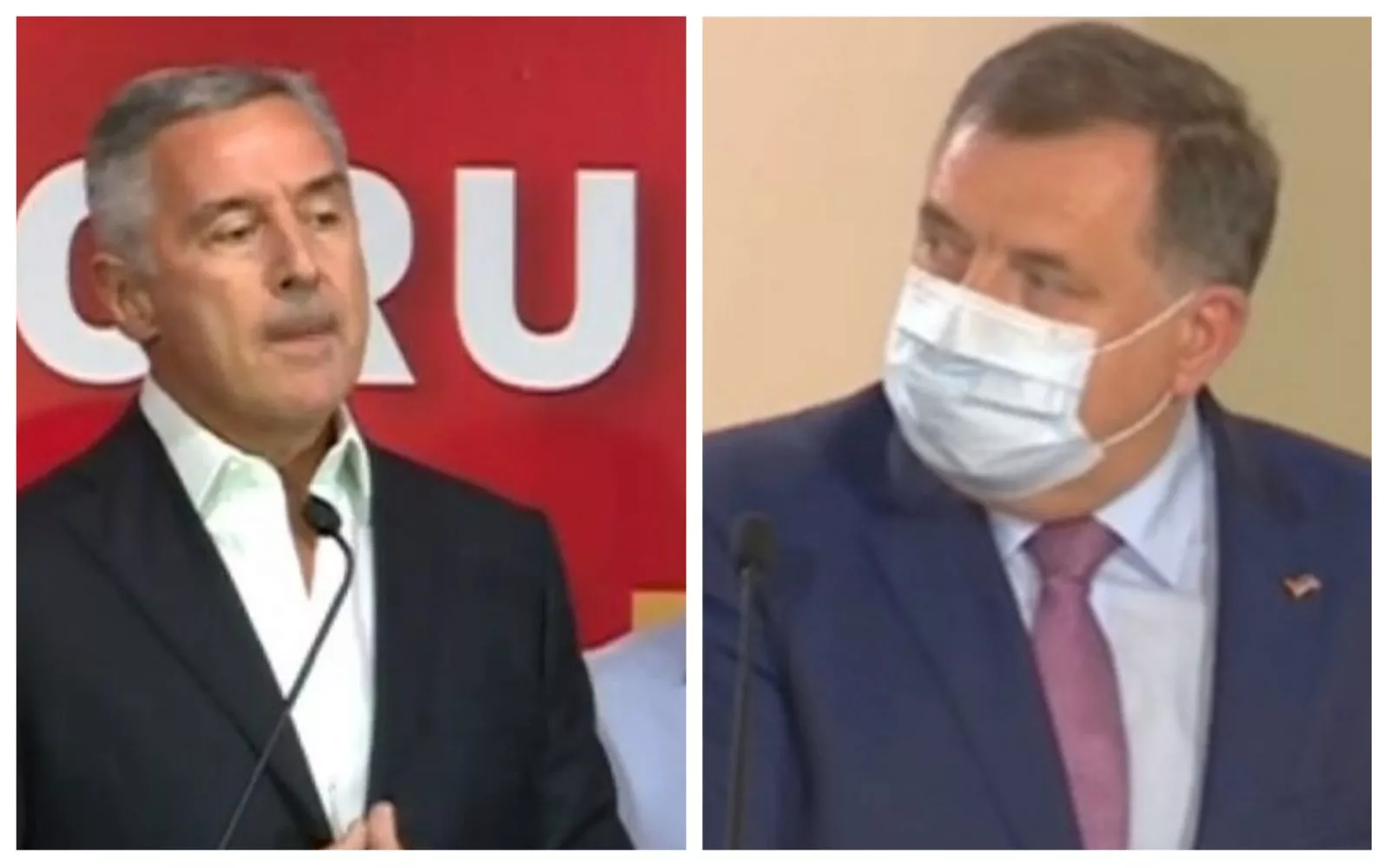
By Rasim BELKO
Rarely anywhere, as in the Western Balkans, do elections in an independent and sovereign country cause tremors in most of the region. This year's elections in Montenegro were more like some historical conflict between the Serbian Orthodox Church and its opponents.
And it is not the first time that the Serbian Orthodox Church has mixed its religious and political decisions. The Law on Freedom of Religion was a trigger for Serbian nationalist currents in Serbia, and they inevitably spilled over into Bosnia and Herzegovina afterwards.
In essence, it is least about Orthodox holy sites on Montenegrin land and most about the intentions of Serbian nationalists to take over Montenegro in order to start a new "Greater" Serbia.
The reincarnation of Bulatović's Montenegro was a prerequisite for Aleksandar Vučić's regime to open a new path for Greater Serbia. Because, he currently has no other serious ally. And the church is always a good catalyst.
Processions and the incitement of political unrest marked the months leading up to the elections. And then they started with that well-known theory. Milo Đukanović was accused of oppressing the Serbian vulnerable.
We all remember well that the aggression against BiH, led by Serbia in complicity with Montenegro at the time, also began in the same way.
They accused Milo of being a dictator, of ruling Montenegro with an iron fist, violating rights…
And Sunday's elections completely shut them up. Because, unlike in Serbia, where Vučić crushed and destroyed the opposition by various means, including armored vehicles, that alleged dictator Đukanović allowed everyone a fair electoral game.
In the end, he found himself in a situation of complete political uncertainty, where one or two mandates will determine the path Montenegro will take in the coming period.
When it comes to Bosnia and Herzegovina and the attitude of its citizens towards Montenegro, everything has been reduced to the already seen classic where Chetniks defend the Serbian vulnerable.
And Chetniks never go without the SDS flag, only this time a part of PDP joined them. At the end of the story about Montenegrin anti-Serb sentiment, we have come to a situation where Milo is there, Mile here, and Chetniks in between.
Although a fierce opponent of Milo Đukanović in public, according to various information, Dodik is also a kind of ally of the Montenegrin president. Therefore, with a high degree of certainty, we can believe that Dodik's activists in Trebinje and other parts of Herzegovina organized voters for Montenegro, who voted for Đukanović.
And this is interference in the internal affairs of Montenegro, but significantly milder compared to what Vučić's and Chetniks from this side of the Drina did.
The video in which Montenegrins residing in Sarajevo are declared "Turks from Sarajevo" simply because they came to Montenegro to vote, vividly illustrates the actions of certain BiH politicians.
Nebojša Vukanović and Draško Stanivuković stood together under the banner of those who want the Polonization and Christianization of Montenegro. Hidden Chetniks, false protectors of Serbdom, most resembled Vojislav Šešelj in the pre-war period in recent days.
Because Šešelj could not even get close to power in Serbia in the 90s, just as the aforementioned duo cannot get within a kilometer of Milorad Dodik.
Whether they tried to gain points in the Montenegrin elections for the elections in BiH, or not, is completely irrelevant.
Their behavior is contrary to everything that is called normal. What do those two have to do in Montenegro anyway?
Sticking your nose into someone else's yard while your own house is on fire is not an act of charity, but a harbinger of trouble. And Vukanović and Stanivuković are precisely the troubles of the Serbian people, it's just lucky that they are short-ranged.
The Montenegrin elections passed peacefully. Without any doubts about the results. The results, although still unofficial, indicate that political uncertainty will continue to loom over the neighboring country for some time.
Milo Đukanović may not be the most desirable and cleanest politician, but compared to the forces that attacked him, he is far more harmless and progressive.
Therefore, Montenegro and Milo have lasted so long together and are moving towards normal standards, while countries where Vukanovićs, Stanivukovići, and Šešelji operate constantly fear new conflicts.
The continuation of Milo Đukanović's rule means that Montenegro will not become a new hotbed of destabilization; anything else is dangerous for both that country and its surroundings.
Komentari (0)
Prijavite se za komentiranje
PrijavaJos nema komentara. Budite prvi!
Minuta
Sve →Iz drugih kategorija

High Representative Not Elected: Germans, French and British Sabotaged Americans, New Attempt at End of June

ČOVIĆ WITHOUT MERCY: How Those Who Brought Ademović to Office Created a Political Hell for Him



Sunny Saturday, quite warm



Tragedy in Albanian resort: Two minors drown












