
The international and non-international illegal trade in wild animals, plants, and products derived from them is one of the most lucrative forms of organized crime in the world, with an annual turnover of between eight and 20 billion euros. This activity has become the fourth largest illegal activity in the world, after drug trafficking, counterfeiting, and human trafficking. These are reports that can be read in several international analyses. And, recently, Croatian MEP Marijana Petir mentioned them.
Illegal trafficking of wild plant and animal species opens the door to corruption, very often involving transnational organized crime networks, such as money laundering, drug and arms trafficking, and serves as a source of income for these networks and militant rebel groups. Therefore, crime related to wild flora and fauna is becoming a serious threat to security, political stability, the economy, local income, natural resources, and the cultural heritage of many countries, and directly undermines peace and the rule of law, hindering sustainable global development.
Encompassing tens of millions of plant and animal specimens, including numerous protected species, the illegal trade in wild fauna and flora has a catastrophic effect on biodiversity, bringing some species to the brink of extinction, thereby endangering entire local ecosystems. The rarer and more endangered the species, the more sought after they are on the market and the higher the price they fetch, whether they are live specimens, such as rare species of turtles, parrots, or orchids, or luxury items, a kind of "status symbol" such as ivory, tortoiseshell, rhinoceros horn, or items made from the skins of exotic reptiles.
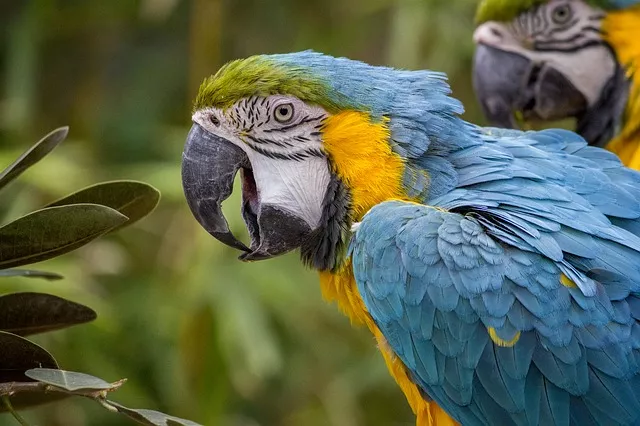
For example, extremely rare and critically endangered turtles from Madagascar, of which there are only about 400 today, fetch prices of up to 25,000 euros each on the illegal market, and rare Lear's macaws from Brazil can cost a staggering 90,000 euros per specimen.
Due to the belief that it has medicinal properties, rhinoceros horn is used in traditional medicine across Asia, and a kilogram on the black market costs more than a kilogram of gold. Ivory continues to represent a luxury product and a status symbol, so the price of raw ivory is up to 5,000 euros per kilogram, while carved items cost much more. The demand for these products has resulted in mass poaching of these species, which has decimated the size of their populations in the wild.
In 2012, 22,000 elephants were killed in poaching, and during the past year, more than 1,000 rhinos died due to poaching in the territory of South Africa alone. The illegal trade in ivory has more than doubled since 2007, and is three times higher than in 1998. Rhino poaching in South Africa increased by 7,000 percent from 2007 to 2013, endangering the survival of this species.
In its efforts to prevent the illegal trade in wild animals, plants, and products derived from them, the European Union recently adopted the EU Action Plan to Combat Illegal Wildlife Trafficking.
The EU plays an important role in combating this trade, as Europe is currently a target market and a transit hub for illegal trade to other regions, and it is also a region where certain illegally traded species are sourced.
At the last meeting of the Committee on Environment, Public Health and Food Safety of the European Parliament before the summer break, a Resolution on the strategic objectives of the EU for the 17th meeting of the Conference of the Parties to the Convention on International Trade in Endangered Species of Wild Fauna and Flora (CITES) to be held in Johannesburg, South Africa in July was unanimously adopted.
CITES represents an international legal framework that regulates the cross-border movement and trade of wild species, ensuring that international trade in wild animals and plants does not threaten the survival of these species in the wild. The Convention itself was adopted in 1973 and entered into force in 1975, and 181 countries worldwide are members of the agreement.
For example, in Croatia, the Ministry of Environmental Protection and Nature is responsible for the implementation of the CITES convention, as well as EU regulations on wildlife trade and the Law on Cross-border Movement and Trade in Wild Species.
On the other hand, in BiH, the trade in prohibited animals and plants is difficult to control. Exotic animals can often be found for sale, on internet ads.
Marijana Petir warns that according to the report on the work of the Nature Protection Inspectorate during 2015, the inspectorate in Croatia confiscated 417 specimens, while in 2014 it confiscated 456 specimens of strictly protected species. These were mainly land tortoises and songbirds, but the discovery of lynx fur, stuffed wolves, and other animals is concerning, writes Patria.
Komentari (0)
Prijavite se za komentiranje
PrijavaJos nema komentara. Budite prvi!
Minuta
Sve →Iz drugih kategorija

High Representative Not Elected: Germans, French and British Sabotaged Americans, New Attempt at End of June

ČOVIĆ WITHOUT MERCY: How Those Who Brought Ademović to Office Created a Political Hell for Him



Sunny Saturday, quite warm



Tragedy in Albanian resort: Two minors drown












