
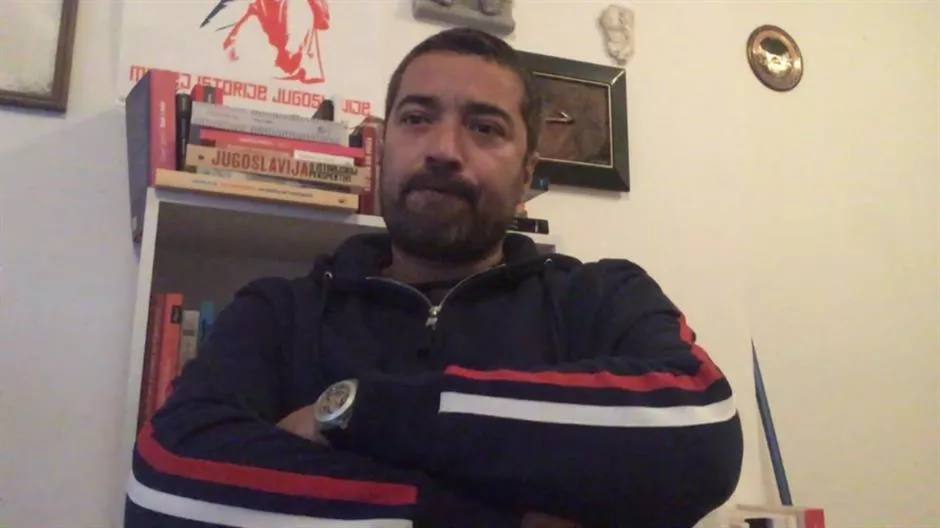
SARAJEVO, (Patria) - Tuđmanism caused great damage not only to Bosniaks, but also to Croats, because it lured them into the Tuđman-era Banovina, meaning to participate in it, said historian Dragan Markovina, appearing on N1's show "Izvan okvira" (Outside the Box).
"There are two types of relations in Mostar. There are relations among politicians and relations among people. I think people function normally within the framework they themselves desire. If we listened more to the street and less to the political elite – it would be much better," Markovina believes, adding that public and private political relations are not the same, and that public insistence is on showing inter-political animosity.
Markovina touched upon the problems of Croats in BiH, and added that it is necessary to seek forgiveness for all that happened in BiH during the war in the 90s.
He adds that by seeking forgiveness, everything that the HDZ seeks at the national, state level would have greater argumentation.
"Croats are indeed the smallest nation, they have many real problems within BiH. But precisely because of that, in the example where they are stronger, where there are more of them, if they showed different behavior, no one would have the moral integrity to refuse to discuss everything that troubles the HDZ or Croats in BiH," Markovina said.
He also spoke about the intertwining of sports and nationalist spirit in Mostar, and when asked if it can be expected that Velež will one day play at the stadium under Bijeli Brijeg as the home team, he replied that "at first glance, any reasonable person would say no."
Markovina is of the opinion that emotions should be overcome on this issue.
"Living without utopia essentially has no meaning. I think we need to overcome our emotions here. Zrinjski once existed, and for political reasons, because it competed in the NDH League, it was banned after World War II. I have no problem with that club being re-established. I have no problem with that club existing, playing at the stadium under Bijeli Brijeg, which is a city stadium. But I have a problem with the way it happened. I don't see a problem with both Velež and Zrinjski playing at that stadium, especially if publicly we have the narrative that Mostar is a united city, that it is not divided. And in negotiations, the HDZ insists that Mostar be viewed as a united city. If that is truly the case, if we have two first-league teams, why shouldn't they play at the same stadium? Now it's not possible, but perhaps the political climate in the city will change, it depends on us," Markovina concluded.
Komentari (0)
Prijavite se za komentiranje
PrijavaJos nema komentara. Budite prvi!
Minuta
Sve →Iz drugih kategorija

High Representative Not Elected: Germans, French and British Against Americans, New Attempt at End of June

ČOVIĆ WITHOUT MERCY: How Those Who Brought Ademović to Office Created a Political Hell for Him



Sunny Saturday, quite warm



Tragedy in Albanian resort: Two minors drown












