
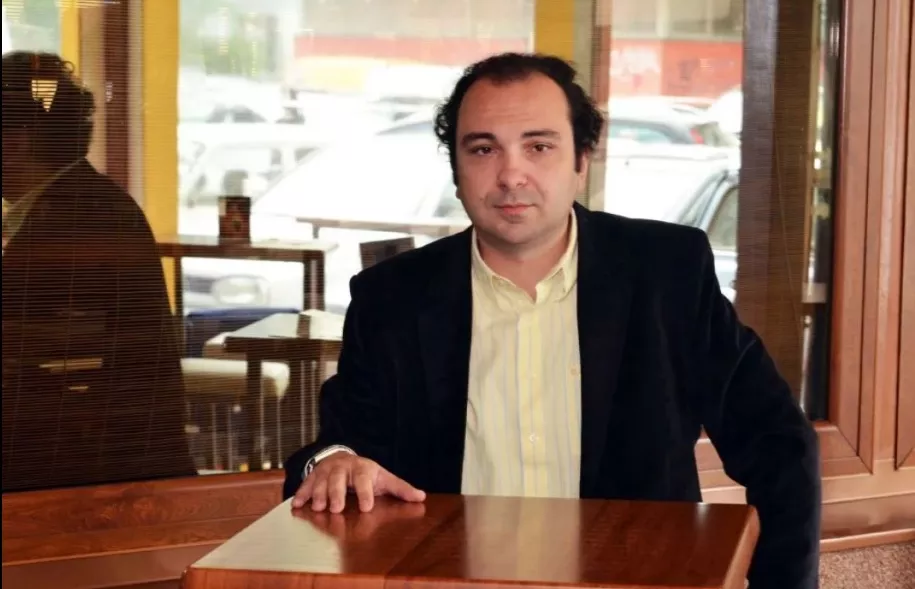
Interview by Armin Aljović
Marijo Pejić is the new president of the Croatian National Council, which recently celebrated its 25th birthday. This doctor of communication sciences, with an exceptional career, announces that he will continue the successful policy of his predecessors, whose main foundation is the building of Bosnia and Herzegovina in which every citizen will be protected in every corner of the country, regardless of their ethnic and religious affiliation.
In an interview with the Patria News Agency, Pejić also talks about the HNV, the policy of the HDZ of Bosnia and Herzegovina, Croatia's relationship with BiH...
It is little known that the Croatian National Council initiated the Washington Agreement in 1994, thanks to which the "Herceg-Bosna" para-state was abolished, after which the conflict between Bosniaks and Croats also ceased. Dragan Čović is reviving HZ HB again today. Does the HNV have an answer to the repetition of the past? Are you afraid of further radicalization of relations in the country?
- The HNV BiH began its political activity at a time when the position of Croats in BiH was truly very difficult, perhaps the most difficult in their history, so their very biological survival in these areas was called into question. The First General Assembly of Croats of Bosnia and Herzegovina, held on February 6, 1994, was a turning point in the recent history, not only of Bosnia and Herzegovina, but also of the Republic of Croatia. Through systematic efforts to stop the war between the armed forces of Bosniaks and Croats and to establish peace throughout BiH, the HNV BiH became an active participant in both the Washington and Dayton Agreements. It is an undeniable historical fact that the HNV BiH is the ideological creator of the Federation of Bosnia and Herzegovina, after which "Herceg-Bosna" was abolished. Therefore, in its further political activities, the HNV BiH advocated for the restoration of trust among the peoples of Bosnia and Herzegovina, for the return of displaced and expelled persons to their homes, and for the establishment of lasting and just peace throughout the territory. Based on these fundamental principles, immediately after the Assembly of Croats in Sarajevo, the HNV BiH will begin its political activities in several targeted directions and at several geographical points, which will bring the first political successes on the international stage. By including its representatives in the negotiations on the future of BiH in Geneva, these negotiations completely failed, thus avoiding the already almost prepared partition of BiH. After that, the time of intensive political activity of the HNV BiH began, led by presidents Prof. Dr. Ivo Komšić, Fra Luka Markešić, and Prof. Dr. Marinko Pejić.
The revival of "Herceg-Bosna" certainly leads to political tensions, but the HNV BiH's response to such catastrophic moves by the political representatives of Croats in BiH will again be, as in the nineties of the last century, the HNV BiH's work program, which is based on the principles of further building a complete and independent state of BiH, the unquestionability of constituent peoples throughout the territory of BiH, the building of a unified economic system and space, as well as numerous other issues of interest to all citizens of BiH. Through the activities of our central office in Sarajevo, the HNV BiH clearly shows the proponents of the failed and compromised "Herceg-Bosna" that Sarajevo is also a Croatian city, i.e., the central city, not only of the state of BiH, but also of the past, present, and future national, cultural, economic, political, and religious life of the Croatian people in BiH. The HNV BiH, as the umbrella Croatian organization in BiH, shows the Croatian people in BiH that their fundamental political institutions should be located in Sarajevo, which will enable those who live there to stay and survive, and those who wish to return to their homeland to have a place to come to.
All previous presidents of the HNV, from Ivo Komšić through Fra Luka Markešić and Marinko Pejić to you today, advocate for a complete and independent Bosnia and Herzegovina, in which every citizen will be equal regardless of religious affiliation? Can one be a good Croat, Bosniak, or Serb in a civic Bosnia and Herzegovina? HDZ, for example, thinks that Croats would lose their identity in such an environment, as there are the fewest Croats in the country. What are your arguments?
- It is important to emphasize that, contrary to the claims of nationalist ideologues, the civic concept and the concept of constitutional (constituent) peoples of a complete and independent Bosnia and Herzegovina are not in contradiction in the context of organizing a modern state, which should become a member of the European Union, so that Croats, like any other people in BiH, would not lose their identity in such an environment. Any state organization that excludes the civic concept and the concept of constituent peoples, as its integral part, poses a danger to the survival of BiH. It should not be forgotten that even during the period of the Socialist Republic of Bosnia and Herzegovina, these two concepts were not in opposition. Linking the identity of the constituent peoples in BiH exclusively to religion and nationality, and not to the state (nation) and its tradition, actually proves that the meaning of the state has been reduced for us to the existence of religions and peoples. A true civic concept of state organization does not negate the specificities of the peoples of Bosnia and Herzegovina, culture, language, national and religious identity, and the tradition of constituent peoples and national minorities in BiH, as essential prerequisites for the existence of the state of BiH and society as a whole. The Croatian people need a unified and complete Bosnia and Herzegovina, without ethnic division, and its capital Sarajevo for the articulation of the political and social interests of the Croatian people in BiH. The HNV BiH confirms the principle of institutional and real equality of members of constituent peoples, with full respect for the rights and freedoms of all citizens of BiH. We do not support ethno-territorial unitarism and separatism against a functional state, nor attempts by some political groups to impose an rejected model of consociational segregation in the modern world. It is a deception to offer BiH a concept of a segregated society that did not exist in the past, did not succeed even during the war, despite the then and current creation of ethnic hostilities. In our country, there is no proportional representation in government institutions at all levels; instead, a parity model is used which negates the models of proportional representation and is not affected by the small number of Croats in BiH. Houses of Peoples, as well as clubs at the cantonal level of government, are composed on a parity basis, and in them, as well as in the Presidency of BiH, the Federation of BiH, and the Council of Ministers of BiH, decisions are made by consensus, without the possibility of outvoting. Parity also exists in judicial bodies, security, financial, tax, and other agencies. However, the separation of state and political institutions on an ethnic basis, under the guise of legitimate representation, is contrary to fundamental European values and electoral standards. On the other hand, the HNV BiH supports the initiative for an independent expert body to analyze the actual position of the Croatian people in BiH and to measure this position by all relevant parameters of participation in institutions at all levels of government, i.e., in overall employment in institutions, the real sector, diplomacy, security services, areas of culture and education, and other statistically relevant and comparable parameters within and outside the imagined borders of a third entity.
Where did the turn in the policy of the HDZ of Bosnia and Herzegovina occur? At the beginning of its founding in the nineties, that party advocated for an independent and strong Bosnia and Herzegovina. How is it possible that the current president, Dragan Čović, is today closer to Dodik and Vučić than to the West, even though both are working to destabilize BiH? The HDZ no longer even mentions the 140,000 Croats expelled from RS.
- What is often omitted is that at the beginning of the nineties of the last century, the HDZ BiH, led by Stjepan Kljuić, Ivan Markešić, Damjan Vlašić, Jerko Doko, Jure Pelivan, Milivoj Gagro, and others, was politically oriented towards strengthening the statehood of Bosnia and Herzegovina and resolving the Croatian issue through the state issue of Bosnia and Herzegovina. Let's recall that the creator of the referendum question on the sovereignty and independence of BiH was the respected Mostar lawyer and HDZ BiH representative in the BiH Assembly, Damjan Vlašić. After the declaration of independence of BiH, the need arose to find new symbols. In 1992, the representatives of the HDZ BiH in the BiH Assembly offered medieval Bosnian symbols as a solution, specifically the coat of arms of Kotromanić with golden lilies, which was partially stylized for the needs of the new flag and coat of arms, which was a direct link to Bosnian tradition. The HDZ BiH proposal for a new flag and coat of arms with lilies was adopted. However, those who represented nothing at the time in the structures of the original HDZ BiH, which was founded in Sarajevo, later decided to change the policy, politically liquidated the representatives of the moderate faction, and moved towards the partition of BiH, which also resulted in the division of Croats into "Bosnian" and "Herzegovinian." After Mate Boban took over the leadership of the HDZ BiH in 1992, the idea of a Bosnian-Herzegovinian state and its territorial, state-legal, and historical integrity was abandoned, the state flag with golden lilies was rejected, and the idea of creating the national para-state "Herceg-Bosna" was advocated, contrary to the survival of a common democratic state of BiH, which led to the rapprochement of Serbian and Croatian policies in BiH, then led by Radovan Karadžić and Mate Boban. Today's representatives of Croats clearly follow these political ideas, and due to the open coalition of Serbian and Croatian official policies in BiH, they do not talk about the position of Croats in the Republika Srpska at all. However, it would be inappropriate and an overgeneralization to generalize the entire current HDZ BiH, as generalization has already gone too far in our country. One must be objective and emphasize that even within the HDZ BiH, at various levels of government, there are serious, committed, and competent people who are oriented towards the future, implement concrete projects, realistically analyze the current socio-political situation in BiH, and party affiliation is not their primary criterion. Unfortunately, such political actors cannot come to the forefront and shape party policy in line with its fundamental goals defined in 1990 in Sarajevo.
World media very often write about Croatia in a negative context precisely because of BiH. This is because the problems in BiH are largely generated from Zagreb and Belgrade. It can be concluded that Croatia is risking its international reputation because of Čović. Have you considered the reasons for this suicidal policy of the official Zagreb?
- The Republic of Croatia is our friendly country, and it should not be forgotten that it helped BiH a lot during a difficult historical period. The then representatives of opposition parties in Croatia, and even some representatives of the HDZ, during the war in BiH, loudly and clearly advocated for the preservation of the integrity and sovereignty of the state of BiH and for an end to the armed conflicts between Bosniak and Croatian military units. It is necessary to acknowledge the fact that cultural organizations, institutions, companies, economic associations, tourist boards, artists, athletes, and social workers from the Republic of Croatia, through their engagement in BiH, contribute to strengthening friendly and good-neighborly relations between the Republic of Croatia and BiH. Most of them respect and love BiH as a neighboring country. However, based on some statements, proposals, and actions of current political representatives of the Republic of Croatia, one might get the impression that the official policy of the neighboring Republic of Croatia is currently under the direct influence of the HDZ BiH. Therefore, it is essential that the political representatives of the Republic of Croatia inform themselves from multiple sources about the socio-political conditions in BiH, and that they hear and respect the opinions of those Croats in BiH who do not think like members of the HNS.
The HNV BiH advocates for the development of good-neighborly relations between Croatia and BiH, which are based on mutual respect, cooperation in the fields of culture, education, and tourism, open and constructive dialogue, and full recognition of sovereignty, territorial integrity, and political independence of states, as well as lasting historical interdependence for sincere cooperation in all areas of society and state. Trust and mutual understanding should be built between these two friendly countries, not confrontation and scandals.
Who do you blame more, the radicalism of ethno-national parties in BiH or the sluggishness of civic parties that show they don't really have a vision of how to respond to the increasingly chaotic situation in BiH?
- The proponents of chauvinism and national radicalism are, of course, most responsible for the chaotic situation in BiH, as they are the biggest obstacle to the development of our society. Representatives of civic movements must define a strategy of action and, theoretically and practically, bring closer and explain the civic model of state organization to all citizens of BiH, i.e., refute the incorrect and scientifically unfounded interpretations of the civic concept, which chauvinists and political extremists consciously spread and impose on our citizens, trying to scare them and convince them that the civic concept is something bad for the peoples living in BiH. Therefore, it is important to logically present the scale of concepts that include the civic concept to the wider public, which are the concepts of citizen, citizenship/nationality, ethnicity, religious affiliation, regional affiliation, etc. It is important to explain to all citizens of BiH that these are not contradictory concepts, but that in the pyramid of these concepts, there are superordinate, subordinate, and coordinate concepts, which only need to be logically arranged.
Do you believe in the future of Bosnia and Herzegovina?
- I believe. After every rain comes the sun, as the folk wisdom says.
Komentari (0)
Prijavite se za komentiranje
PrijavaJos nema komentara. Budite prvi!
Minuta
Sve →Iz drugih kategorija

High Representative Not Elected: Germans, French and British Sabotaged Americans, New Attempt at End of June

ČOVIĆ WITHOUT MERCY: How Those Who Brought Ademović to Office Created a Political Hell for Him



Sunny Saturday, quite warm



Tragedy in Albanian resort: Two minors drown












