
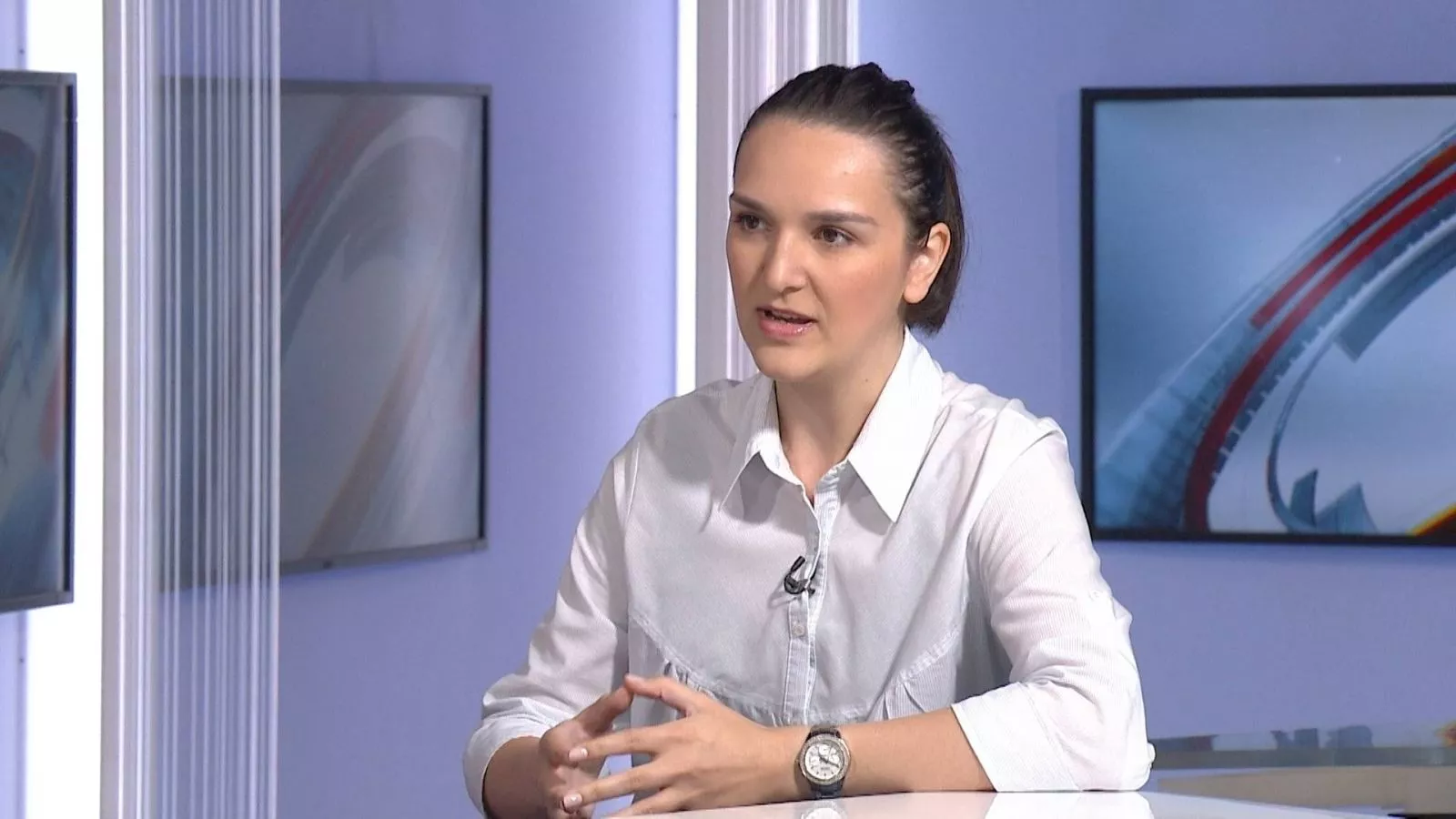
Since 2016, when Sebija Izetbegović took over the management of the Clinical Center of the University of Sarajevo, the number of hospital beds has decreased by 450. The number of clinics, doctors and other staff, and the scope of services provided at KCUS have also decreased, but the amount of money allocated to KCUS has remained the same, or even increased.
The budget for 2020 allocated by the Sarajevo Canton Health Insurance Fund is 7.5 million KM more than in the previous period. The public is not aware of the explanation for the increase in the allocation while the hospital is reducing its capacity.
Sources from KCUS, speaking to the Patria News Agency, are outraged by the situation in this hospital. They claim that doctors work in an atmosphere of fear and a complete absence of any moral principles. Patients, who are the most affected, often witness this. One such example is still ongoing, concerning the girl Nadin Smajlović, for whom KCUS has no therapy, and Izetbegović has publicly banned the girl's treatment. Such a statement has passed completely without reaction from all children's rights protection associations, ombudsmen, medical chambers, and other institutions.
Those who dare to express their opinion or disagreement with the decisions of the General Director of KCUS, Sebija Izetbegović, face tried and tested methods – mobbing, intimidation, blackmail, or disciplinary action.
Experience, qualifications, and knowledge are secondary at KCUS, while suitability, not capability, is sought. How can common sense explain the departure of 162 specialist doctors? Only a few have come to KCUS, while some have not stayed long.
At KCUS, while the number of beds was being reduced, the number of surveillance cameras and security guards was increased. Fearing retaliation, doctors avoid direct meetings or conversations in places where cameras are installed. The methods introduced by Izetbegović to "establish order" are actually more methods of disciplining doctors. Can and should doctors work in such an atmosphere of constant surveillance? Why are they obliged to write reports about what they did that day, if the general director claims that "lazy people left on their own"? Why do doctors have to explain why they performed a CT scan, MRI, or some other diagnostic method on a patient?
Patria's sources, who have watched KCUS turn into a one-person company for years, state that no one is talking about the catastrophic consequences of merging clinics. With every merger of clinics or transformation of clinics into departments, the number of beds decreases. No one can say for sure what Izetbegović's ultimate goal is. Some speculate that the aim is a complete personnel collapse of KCUS to make room for the involvement of a foreign partner with the support of her husband's political associates and SDA.
And while Izetbegović claims that KCUS is working better than ever, the data clearly refutes her.
A large number of surgeries are no longer performed at KCUS, especially when it comes to pediatric surgeries. For example, data from 2014 shows that doctors Edo Omerbašić and Sanko Pandur operated on 68 children with congenital heart defects, aged 0 to 7 years.
The following year, Omerbašić operated on about 40 children. After he left KCUS, the number of operated children dropped to only six. An interesting case is that the youngest patient was born in 1980 (36 years old), and this operation is classified as pediatric because it concerns the repair of an atrial septal defect (ASD) and ventricular septal defect (VSD), which is one of the most common congenital heart defects. It is usually operated on in early childhood.
The number of these operations in 2017, 2018, and 2019 totaled six.
The fact that KCUS is heading in the wrong direction is also shown by the data that the hospital pharmacy is out of antibiotics, so for example, a patient cannot receive a prescribed therapy by an infectologist. Another problem is that such antibiotics are not available for free sale because they are injectable antibiotics intended for hospital therapies.
Informed sources claim that mortality at KCUS was 2%, and today it is 12%, which is six times higher than all European and world standards. Supporting this is the fact that an analysis of the justification for closing the Emergency Medical Unit (KUM) of KCUS on Mondays and Fridays has never been conducted. We never found out how many patients from the General Hospital "Prim.dr. Abdulah Nakaš" had to be immediately transferred to KCUS, and how many lost their lives in that time crunch. For six years now, Izetbegović's arbitrary decision to give her doctors days off has continued, despite the General Hospital being unable to provide services at the tertiary level of healthcare.
Such cases are an alarm for the competent institutions, first of all, professional ones such as medical chambers, and then for the competent inspection authorities, ministries of health, and ultimately, prosecutor's offices. Who, and with what right, endangers anyone's life? Who, and with what right, can prohibit anyone from treatment or coming to KCUS? And who, and with what right, determines who will live and how they will be treated?
Komentari (0)
Prijavite se za komentiranje
PrijavaJos nema komentara. Budite prvi!
Minuta
Sve →Iz drugih kategorija

High Representative Not Elected: Germans, French and British Sabotaged Americans, New Attempt at End of June

ČOVIĆ WITHOUT MERCY: How Those Who Brought Ademović to Office Created a Political Hell for Him



Sunny Saturday, quite warm



Tragedy in Albanian resort: Two minors drown












