
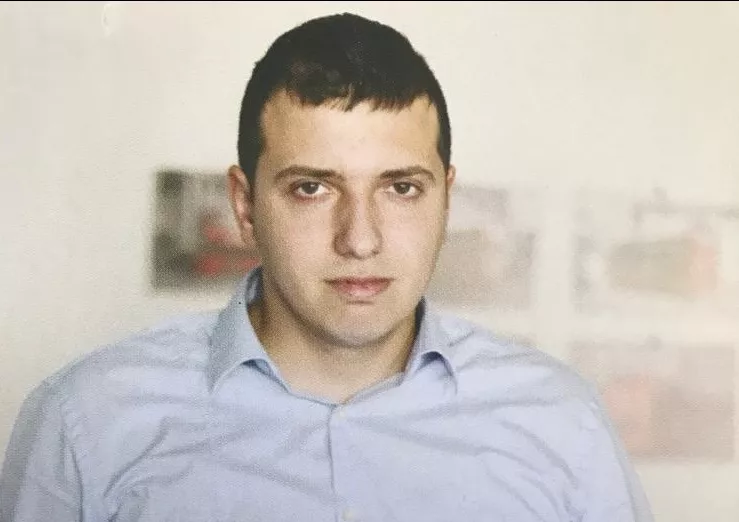
Interview by Armin Aljović
(Patria) - Macedonian historian Dejan Azeski says that the entry of Western Balkan countries into the European Union would not only mean economic progress for the region, "but it would, in a way, make the stories about border changes in the Balkans, which are always a source of conflict, meaningless."
"I sincerely believe in and rely on that concept, because the other one we have already seen (violent border changes) is not something I like. I don't like it and I don't believe in it, not only because of the bloodshed and horror it leaves behind, but also because it has proven to be unsuccessful," Azeski says in an interview for the Patria news agency, recounting that he recently stayed in the Rhine valley in Germany and France, which was a theater of conflict in the past, but has remained unchanged to this day as the border between the two countries.
"My colleague historian explained it to me like this: four major wars were fought on the Rhine River in the last 200 years, and the border still remains on the Rhine, neither left nor right of it."
"Also, from the assassination in Sarajevo in 1914 until today, a million people have died, but the border between Serbia and Bosnia and Herzegovina is still on the Drina. So, let's finally distance ourselves from that insane concept that we can change something by force. You can't take even a piece of bread from a person by force, let alone entire cities and countries. It is in human nature to respond to force with force. Even the weakest creatures, like a small chick or lamb, start to attack as soon as you push them against a wall. So, there will certainly be no violent border changes. Let's at least not have people die again for this provenly unsuccessful project."

Speaking about what the European Union would mean for Macedonia and the region in a cultural sense, the Macedonian historian says that for Macedonians, it would mean that after 1912, when the territory of geographical and ethnic Macedonia was divided, it would finally become a whole again. Macedonians expelled from the Greek cities of Lerin, Voden, and Kostur will be able to return to their birthplaces more often and, most importantly, communicate with each other without restrictions. For Albanians from Macedonia, Kosovo, and Albania, it will mean a peaceful unification of all territories where the Albanian people live. This concept – Azeski explains his vision of the Western Balkans in the EU – will connect Bosnia with Sandžak, as well as Serbia with Republika Srpska.
"So, I'm not saying that when the borders fall, there will be no more problems. But there will certainly be fewer problems than if we were to resolve borders bloody, as we did in the 90s."
Azeski also thinks in another direction. He admits that it is very difficult to predict when the Western Balkan countries might become EU members, so he advises that until then, countries in the region should focus more on the reforms that the EU requires of them, while accession to the EU as a formal act should be a consequence of successful reforms.
"The European Union is not a physical creation that can be touched, but rather a set of visionary ideas in one place."
"A set of ideas that are there with only one goal, and that is to improve the lives of all of us. Therefore, let's implement these ideas as soon as possible. Let's prove to Brussels that we can improve our own lives and thus become more valuable interlocutors and partners for Europe. We don't have to wait to become EU members to have a better healthcare and education system, as well as better infrastructure. We don't have to wait for accession to the European Union to provide greater support to the private sector or to improve business conditions. Even less do we have to wait for accession to the EU to ensure humane working conditions for our artists and athletes. As far as I am concerned, it is more important to implement these European values and principles as soon as possible and to become Europeans ourselves, while the act of joining this political alliance is just a formality."
When asked what the priority steps would be for preserving a multi-ethnic Western Balkans, Azeski answers: "Just one simple thing: tearing down borders and maximizing communication among people. So many borders in such a small space benefit no one."
"We cannot gain trust among ourselves because we actually socialize very little. I traveled from Macedonia to Sarajevo for more than ten hours because there are no planes, no trains... This discourages young people from traveling and socializing with each other. And if they don't socialize today, they won't know each other tomorrow and won't be able to do business together. If they don't do business together, they won't have common interests, which means they won't feel close to each other. Breaking down borders will initiate a cycle of bringing people closer together, which should trigger a domino effect for all these positive things I am listing. Without this, not only do we not have a multi-ethnic future for the Balkans, but we don't have any future at all," concludes Dejan Azeski.
Komentari (0)
Prijavite se za komentiranje
PrijavaJos nema komentara. Budite prvi!
Minuta
Sve →Iz drugih kategorija

High Representative Not Elected: Germans, French and British Sabotaged Americans, New Attempt at End of June

ČOVIĆ WITHOUT MERCY: How Those Who Brought Ademović to Office Created a Political Hell for Him



Sunny Saturday, quite warm



Tragedy in Albanian resort: Two minors drown












