

(Patria) - The fact is that in the case of filing an appeal against the judgment of the European Court of Human Rights in the case "Kovačević v. Bosnia and Herzegovina", the quietest are those policies that were the loudest in their criticism regarding the revision of the genocide verdict in the case "Bosnia and Herzegovina v. Serbia and Montenegro".
This "deathly silence" is the best confirmation of the hypocritical nature of precisely such policies, emphasizes legal expert Sifet Kukuruz.
He assesses that the strength of the criticism of these policies in the case of the revision of the genocide lawsuit and the depth of the silence in the case of filing an appeal against the judgment in the case "Kovačević v. Bosnia and Herzegovina" shows the full splendor of their hypocrisy.
"Judgments of the European Court of Human Rights annul the effects of aggression against RBiH, and any challenge to such judgments, especially one sponsored by the political leadership of the state that committed aggression against RBiH, actually represents a continuation of the aggression."
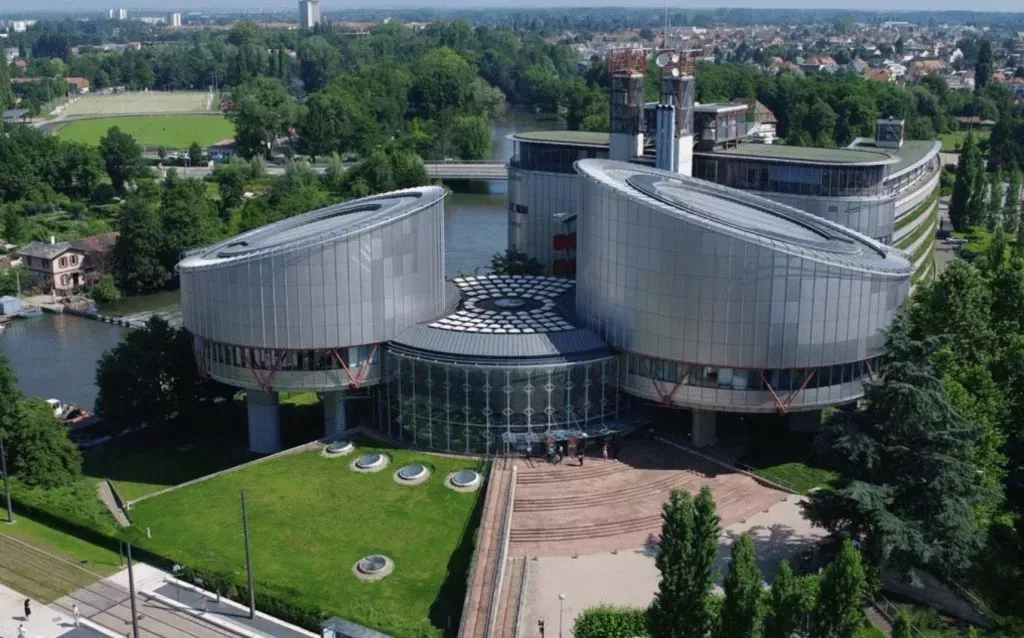
However, what should particularly concern the citizens of Bosnia and Herzegovina is the fact that certain policies in Bosnia and Herzegovina are being placed in the service of aggression and crime.
The judgment of the European Court of Human Rights is an effort to annul the crime, and an appeal against the judgment is an attempt to give legal form and validity to the crime itself and its results.
Filing an appeal against the judgment of the European Court of Human Rights annuls the declarative and extremely hypocritical commitment to a civic state of Bosnia and Herzegovina by those policies that are in power today, and which have very often publicly identified and declared themselves as pioneers of the civic idea.
As is often the case throughout history, the truth of the thought that every idea, concept, platform, and program resembles more the people who implement it than the ideas and principles it proclaims and invokes is confirmed today.
Thus, today, the pioneers of the civic idea, liberalism, and human rights here are becoming the gravediggers of that very idea.
It is obvious that the filing of an appeal against the judgment in this specific case has the main goal of preserving the effects of aggression, genocide, ethnic cleansing, and other forms of mass crimes committed in Bosnia and Herzegovina.
Given the fact that the judgment eliminates the effects of aggression and crimes from legal existence, it is clear that the policies that oppose it, by filing an appeal or tacitly approving its filing, are of the opinion that crime should be rewarded through the establishment of a state organization that inherits the spirit of crime.
The filing of the appeal confirms the commitment of the policies that sponsored it, as well as the policies that carried out its filing, to the Dayton solutions.
The appeal is clear evidence of opposition to the European perspective of Bosnia and Herzegovina and a negation of the Brussels solutions, which indicates that in Bosnia and Herzegovina, as well as in its immediate surroundings, there are policies that are waiting for their new opportunity, for whom the Dayton "solutions" are legally and civilizationally acceptable.

The policies that have opted for filing an appeal have shown unambiguous support and commitment to solutions that are the result of crime and unlawful use of force.
Thus, in this specific case, the appeal against the judgment, instead of a legal remedy, proves to be a continuation of therapy whose ultimate goal is the euthanasia of Bosnia and Herzegovina.
However, Bosnia and Herzegovina and its citizens, as well as the European Court of Human Rights, have so far shown that they have the strength to defeat the forces of darkness, regardless of their false brilliance, which will inevitably be the case here as well, because the European Court decides on the basis of European law, not European politics.
Nevertheless, it is important for history to record and mark the policies that have been opponents of Bosnia and Herzegovina as a modern European state," stated Kukuruz.
Komentari (0)
Prijavite se za komentiranje
PrijavaJos nema komentara. Budite prvi!
Minuta
Sve →Iz drugih kategorija

High Representative Not Elected: Germans, French and British Against Americans, New Attempt at End of June

ČOVIĆ WITHOUT MERCY: How Those Who Brought Ademović to Office Created a Political Hell for Him



Sunny Saturday, quite warm



Tragedy in Albanian resort: Two minors drown












