
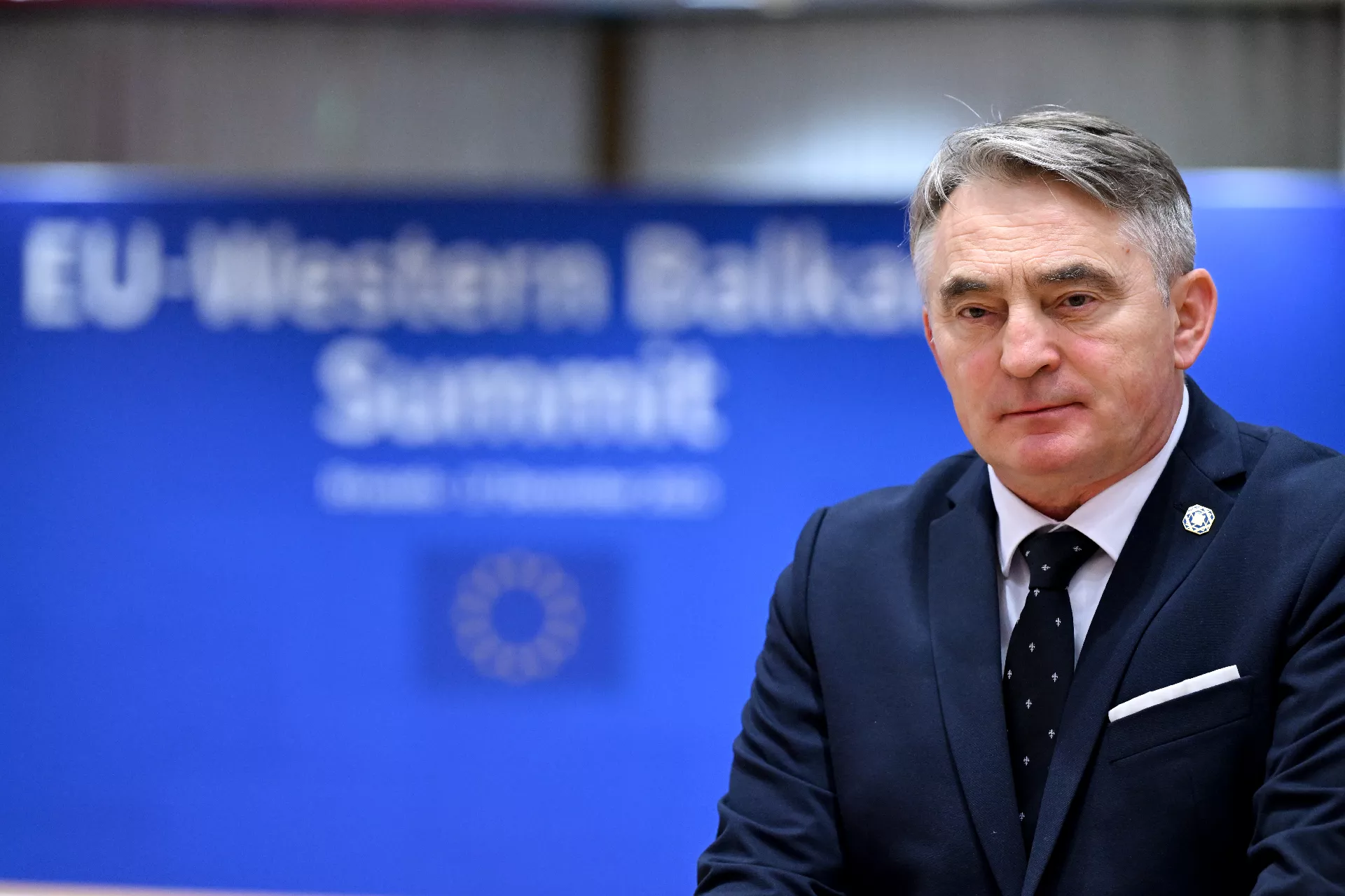
(Patria) - Chairman of the BiH Presidency Željko Komšić addressed the EU-Western Balkans Summit in Brussels today.
At the beginning of his address, Komšić thanked the President of the European Council Antonio Costa and the President of the European Commission Ursula von der Leyen for the invitation to participate.
He said he would take the opportunity to share his views on the future of Bosnia and Herzegovina's integration into the EU.
- In this endeavor, I have a problem deciding to what extent to criticize Bosnia and Herzegovina's lack of serious achievements on the path to the EU, and how to express my disappointment and concern for the future of the enlargement process to the Western Balkans.
We have witnessed the regrettable failure of the BiH Council of Ministers to adopt draft laws on courts, laws on the High Judicial and Prosecutorial Council, and decisions on establishing the Chief Negotiator's Office, which, ultimately, must be appointed by the Presidency of Bosnia and Herzegovina, in several attempts - said Komšić.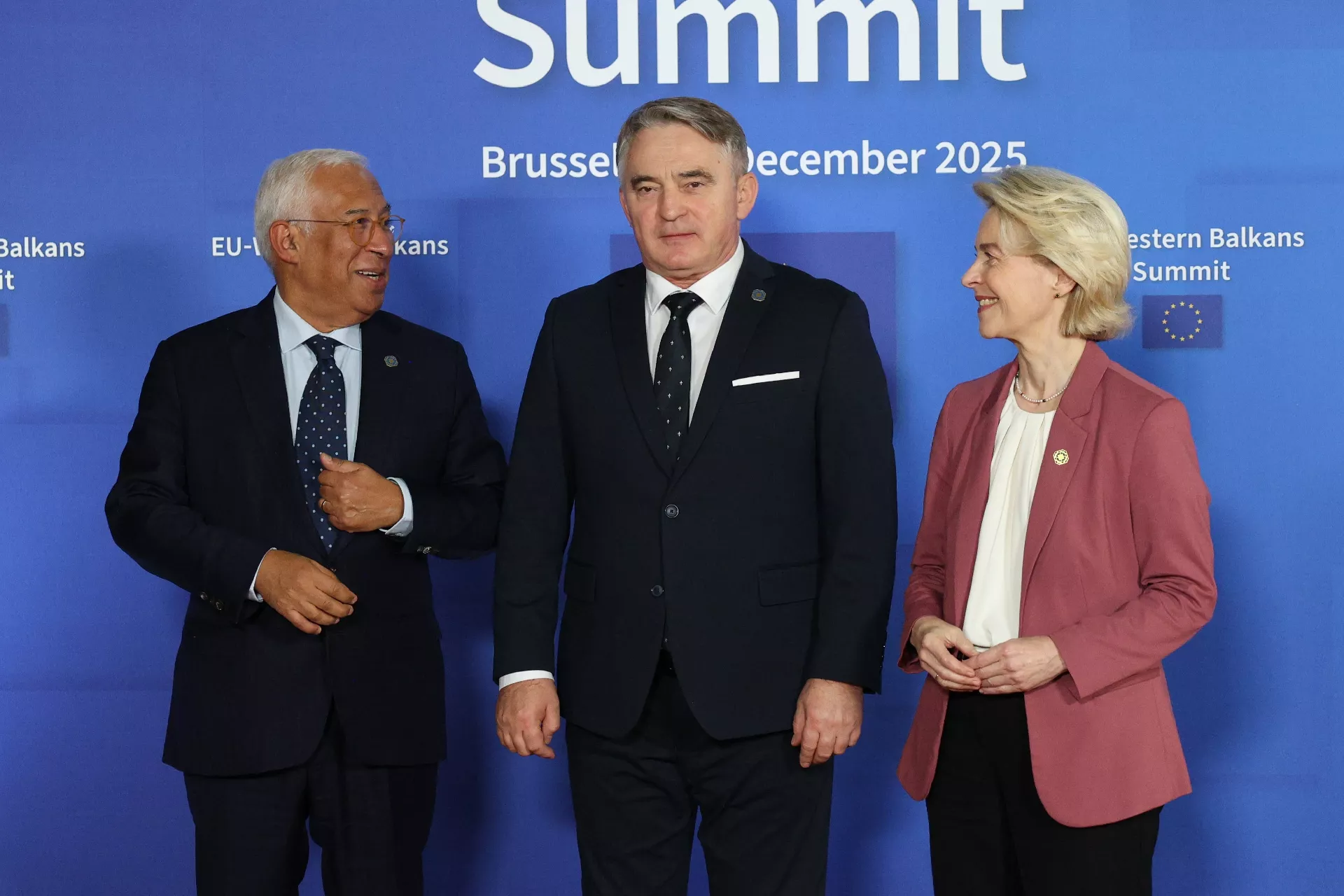
He asked how to comment on the failure to meet these elementary requirements, when Bosnia and Herzegovina is expected to make further efforts to fulfill the 14 key priorities from the European Commission's Opinion of 2019.
- First of all, allow me to express my satisfaction regarding several points from the draft conclusions of the European Council on Bosnia and Herzegovina, which will be considered tomorrow, and which I had the opportunity to see.
Primarily, "the EU's unequivocal commitment to the perspective of Bosnia and Herzegovina as a single, united and sovereign country."
Furthermore, how Bosnia and Herzegovina must "ensure equality and non-discrimination of all citizens, primarily by implementing the Sejdić-Finci group of judgments rendered by the European Court of Human Rights".
Particularly emphasizing that "no step that would hinder the implementation of these judgments or deepen divisions should be taken." I also fully agree that "the integrity of the electoral process must be improved before the General Elections in 2026."
Indeed, we have ratified the cooperation agreement with Eurojust. Also, the agreement with Frontex is already in provisional application, which has enabled the deployment of Frontex personnel.
The Personal Data Law and the Border Control Law have been amended to meet the necessary conditions - said Komšić.
Finally, he continued in his address, the Reform Agenda was adopted at the last moment to enable the implementation of the Growth Plan for Bosnia and Herzegovina.
- However, we still need to appoint a coordinator for the implementation of this program, as well as an IPA coordinator, and develop a National Plan for the Adoption of EU Acquis.
Like many citizens of Bosnia and Herzegovina, I believe this is too little and too slow. As the draft conclusions of the European Council also note, "reform dynamics remain stalled." This will affect the further implementation of the Growth Plan, the Green and Digital Agenda.
I expect the appointment of coordinators for the Growth Plan and IPA coordinator to become subjects of constant political struggles based on the ethnic distribution of power.
Even the diversification of our gas supply, which currently comes exclusively from Russia, is subject to political conditioning by the ruling HDZ BiH, a Croatian party that controls local institutions in the territories through which the Southern Gas Interconnection should pass.
This southern gas pipeline is intended to connect Bosnia and Herzegovina with the LNG terminal in Krk, Croatia. This fact is being used to pressure multi-ethnic political parties in Bosnia and Herzegovina to adopt an election law that deepens ethnic divisions contrary to the judgments of the European Court of Human Rights.
Now we have a new element - the clearly expressed interest of the United States to develop, build, maintain, and operate this gas pipeline. This could be a solution.
The introduction of digital signal was halted for a decade, until mid-this year when it gradually began. Nevertheless, this has not helped the public media service and BHT, which is in debt due to entity obstruction in revenue distribution. This could lead to the shutdown of the public radio and television service of Bosnia and Herzegovina.
If you ask me how to get out of all these problems and how to approach challenges correctly - I will tell you - through democracy. As I understand it, the Commission recently presented a document called "European Democracy Shield," proposing a series of concrete measures aimed at strengthening, protecting, and promoting strong and resilient democracies across the EU.
I believe that candidate countries for EU membership should also participate in this in some way.
I believe that one of the fundamental problems generating stagnation in Bosnia and Herzegovina is precisely the lack of true democracy - emphasizes Komšić.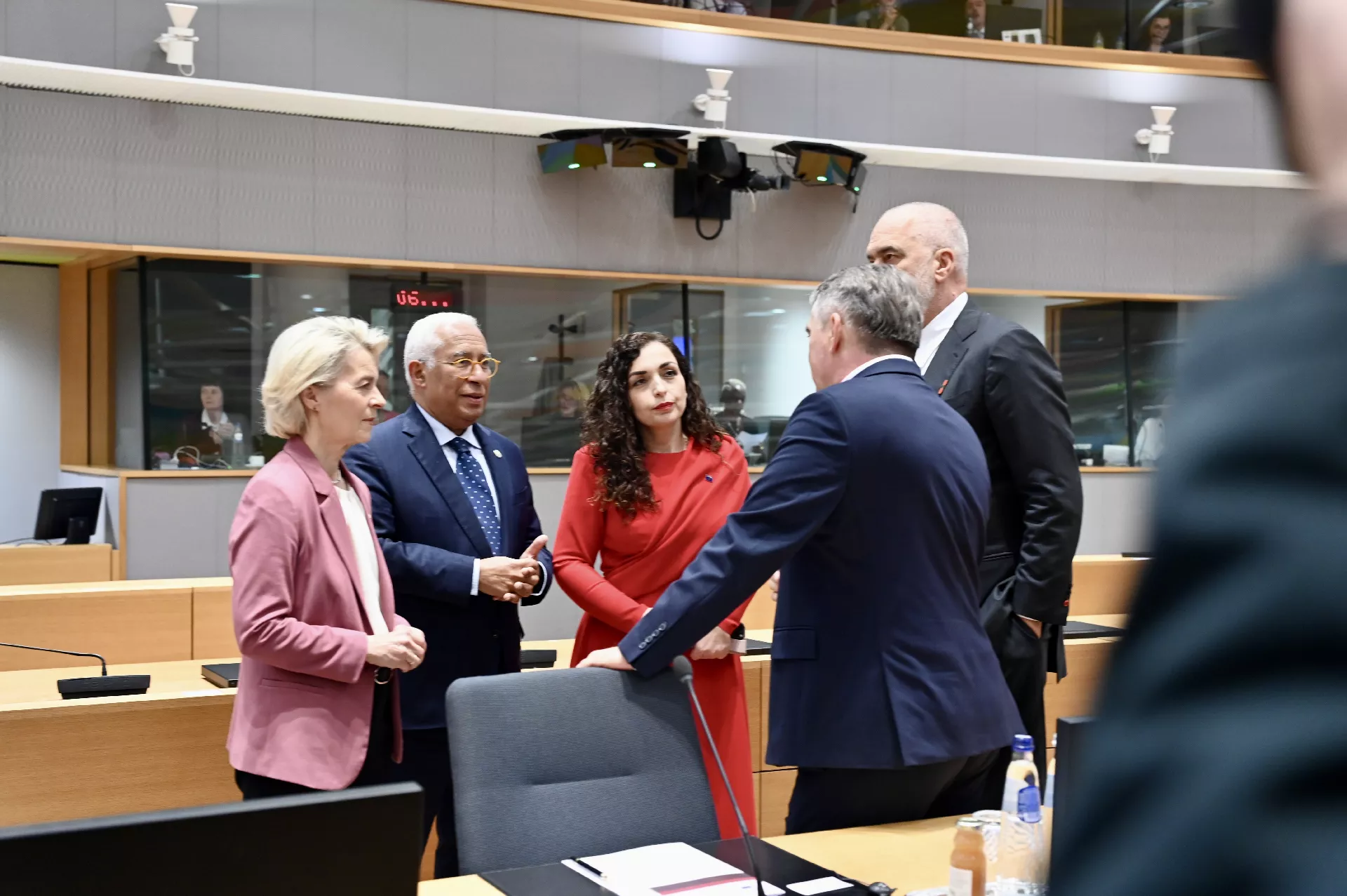
He reminds that three decades ago, the Dayton Peace Agreement created a Constitution where democracy was perverted by the ethnic division of power in decision-making.
- The idea of stopping the war through ethnic balance has resulted in functional imbalance in peace.
This is precisely why two ethnic ministers can outvote their eight colleagues in the BiH Council of Ministers and halt key decisions on the EU path.
Furthermore, voting in the Parliamentary Assembly requires ethnic and entity majorities that can halt even proposals that pass the Council of Ministers if they involve fragile coalitions.
In the Presidency of Bosnia and Herzegovina, we must have absolute unanimity on matters of armed forces and defense, and just one conditional veto can halt foreign policy decisions.
This is why our alignment with the EU's Common Foreign and Security Policy is so difficult to achieve. Especially in such complex geopolitical circumstances.
If we were to apply the principles of full democracy, all the aforementioned decisions on Bosnia and Herzegovina's EU path could be made without vetoes, and I believe we would be among the first on the path to the EU.
Unfortunately, the current ethnic distribution of power prevents a true pro-European political majority from making decisions. At the same time, ethnic Bosniaks, who most support the EU path, are falsely accused of being "radical Islamists," which they have never been.
The goal of such a narrative is to delegitimize their "European" potential and prevent the use of full democracy.
Radical right-wing, anti-European parties from the EU, the region, and their satellites in Bosnia and Herzegovina strongly support this narrative with the ultimate goal of halting Bosnia and Herzegovina on its European path and making my country disappear from the political map of Europe.
Their plan is to block all BiH institutions and make decision-making impossible. To prevent the General Elections in 2026 by preventing their financing.
They initiate conflicts and promote the narrative of Bosnia and Herzegovina as a failed state, waiting for a favorable geopolitical environment for the disintegration of Bosnia and Herzegovina.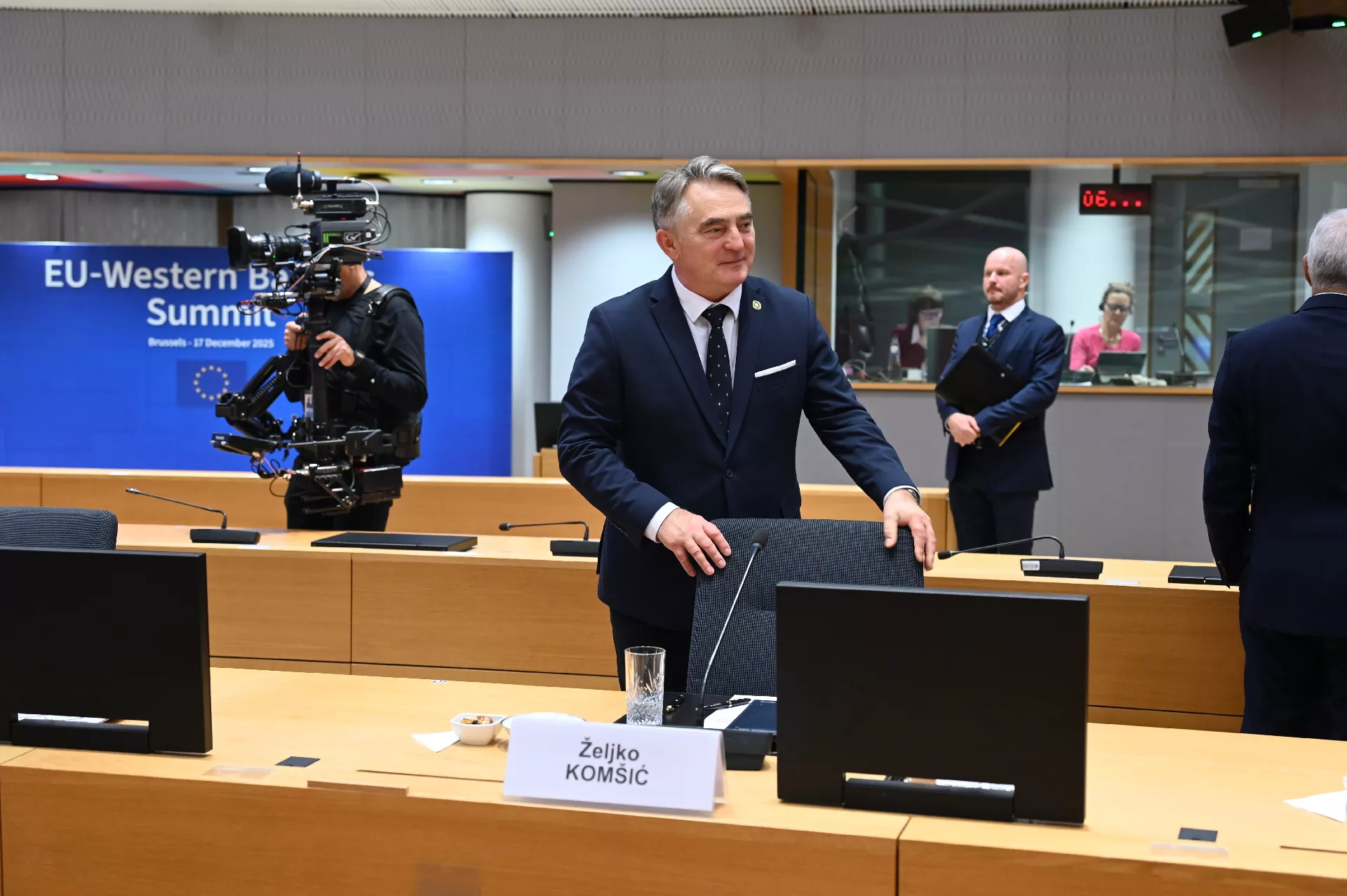
It should be clear that these anti-European forces will not succeed in this, but these efforts can seriously undermine our EU path. They will not succeed because the majority of citizens of Bosnia and Herzegovina are against such a scenario, regardless of ethnic affiliation.
Recent public opinion polls show that 70% of citizens of Bosnia and Herzegovina are in favor of EU integration. This is because democracy and the dream of a European future for Bosnia and Herzegovina must, and will, prevail. The dream that democracy in Portugal, Germany, and Bosnia and Herzegovina means the same thing - concluded Komšić.
Komentari (0)
Prijavite se za komentiranje
PrijavaJos nema komentara. Budite prvi!
Minuta
Sve →Iz drugih kategorija

High Representative Not Elected: Germans, French and British Sabotaged Americans, New Attempt at End of June

ČOVIĆ WITHOUT MERCY: How Those Who Brought Ademović to Office Created a Political Hell for Him



Sunny Saturday, quite warm



Tragedy in Albanian resort: Two minors drown












