
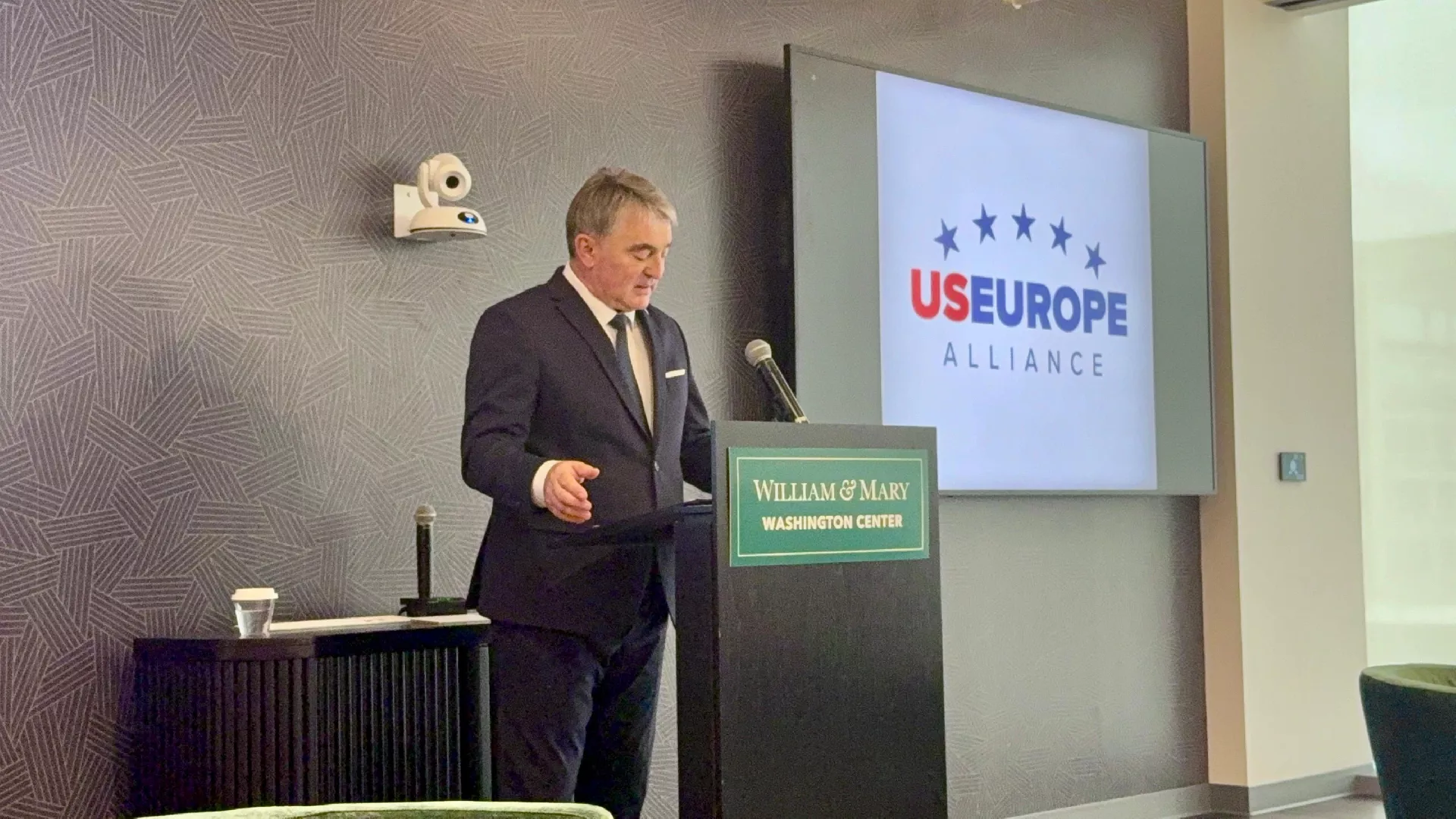
(Patria) - Chairman of the Presidency of Bosnia and Herzegovina Željko Komšić participated as the keynote speaker at the International Conference "30 Years After the Dayton Peace Agreement", held in Washington, at the invitation of the Vice President of the US-Europe Alliance organization from Washington, Reuf Bajrović.
The conference was held at the William & Mary Washington Center and brought together experts, diplomats, representatives of the academic community, and political leaders who discussed the legacy of the Dayton Peace Agreement, the current political situation in Bosnia and Herzegovina, and the prospects for future development and security in the region.
- Thirty years ago, the signing of the General Framework Agreement in Bosnia and Herzegovina established peace and ended a three-and-a-half-year bloody war that was accompanied by the most severe forms of war crimes and ethnic violence, including genocide.
Dayton enabled peace. Although that peace has not always been perfect or complete - it has become a fact in the daily lives of Bosnian citizens, and that fact has no alternative - Komšić said.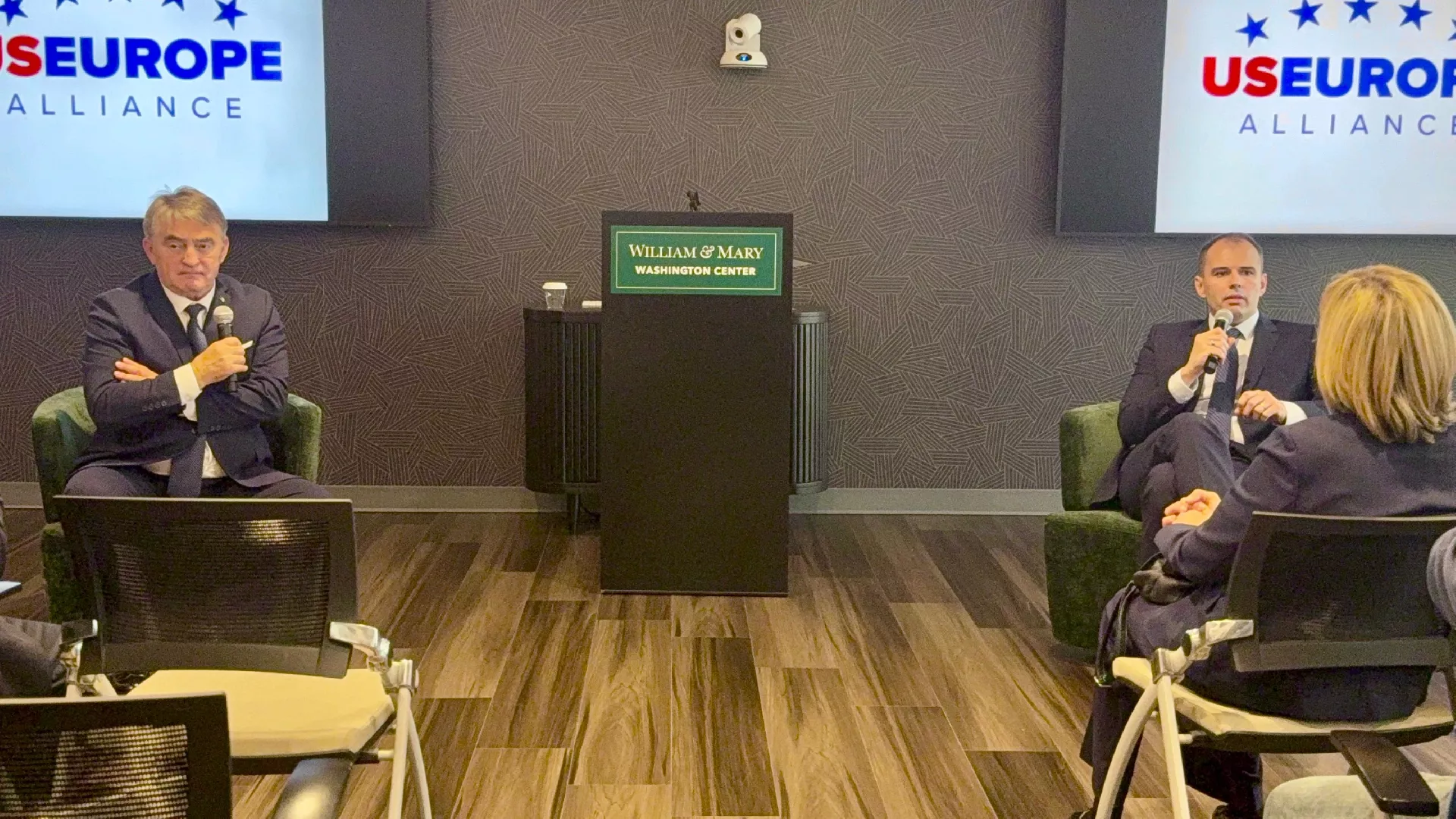
The Dayton Peace Agreement, he continued in his address, also confirmed the state-legal continuity of BiH, which is clearly visible from the first article of the Constitution of Bosnia and Herzegovina.
- While fully aware that we fought for our own country and its survival ourselves and with great sacrifices, we remain deeply grateful, first and foremost, to the United States of America, but also to other friendly countries, for their political and all other forms of assistance.
Without them, the survival of Bosnia and Herzegovina would be in serious doubt. By establishing lasting peace, Bosnia and Herzegovina had the opportunity to build its independence and sovereignty through political, economic, infrastructural, and general social recovery - said Komšić.
He then briefly outlined our successes and achievements over the past thirty years.
- According to UNHCR data, more than 1,000,000 former refugees and displaced persons returned to Bosnia and Herzegovina after the war. We have established a number of institutions that protect the sovereignty and political integrity of Bosnia and Herzegovina through institutional memory.
This continuity of statehood has enabled the establishment of various forms of business and social cooperation among peoples and citizens, and the free movement of goods and capital has unified economic integration between communities - Komšić emphasized.
He stressed that Bosnia and Herzegovina has recorded, with a few exceptions, continuous thirty-year economic growth between two and five percent. Our exports continue to grow to both European and global markets.
On the political level, he added, Bosnia and Herzegovina's path towards the EU and NATO is firmly established - this path has been difficult and full of obstacles.
- In March 2024, by decision of the European Council, we opened accession negotiations with the European Union, seventeen years after signing the Stabilization and Association Agreement.
Since 2008, we have been part of NATO's Membership Action Plan, and by adopting all annual reform programs, we continue to build the defense and security capacities of Bosnia and Herzegovina.
The defense capacity building package adopted at the NATO summit in Madrid further supports us in strengthening interoperability with NATO standards and processes - Komšić noted.
Having witnessed the war, but also all post-war processes, he stated that it is not unreasonable for him to say that the Dayton Agreement is the most successful peace agreement and creation of American diplomacy in the last century.
- However, although the country has made impressive progress in the last thirty years, the post-Dayton structure has not made the necessary leap in terms of improving human rights, political equality of all citizens, and establishing a fairer political system. This remains the biggest flaw in the constitutional framework of Bosnian society.
In order to continue to bear the title of the most successful peace agreement, it is natural that it be upgraded along the way. This is not, as opponents of Bosnian existence claim, the building of a new nation. It is the strengthening of world peace.
We are witnessing that recent years have been marked by the biggest crises of security and political instability in Bosnia and Herzegovina - said Komšić.
He emphasized that there is no one in the country or in Europe who does not recognize that political aggression is still ongoing and is being realized through the policies of separatist forces in BiH, which are actively supported by Belgrade and Zagreb. This is the legacy of the defeated military aggressions of neighboring countries from the previous war.
- These attacks on the Bosnian state have become commonplace precisely because the current constitutional framework rewards, rather than discourages, the logic of ethno-national policies - substituting democratic pluralism and civic equality with territorial control and ethnic exclusivity.
This is precisely what numerous judgments of the European Court of Human Rights testify to, which call for the removal of ethnic discrimination and demand the introduction of civic standards into the political system of Bosnia and Herzegovina - states Komšić.
In Bosnia and Herzegovina, he adds, there is a critical mass capable of implementing such reforms, but it needs the real support of international democratic forces.
- Such an undertaking strengthens world peace in the new geopolitical reality where the superiority of force over international law is realized at the expense of small states and unfinished peace and democratic processes, among which is Bosnia and Herzegovina.
I recently spoke about the embargo on democracy in Bosnia and Herzegovina. If the implementation of this embargo continues, separatist policies based on ethno-national exclusivity and producing constant instability will prevail.
They are the source of chronic dysfunctionality that prevents the development of true democracy, because our Constitution violates almost all European values, democratic principles, and human rights standards on the Old Continent.
However, American wisdom in concluding the General Framework Agreement left a natural corrective for such shortcomings. Precisely through the Dayton Agreement, i.e., the Constitution of BiH, it is stipulated that the European Convention on Human Rights has primacy over the Constitution of BiH.
Therefore, the implementation of the judgments of the European Court of Human Rights and the introduction of a civic model into the political system of Bosnia and Herzegovina are not contrary to the Dayton Agreement and the Constitution of Bosnia and Herzegovina.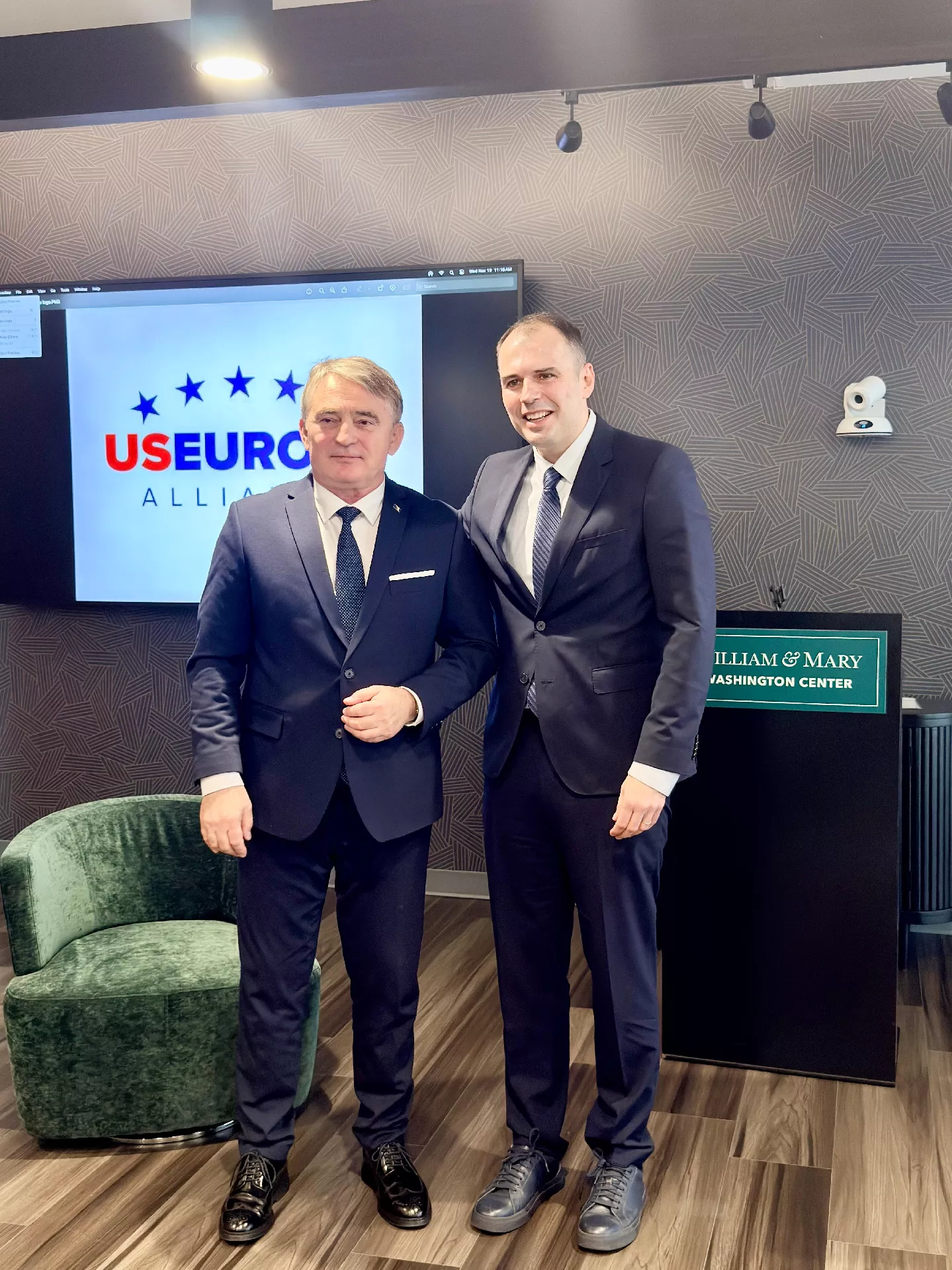
On the contrary, these obligations arise from our Constitution, as well as from the natural upgrading and modernization of the constitutional and social framework in Bosnia and Herzegovina.
Finally, considering global trends from our Bosnian perspective, I want to emphasize that the Dayton Agreement, with all its shortcomings, is a pillar that needs further development. Our Bosnian peace is already longer-lasting than the Versailles peace, and perhaps even more stable than the Yalta peace, despite the constant winds of new wars.
Bosnia and Herzegovina lives its peace in a peculiar way that offers hope that it will last, no matter how often it seems to be fundamentally disturbed. The people of this country and the country itself cannot be attacked without serious consequences, and that is what provides some guarantee that peace will last.
Therefore, today, while especially thanking the American soldiers who guarded our peace long after the war, I also believe in the Bosnian idea that made it possible - the idea of freedom, equality, and justice. Bosnia and Herzegovina exists on these values, because they are not only Bosnian, but also universal values.
They oblige us never again to allow our destiny to be decided by those who once tried to destroy it - concluded Željko Komšić in his address.
Komentari (0)
Prijavite se za komentiranje
PrijavaJos nema komentara. Budite prvi!
Minuta
Sve →Iz drugih kategorija

High Representative Not Elected: Germans, French and British Sabotaged Americans, New Attempt at End of June

ČOVIĆ WITHOUT MERCY: How Those Who Brought Ademović to Office Created a Political Hell for Him



Sunny Saturday, quite warm



Tragedy in Albanian resort: Two minors drown












