
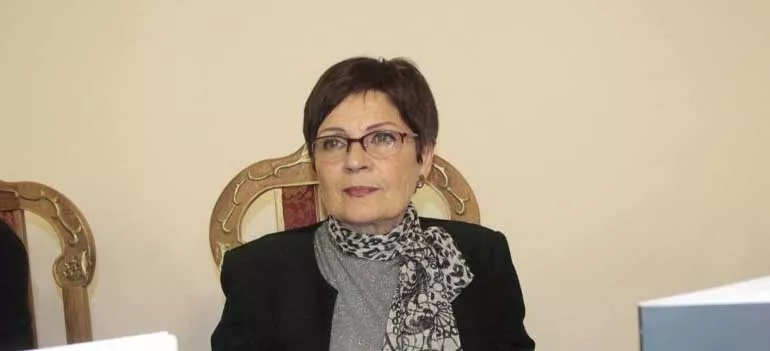
Bh. news agency Patria presents the second part of the analysis by Prof. Dr. Hanka Vajzović, full professor at the Faculty of Political Science, University of Sarajevo.
Which nation's language do you speak?
The essence of the story about renaming the subject from Bosnian language to the Language of the Bosniak People is more or less known, as the case has rightly received significant media publicity. Nevertheless, it is not superfluous to briefly recall. The Republican Pedagogical Institute of Republika Srpska (supposedly an Institute, but certainly not without the knowledge of the superior Ministry of Education and the Government of the so-called smaller entity) decided, after a year-long agony of the constituent Bosniaks (parents and their children), the so-called returnees with entity citizenship of Republika Srpska (!?), to finally resolve the issue by abruptly passing a decision to comply with their requests. A solution was offered, one might say, a compromise: you get the subject as you ask for it, but not as you want it, but as we determine it. You refer to the BiH Constitution, and we have our RS Constitution, so may the stronger and more persistent win. Bosniak children have thus finally formally realized their right to study their mother tongue, but it is no longer "Bosnian" but "Language of the Bosniak People." Thus, even 13 years after the decision of the Constitutional Court of BiH that entity constitutions must be harmonized with the state constitution, nothing has apparently been done regarding the language. On the contrary, when the years-long insistence that the language of the constituent Bosniaks, contrary to their will and the Constitution of our common state, be renamed "Bosniak" fails, then, instead, at least in the RS Constitution, it is stipulated that the language of the Serbs, the language of the Croats, and the language of the Bosniak people are in use. Convenient! Descriptive, one might say, quite "out of this world," but at least it is, well, equal – the same for everyone. However, based on such provisions, it was decided just before the start of this school year that Bosniak children would henceforth learn "The Language of the Bosniak People" in schools. It was not enough for them to have it in the Constitution, so now it is even more descriptive and even "worse" (it sounds somewhat like a "cousin") and, on top of that, extremely discriminatory, because in the same schools with so-called parallel programs, Serb and Croat children will have grades in Serbian or Croatian language, respectively. It is simply unbelievable – imagine if in America or Australia, classes were held in schools on "The Language of the English People"!? It is understood that in such a transformation, linguistically or formally semantically, there is nothing controversial, only that we should be afraid that soon, by analogy with the aforementioned case, there will be a Republic of the Serb People instead of Republika Srpska. Even then, nothing would change semantically (though, not functionally, essentially, in terms of the current situation on the ground), because even in the existing phrase (Republika Srpska), it is about a possessive adjective (Serbian) that someone once (accidentally, unversed in grammar?) slipped in. Of course, I won't go into that further this time - that's a different story.
Instead, I will remind those less informed that discussions about the name of the Bosniak language, or debates about the official language in Republika Srpska, took place much earlier, long ago, or continuously for years. Thus, in Serbia, as early as 1998 (less than three years after the end of the war), the Management Board of Matica srpska officially decided that it was not and could not be the Bosnian language, but the Bosniak language, with the explanation that the name Bosnian hides the Bosniaks' aspiration "for a unitary BiH, in which they and their language would rule." And later (2001/2002), the same request from Republika Srpska (that Bosnian should be changed to Bosniak language "unless some force in democracy says otherwise"), only then with an even harsher explanation from the then SDS representative in the National Assembly of Republika Srpska, Desanka Rađević: "Those who advocate for it to be Bosnian want," she sharply emphasized, "to commit genocide." (sic!). Discussions about the language also took place in the Federation, especially in connection with amendments to the Constitution of Republika Srpska. Bosniaks reacted to all of this by adopting the Charter on the Bosnian Language, which states, among other things, that "The Bosnian language is the language of Bosniaks and all those who feel it is theirs under this name," and that "Manipulating the name Bosnian language for political purposes (...) does not call into question the credibility of using this name by Bosniaks in a national sense." And so, from time to time, someone often brings up this topic and tries to capitalize on it politically, including during preparations for the census. And then sharp remarks, fierce and nationalistic, but also more moderate ones, were made from Republika Srpska: We do not dispute the right of Bosniaks to have their language, but it cannot be called Bosnian but Bosniak. Bosniaks then responded en masse with arguments: Bosnian is a historical fact and an internationally recognized language, for which, according to the 1991 census, about 1,640,000 citizens declared themselves, and we, despite your political provocations, know that we have the right to choose the name of our language as we wish. And so, everyone their own way. Years pass, and the problems seem as if the war was yesterday.
Our so-called Constitution is to blame for everything
What is currently happening in the educational system of Republika Srpska is merely an illustration, a detail from the overall picture. There are many questions that still confuse citizens today, almost 20 years after Dayton. Some of them relate to politics, some to elementary logic.
- How is it possible that someone offered and someone else accepted such a bizarrely unrepeatable political identity for a civilized, let's say democratic, European country: a state = one republic of one of the three so-called constituent peoples + one state federation + one district (a district of municipal rank), belonging to no one and everyone?
- How is it possible that even after two decades since the end of the war, we still do not have a Constitution but some long-functionally outdated Peace Agreement and its Annex 4, along with excessively autonomous, independent, unharmonized constitutions of entities, districts, cantons (almost even local communities)? After all, if Dayton was a means to stop the war, the question is why we are still holding onto it so desperately (it's not perhaps... just in case).
- How is it possible that citizens of a small country with about 3.8 million inhabitants must have dual internal citizenship (state + entity) and that some basic human rights are conditioned by it, because if this nonsense is not accepted, rights are simply taken away (District, Pilav case, Law on Residence, election of members of the Presidency, etc.)?
- How is it possible that, for example, Bosniaks are the majority people in the country (almost 50%), but are treated as a minority in one entity or in some cantons; it is similar with the other two constituent peoples – one is a majority, the other a minority, and then different human rights are conditioned by this? It is probably no longer useful to talk about the disenfranchisement of non-constituent peoples.
- How is it possible that 51% of the territory of the "state Federation" is allocated to two constituent peoples (with almost 2,400,000 inhabitants), and 49% of the state territory to the "republic" (and onomastically reserved for only one people – Serb), which has almost half fewer inhabitants or just over 1,300,000?
- How was it possible to accept all of that back then (Dayton Agreement), and yet, over two decades, change almost nothing, and still try to divide the state and promote the story that it is composed of entities instead of being divided into them, thus preparing the reform of only the federations, actually the first project of the "third," and then the idea of (con)federalization – the looser, the easier it falls apart.
And so on – we ask ourselves how, and we witness that it is possible. We ask ourselves why, and we all know the answer. We do not have a state, not even a properly "drawn" one on paper, let alone a functional and legally regulated one. Republika Srpska mocks it and threatens secession, and Dodik calls it a devilish, rotten, tragicomic, institutional monster, a dying country, a wrong story, generously contributing to it becoming even worse. Until when? One can hope – until the new government, elections are imminent. We all know that the foundations are flawed, that the roof is leaking, but also that the government is trying to deal only with the windows and furniture. And even when we ask ourselves who is to blame for everything being so terrible – politics or the people, it seems we cannot move beyond the eternal dilemma: the chicken or the egg? In any case, if nothing significant begins to change in the coming period, or at least if we do not stop the collapse of the state and society, may God help us. The first line of defense will be in the halls of the Parliamentary Assembly of Bosnia and Herzegovina. If there are no results and progress there, everything else will remain the same or simply become an irrelevant story.
Komentari (0)
Prijavite se za komentiranje
PrijavaJos nema komentara. Budite prvi!
Minuta
Sve →Iz drugih kategorija

High Representative Not Elected: Germans, French and British Sabotaged Americans, New Attempt at End of June

ČOVIĆ WITHOUT MERCY: How Those Who Brought Ademović to Office Created a Political Hell for Him



Sunny Saturday, quite warm



Tragedy in Albanian resort: Two minors drown












