
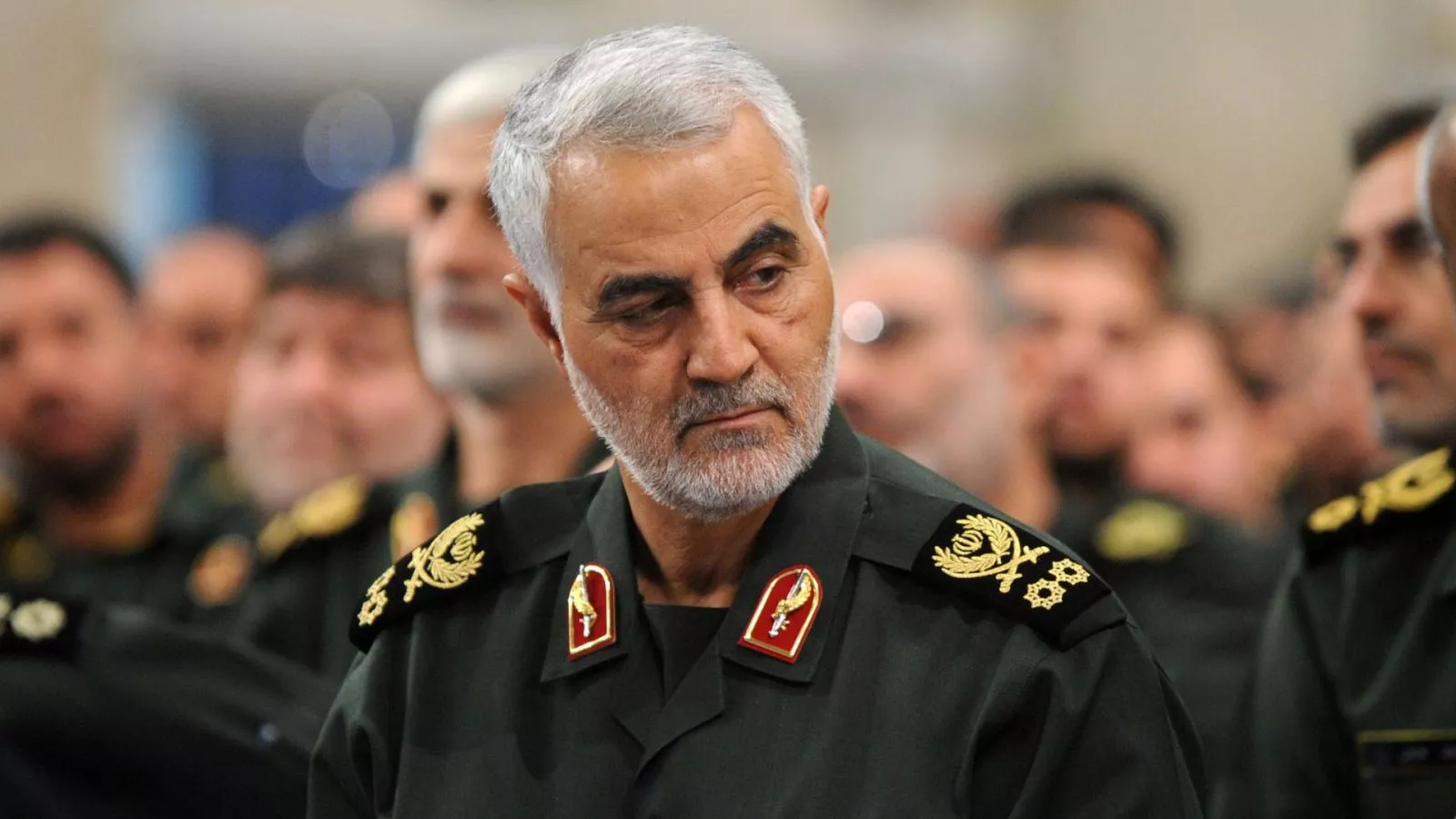
(Patria) – Following the US assassination of one of the commanders of the Iranian Revolutionary Guard, General Qassem Soleimani, Western media are trying to present as accurate a picture as possible of the man who is considered the 'second most influential figure in Iran after Ayatollah Khamenei'.
Perceived as a hero in his country, Soleimani was once called a 'living martyr of the revolution' by Iran's Supreme Leader Khamenei himself (who was his only superior).
However, the US considered the Iranian general a blatant killer.

Trump stated via Twitter that 'although Iran will never admit it, Soleimani was a hated figure in the country and was feared. They are not nearly as sad as their leaders portray to the world. He should have been killed many years ago!'
He also wrote that Soleimani was responsible for 'the deaths and serious injuries of thousands of Americans over a long period, and was planning many more killings... but was caught'.
One of the most powerful men in Iran, Soleimani was a controversial figure. He led the so-called 'Quds Force' (al-Quds Arabic for 'holy' is usually used for Jerusalem), specializing in unconventional warfare and military intelligence.
Since 1998, Soleimani had been the commander of the Quds branch for extraterritorial operations, and as such, he supported paramilitary groups in many countries, such as Hezbollah in Lebanon, Hamas and Palestinian Islamic Jihad in Palestinian Gaza and the West Bank, Yemen's Houthis, as well as Shia militias in Iraq, Syria, and Afghanistan.
The US considers the Quds a foreign terrorist organization.
Soleimani began his military career on the front lines in the early eighties, during the eight-year war between Iran and Iraq, when he became a prominent figure in Iran and played a key role in expanding Iranian influence in the Middle East.
- He spent his whole life fighting. His soldiers love him. He is a quiet, charismatic guy, a genius in strategy and tactical operations, General Mark Hertling, a security, intelligence, and terrorism analyst, described him once to CNN.
The US Pentagon claims that Soleimani and his troops 'are responsible for the deaths of hundreds of Americans and coalition forces, as well as the injuries of thousands more'.
Known as Iran's 'shadow commander', Soleimani was the chief architect of Iran's military operations in Iraq and Syria.
US officials believe that during the war in Iraq, it was Soleimani's units that supplied Iraqi insurgents with specially made bombs capable of penetrating armor, a deadly weapon against US forces in that country, which Iran denied.
During the war against ISIL, Soleimani frequently stayed on the front lines in Iraq, assisting Shia paramilitary forces in the fight against extremists.
US officials claim that Soleimani was involved in the attempted assassination of the Saudi ambassador to the US in 2011 at Cafe Milano in Washington.
They also accused him of orchestrating recent attacks on coalition forces' bases in Iraq, including an attack on December 27 that killed an American contractor and Iraqi personnel.
Abu Mahdi al-Muhandis, deputy leader of Iraq's Popular Mobilization Forces (PMF), also lost his life in Friday's assassination.
PMF members attempted to storm the US embassy in Baghdad a week earlier, which the Pentagon claims Soleimani also approved.
The PMF has existed since 2014 to fight ISIL, and consists of Shia paramilitary forces composed of former pro-Iranian paramilitary forces. It was officially recognized in Iraq in 2016 as an independent military force reporting to the prime minister, CNN writes.
Komentari (0)
Prijavite se za komentiranje
PrijavaJos nema komentara. Budite prvi!
Minuta
Sve →Iz drugih kategorija

High Representative Not Elected: Germans, French and British Sabotaged Americans, New Attempt at End of June

ČOVIĆ WITHOUT MERCY: How Those Who Brought Ademović to Office Created a Political Hell for Him



Sunny Saturday, quite warm



Tragedy in Albanian resort: Two minors drown












