
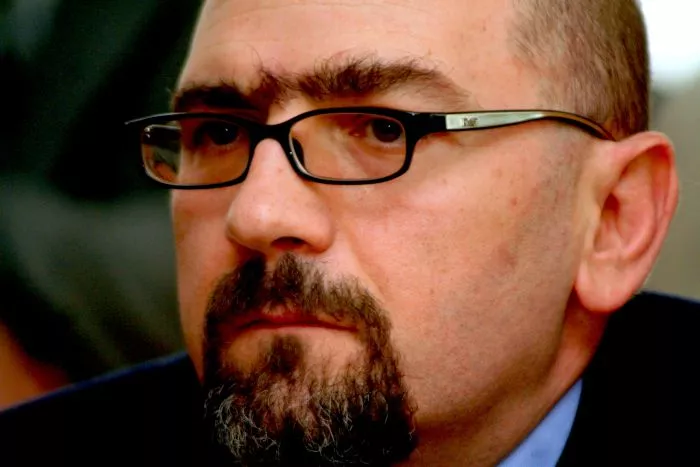
A column on the election of the Bosniak member of the BiH Presidency was written by the respected journalist and publicist Fatmir Alispahić for "Saff", where he has been a long-time collaborator. However, as "Saff" refused to publish it, the BiH news agency Patria is publishing Alispahić's column in its entirety and in its original form.
- Among Bosniaks, there has never been so much unity in slogans and so little in practice. Parties and candidates are full of talk about unity, but no one would give up anything in the name of unity. It turns out that unity is only if you vote for me, but if you vote for someone else, then that's no longer unity. When SDA says: "Unity is strength," it means that only SDA is unity and only SDA is strength. When the Reis-ul-Ulema Kavazović says in his Bayram sermon: "Choose those who advocate for the strength and unity of the people," then it is clearly placing the Islamic Community in the propaganda service of the SDA, precisely according to that totalitarian model that there is no unity, nor are there Bosniaks, without that one party. Otherwise, Reis Kavazović could have avoided the words "unity" and "strength," with which he emphasized the SDA's election slogan. The same applies to the SDP's slogan: "United." This call for unity and togetherness is rendered meaningless by the very fact that one party considers itself the absolute guarantor of unity, thereby excluding all others who should be part of that unity. How can you be united with yourself?
Among Serbs, unity is a non-partisan category, in the sense that they know the criteria that are unique and unifying for all parties. Among Bosniaks, however, unity is a party deception, and that is why it does not exist. As long as the criteria that are binding for everyone are not defined among Bosniaks – as a kind of national program – and as long as a consensus of all parties is not established around these unquestionable points, every talk about unity will be futile. It is a bit audacious to advocate for unity from any (one) party position. It turns out that one party is so intelligent that it can bear the burden of the entire nation. Only national institutions, which gather academic intelligence, can do that; parties cannot do anything, precisely because relations within parties are not structured by intelligence and patriotism, but by personnel and material interests. The essence is that national unity cannot be partisan, because it is no longer unity. This unity can only be non-partisan, or all-partisan, in the sense that there are points of patriotic identification that separate the wheat from the chaff: those who are desirable to represent the nation, from those others who would serve other nations as representatives of our nation. And why have Bosniaks not established these criteria so far, so that parties do not call us to this non-existent, deceptive, partisan unity in these or past elections? Because the strategic goal of the Dayton ideology was to disarm Bosniaks – of weapons, economic power, media, institutions, and patriotism in politics – so that Bosniak politics would be a headless chicken. How is this done? Through a system of corruption and blackmail, by removing intelligent and incorruptible individuals from a nation in the name of so-called democratization and even more so-called standardization, and replacing them with half-people prone to selling their mother and paradise under their mother's feet. This is how it happened that the few Bosniak institutions, such as BZK "Preporod" and VKBI, acquired the characteristics of Bosniak politics, which is overly corrupt and subserviently linked to the Serb-Croat chain of power and influence. That is why the word "unity" has no meaning today, because it cannot transcend party frameworks, which ultimately means that national interests are merely a means to gain profiteering positions in various parliaments.
The worse will be worse, and the better will be down
A mature attempt to overcome party frameworks in the name of unity was the formation of the "Domovina" Coalition, which consists of the most diverse party profiles, ranging from SDA to SBB. The SDP is not in the coalition, which is "united" with itself through this abandonment, since several parties (DF, SDU, Union of Social Democrats) originated from the SDP. If the first step towards maturity was overcoming party frameworks in the name of a common goal, then the second step should be the nomination and election of the highest quality cadres, regardless of the party affiliation within that coalition. And that, unfortunately, did not happen.
The candidate of the "Domovina" Coalition, in fact the SDA, for the president/vice-president of Republika Srpska is Ramiz Salkić, who served as the vice-president of the National Assembly of RS in the past four years. Ramiz Salkić has occasionally spoken out about the discrimination of Bosniaks, but Enes Suljkanović, from the SDP, who was the vice-president of RS and is again a candidate for that position, is an absolute genius at stroking the pig against the grain, and will be remembered for participating in the celebration of the slavas of the genocidal entity, the celebration of "Republika Srpska Day," and for supporting the genocidal "law on residency" and the statement that RS is the better part of BiH. Stroking the pig against the grain has become the doctrine of Bosniak politicians in RS, for reasons unknown, and in the name of what interests. If anywhere in Europe there is space to continuously speak out against apartheid and terrorism, to open court proceedings, organize protests, etc., it is in RS. And surely the main voice should be held by the main representatives of the nation that is the victim of apartheid and terror, specifically Salkić and Suljkanović. Perhaps the emptiness and futility of Salkić's and Suljkanović's actions would not be noticed this time either, if they were not opposed by a Bosniak as a rival candidate and alternative, about whom we already know that he does not compromise with the genocidal practices of the genocidal entity, that he calls things by their right name, and that, as a non-political subject, he has fought more for the rights of returnees in recent years than any political subject in RS has. His name is Sejfudin Tokić, certainly one of the most media-savvy and clearest Bosniak politicians. Tokić moved to Banja Luka to fight for the rights of returnees as the founder of the Bosniak Movement for Equality, and to try to win the position of Vice-President of RS as an independent candidate. If one were to name the rhetorical model of Tokić's performance, one could say that he is – rhetorically Serbian – a man who speaks aggressively, boldly, clearly, directly, and is not easily confused. Serbs are masters of rhetoric, so even when they lie, they do so more convincingly than us who, even when defending the truth, speak into our laps, hiding our gaze and being careful not to offend any Serb or Croat with the truth about their evil and our good. It may seem that political rhetoric is something incidental, unimportant, incomprehensible – especially since politics in our country is structured under market stalls – but there is no nation without politics, nor politics without rhetoric, without the skill to say, think, and fight for what you want with words. That is why Sejfudin Tokić is important. That is why Dr. Mustafa Cerić is important. That is why every Bosniak in politics who does not speak into their lap and who is not afraid of cameras, hosts, or political rivals, but bases all their fear on obedience to God, is important.
Here we are faced with a concrete dilemma. Is it better for Bosniaks to have Ramiz Salkić or Enes Suljkanović as vice-presidents of Republika Srpska, or is it better to have Sejfudin Tokić? I think we all know the answer to this question. Sejfudin Tokić would do it better. Moreover, Salkić and Suljkanović had their chance, but it turned out that they remained silent on dozens of occasions when they should have reacted and protected the constitutional, civil, and human rights of Bosniaks. Especially the SDP candidate. Nevertheless, it seems that victory smiles upon Ramiz Salkić, and defeat threatens Sejfudin Tokić. This is not Salkić's victory, nor is it Tokić's defeat, but it is the victory of what is worse for Bosniaks compared to what is better for Bosniaks. If we were mature, which we are not, it would be completely normal for Salkić and Suljkanović to withdraw their candidacies in favor of Sejfudin Tokić, who would defend Bosniak interests better than both of them from the position of Vice-President of RS.
History is built by giants
The story of withdrawing candidacies necessarily leads us to the peak of the political stage and kitsch in the form of the Bosniak race for the position of member of the BiH Presidency. If such a calculation can be made in the race for the Vice-President of RS (because the position of President of RS in the genocidal entity is reserved only for a Serb, damn it), then the race for the Presidency of BiH is something like "You can be a star" - everyone watches, everyone cheers, everyone gets drunk. Who could withdraw from the race in whose name?
In the Bosniak race for the BiH Presidency, the most important thing is to detect the Greater Serbian and Greater Croatian ambition to have an anti-Bosniak, or at least a non-Bosniak, represent Bosniaks, someone who is insecure and afflicted with a colonial love for "superhumans," those Serbs and Croats. Such is, as has been proven, the SDP candidate Bakir Ha. In a logical sequence, it is assumed that the Bosniak, patriotic votes will be fragmented, so that the SDP candidate, whom Bosniak complexes, many so-called mixed marriages, many Serbs and Croats (out of malice) will vote for, can pass through that fragmentation, which can result in a critical mass of votes sufficient for Bakir Ha's victory. The fragmentation of Bosniak votes also implies the role of several "Trojan horses," such as Fahrudin Radončić and Sefer Halilović, whom, unfortunately, many Bosniaks have not yet seen through. In any case, this story boils down to the possibility that Bakir Izetbegović withdraws in favor of Dr. Mustafa Cerić, or that Dr. Mustafa Cerić withdraws in favor of Bakir Izetbegović. Only then can Bosniak unity be testified and the attempt to sneak Bakir Ha between Cerić and Izetbegović be prevented. But why would one of the two strongest Bosniak candidates withdraw in favor of the other?
If it were to happen at all, it is somehow implied that Dr. Cerić should withdraw in favor of Bakir Izetbegović, because, it is calculated, Bakir Izetbegović cannot fully understand these noble national sacrifices and goals; after all, he is a master of money and connections, not a master of spirituality. Why would Alija's son do something he doesn't understand? - and it is normal for us that someone who doesn't understand is in a position where someone who does understand should be. On the other hand, Dr. Cerić is a spiritual leader, he was the Reis-ul-Ulema, he understands what sacrifice for the common good is, his responsibility is greater, so he should implement the maxim "The wiser one gives way," which echoes as "A good person and a fool are the same." It turns out that Cerić is responsible for whether we will have this green Bakir or that red Bakir, and that the SDA has no national responsibility in that regard. This is also favored by the fact that Bakir Izetbegović has a large party behind him, while Dr. Cerić only has a great history behind him, but you can hang history when you don't live by history, but by what the party gives you. It is calculated that Bakir Izetbegović's withdrawal in favor of Dr. Cerić is a matter for the entire party, while Dr. Cerić's withdrawal in favor of Bakir Izetbegović is only a matter for Dr. Cerić himself.
It is not important at all here that Dr. Cerić is one of the 50 most important Muslims in the world, and that Bakir Izetbegović is only "Alija's son" by education, who became the crown prince in the SDA due to murky circumstances. Nor is it important that there is a heavenly difference between these two candidates when it comes to the interests, pride, honor, and historical responsibility of the Bosniak nation. The question only revolves around what Bakir cannot understand – because we know he is not capable – and what Dr. Cerić can understand, because he is bigger and more significant than that position in the BiH Presidency, so as the founder of the World Bosniak Congress and the Bosniak Academy, as a national leader, he should have the responsibility for the unity of Bosniaks, and save Bosniaks from the possibility of Serbs and Croats imposing their candidate in the Bosniak seat in the Presidency. There is one more important thing... If it is already calculated that Dr. Cerić could be defeated in the race for the BiH Presidency, there is only one way for him to triumphantly return to the head of the World Bosniak Congress, and among projects of national importance, such as the Bosniak Academy and the Museum of Genocide against Bosniaks... ...and that is to give a lesson in Bosniak unity, offering his sacrifice, his withdrawal, as a teaching, even if the worse remain on the surface, and the better sink. Of course, it would be great if the SDA had the capacity to understand this story, to confirm its Bosniak leadership by withdrawing Salkić and Izetbegović from the race, and leaving the victory to those who are truly better and more useful for the Bosniak nation. But the SDA no longer has leadership capacities; it is well known that the SDA is also a worn-out profiteering society, where relations are built on personal interests, while the nation is merely a means of labor, something like fuel, coal, heating oil, consumables.
Dr. Mustafa Cerić, on the other hand, is a historical figure – because during his tenure as Reis-ul-Ulema, more mosques, madrasas, and Islamic faculties were built in Bosnia than in any other period – which makes his responsibilities greater and more complex than those of a party, which, like any party, is a society of smugglers and profiteers. It is tragic that we are even discussing the possibility of a historical giant withdrawing in favor of murky and troublesome figures, whom you can find at every turn. But history is built on sacrifices and giants.
Post scriptum
The election of Dr. Cerić has no alternative
I am writing this postscript after "Saff" refused to publish this text, for which I was told it was - "pre-election promotion of Mustafa Cerić." I don't think Dr. Cerić needs any promotion. History promotes his name. The only question is whether Bosniaks, and "Saff" itself, can recognize that historical and Muslim responsibility to differentiate between various candidates and Dr. Cerić – an alim, a dignitary, our Nelson Mandela. Great shame looms over Bosniaks – if they do not elect Dr. Cerić, but elect some half-literate manipulator. Only a fool would feign impartiality in a choice that has no alternative.
I ask the respected Dr. Cerić not to withdraw his candidacy in the name of so-called unity. If anyone needs to withdraw their candidacy, it is Bakir Izetbegović, in the name of Dr. Mustafa Cerić's victory, and let the SDA and Reis-ul-Ulema Kavazović thus testify to their responsibility for the strength and unity of Bosniaks.
And if Bosniaks shame themselves before history – so be it destined – and one must not interfere with that Judgment. Much can be learned from shame and disgrace.
Komentari (0)
Prijavite se za komentiranje
PrijavaJos nema komentara. Budite prvi!
Minuta
Sve →Iz drugih kategorija

High Representative Not Elected: Germans, French and British Sabotaged Americans, New Attempt at End of June

ČOVIĆ WITHOUT MERCY: How Those Who Brought Ademović to Office Created a Political Hell for Him



Sunny Saturday, quite warm



Tragedy in Albanian resort: Two minors drown












