
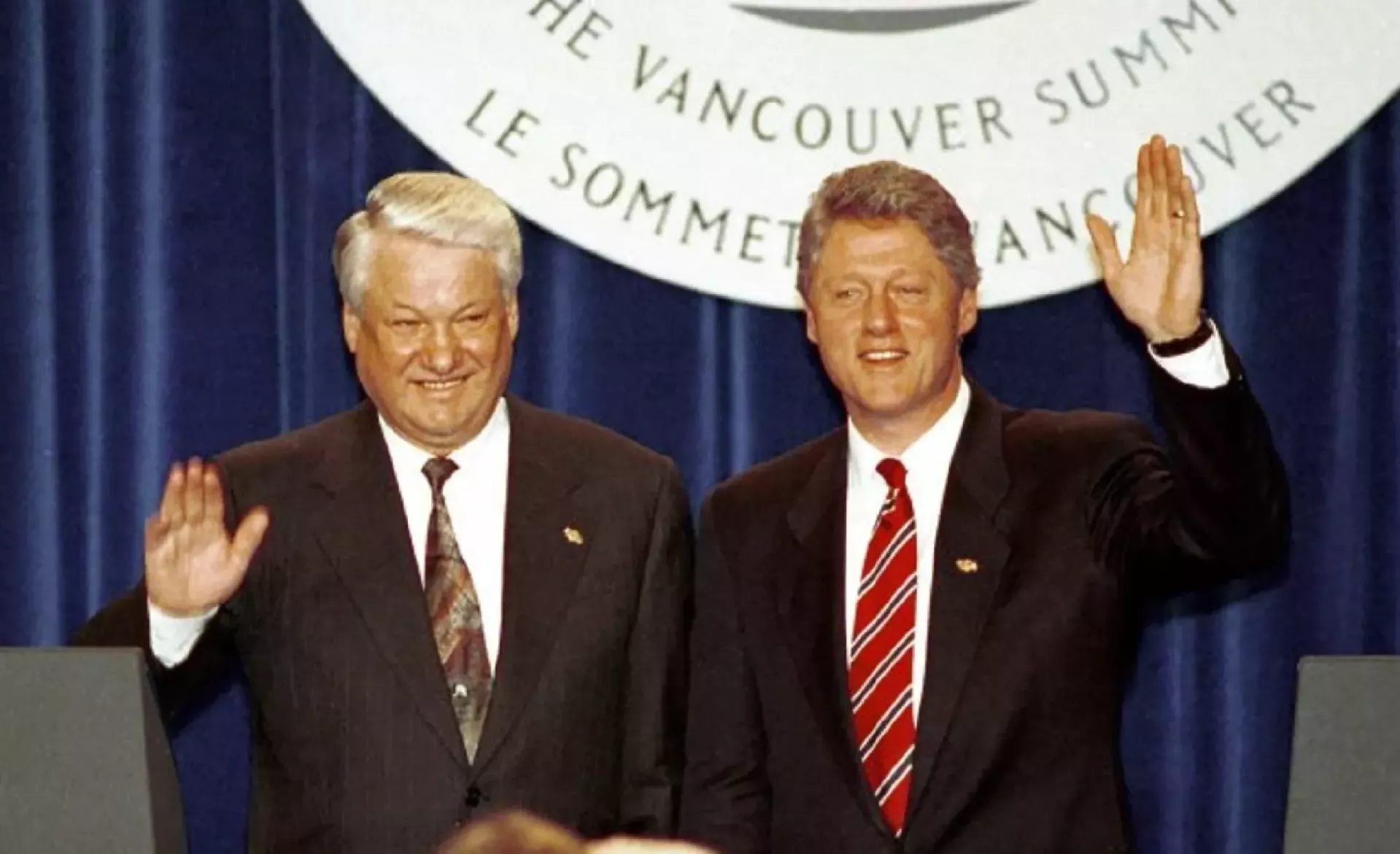
• At the Vancouver Summit on April 3, 1993, a conversation between Clinton and Yeltsin sealed the territorial division of Bosnia and Herzegovina
• Did Yeltsin clearly articulate only what the West deeply believed: "The embargo on Bosnia remains... especially if you know who the Muslims are"
By: Fuad Đidić
At a Circle 99 session on Sunday, July 6, 2025, we will reveal to our public declassified documents from the White House archives that were until recently "Top Secret".
We are presenting a few of the most intriguing details from the conversation between Boris Yeltsin and Bill Clinton on April 3, 1993, at the Vancouver Summit, when they discussed the fate of peace in Bosnia and Herzegovina, and mutually agreed on a key issue: what could and what absolutely could not be given to the "Muslims" in Bosnia.
The content of the "declassified" documents illustrates Russia's attitude towards Bosniaks to this day, but also a clear warning - what Clinton truly thought about the future structure of Bosnia and Herzegovina, and how much he truly believed that Bosnia and Herzegovina could look like a "normal country".
During a relaxed "working lunch" on a boat, along the idyllic coast of expansive Vancouver, Clinton and Yeltsin, as leaders of two state delegations, discussed delicate issues of the new security configuration of Europe, and according to these documents, there were no disagreements between them on any topic of conversation.
However, at the very end of the conversation, an unexpected turn occurred that threatened to disrupt this diplomatic "romance" of the two leaders' conversation when "accidentally" or "well-rehearsed" news arrived that "Bosnian Serbs have rejected the Vance-Owen peace plan for BiH".
From this moment on, a major diplomatic shift began between the two leaders regarding the initiative for the future of Bosnia.
Already slightly drunk, Yeltsin, as the documents reveal, diplomatically outmaneuvered Clinton on the issue of Bosnia.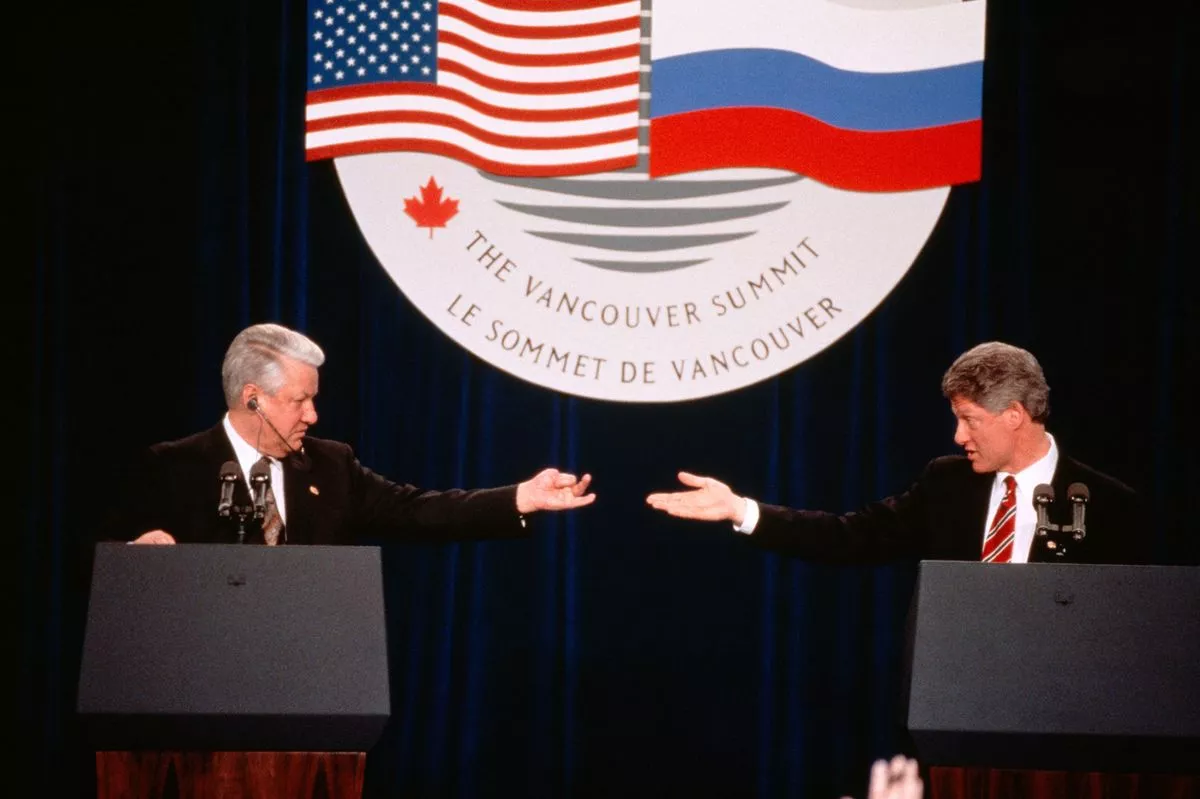
Vancouver Summit in 1993
When this news arrived, Yeltsin merely shrugged and casually added, "What can you do... Churkin did everything he could," justifying himself to Clinton, to whom he had promised in an early February 1993 phone call that Churkin, as his "credible negotiator"... "would do everything to convince Milošević and the Bosnian Serbs to accept this agreement".
Then followed Yeltsin's statement, drawing a deep "red line": "It is impossible for us to lift the embargo on Bosnia".
A careful analysis of the conversation reveals that Yeltsin complains about Churkin for not successfully completing the job with the Serbs, and then readily adds: "The talks should continue anyway".
With this move, Yeltsin not only takes the initiative by offering Clinton the next round of diplomatic negotiations, involving a new diplomatic player - Minister Kozyrev, but also diplomatically "dictates" the terms of future talks about Bosnia.
"We must support Kozyrev; if he fails in Bosnia, things will be very bad in Serbia," Yeltsin warned.
The impression from the document text is that Clinton is in "diplomatic defense," and all that remains is to respond with an "emotional offensive": "I feel pretty bad because the Serbs in Bosnia have free access to weapons from the old Yugoslav army, while the Muslims are left without weapons".
Preoccupied with his own "grand vision" of a new security configuration for Europe, Clinton does not want to contradict Yeltsin in any way on "small issues" like the issue of Bosnia.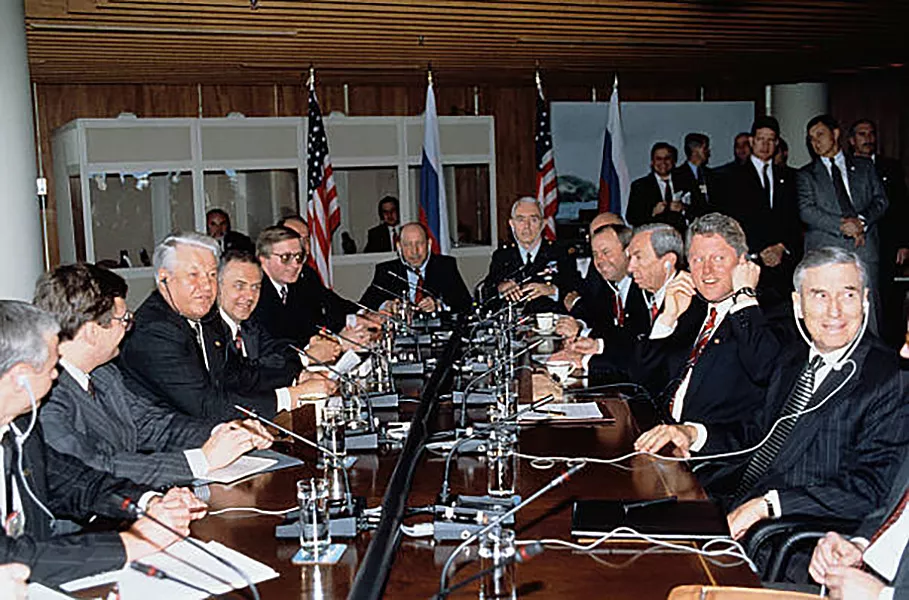
Kozyrev sat to Yeltsin's left
Of course, it remains incomprehensible even today how Clinton lost diplomatic initiative in such a way, that by conceding on these "small issues," as the issue of "Bosnia and Muslims in Bosnia" seemed, he would gain an advantage for the realization of his "grand vision" of Europe.
At the peak of the discussion about Bosnia, Yeltsin not only unreservedly rejects all of Clinton's suggestions about lifting the embargo on BiH, but also ruthlessly seals the fate of "Bosnian Muslims" as "potentially dangerous elements".
Here is Yeltsin's sentence that will have a significant impact on the fate of Bosniaks in the decades to come: "More weapons in that area could lead to thousands of new deaths, especially if you know who the Muslims are".
And now comes Clinton's statement of diplomatic and moral collapse: "They are killing each other without thinking".
This dialogue provides some important answers. But let's focus on Yeltsin for now.
Perhaps the most important is how Yeltsin, not Putin, is actually the author of the geopolitical strategy towards the "Muslims" of Bosnia, and the creator of the strategic axis "Russia-Serbia-Bosnian Serbs" which should be based on the destruction of "Bosnian Muslims" to whom weapons should never be given to defend themselves.
Furthermore, Yeltsin is the true author of the "Russian world," which calls Bosnia by the Russian term "oblast," which irresistibly reminds us of the parallel with Ukraine, where the war was initiated because it is merely a "Russian oblast" and an "invented country," and its people an "artificial" nation.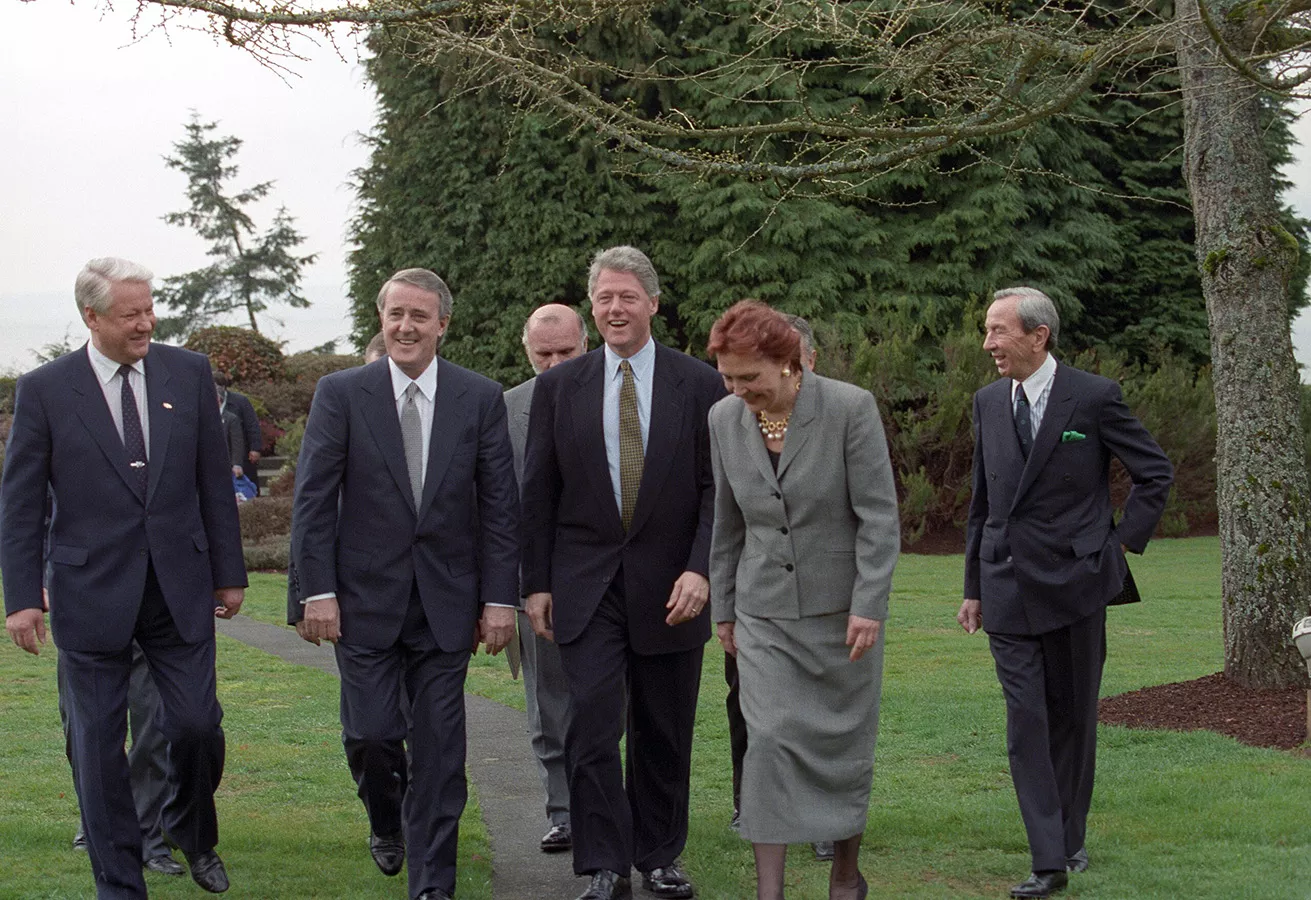
The Summit host was Canadian Prime Minister Brian Mulroney (between Yeltsin and Clinton)
Also, the real trust of Clinton in the Dayton Peace Agreement is called into question here, if he advocated so strongly for the Vance-Owen plan for dividing the country into three parts, and if he even tells Yeltsin: "We told the Bosnian Muslims to accept the Vance-Owen plan".
This conversation was a moment of diplomatic turning point when the issue of peace in Bosnia was being resolved through the Contact Group solution.
In this UN Security Council Group, Kozyrev certainly dominated with ideas about Bosnia as part of the "Russian world".
The political fate of this country was not decided by apathy, ignorance, apology, support, or criticism of the Russian right-wing's positions. The political fate of this country was decided by the affirmation of the same model: blocking, embargoes, fabrications, constructions, false justifications, and distorted narratives.
Yeltsin clearly articulated what the West deeply believed: "The embargo remains... especially if you know who the Muslims are..."
Since then, the political fate of Bosnia and Herzegovina has been shaped by the model of embargo, blockade...
All the way to the European Court of Human Rights, which, by overturning the "Kovačević" ruling, blocked the right to democracy.
Komentari (0)
Prijavite se za komentiranje
PrijavaJos nema komentara. Budite prvi!
Minuta
Sve →Iz drugih kategorija

High Representative Not Elected: Germans, French and British Sabotaged Americans, New Attempt at End of June

ČOVIĆ WITHOUT MERCY: How Those Who Brought Ademović to Office Created a Political Hell for Him



Sunny Saturday, quite warm



Tragedy in Albanian resort: Two minors drown












