
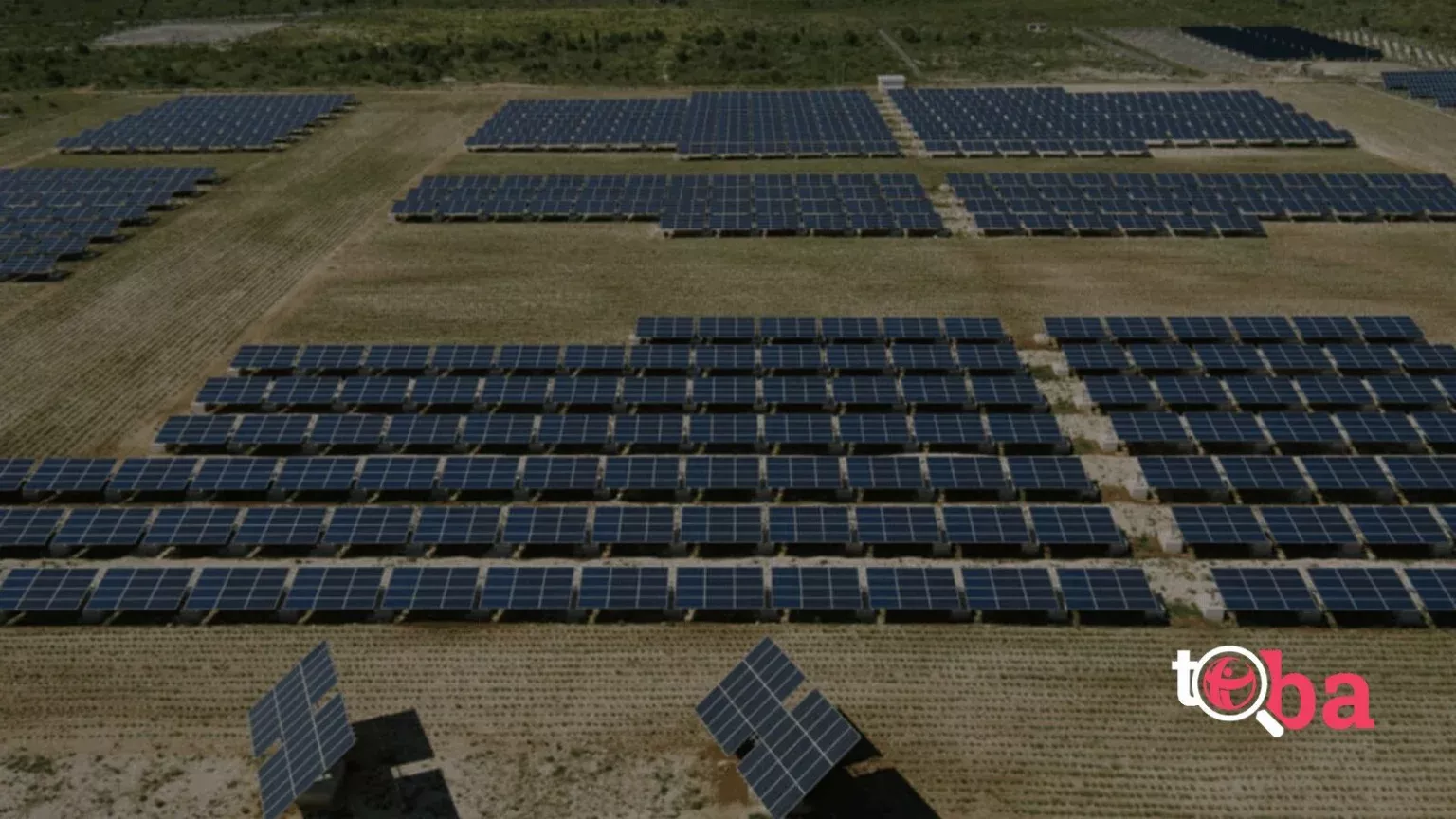
(Patria) - Hodovo, once a quiet zone north of Stolac, has transformed into the largest center for solar energy in Bosnia and Herzegovina over the past decade. Today, this area hosts over 156 MW of installed solar power capacity, with the Hodovo Solar Park (92.5 MW) and Stolac Solar Park (64 MW) accounting for the largest share, managed by the company Eco-Wat d.o.o., owned by the Brajković brothers. On this site, land was divided into micro-units, and this large project into multiple small power plants of up to 150 kW each to qualify for the incentive system and avoid paying concession fees.
A case study by TI BiH states that the development of this project began with small installations in 2012, when companies like GP Toming d.o.o., owned by Miro Tomas, and Bičakčić d.o.o., owned by former FBiH Prime Minister Edhem Bičakčić, installed the first small power plants, utilizing preferential feed-in tariffs that were up to ten times higher than the market price of electricity.
The key incentive mechanism was stipulated by the Law on the Use of Renewable Energy Sources and Efficient Cogeneration from 2013, which guaranteed the purchase of electricity at fixed prices financed by fees collected from citizens through their electricity consumption bills.
Such incentives enabled a rapid return on investment, for small power plants within 3 to 7 years. However, this system led to significant interest from investors with political connections in building power plants, resulting in the exceeding of issued dynamic quotas.
In the early phase of the sector's development, 16,969 kW more quotas were allocated, over 12 million KM were illegally paid out, and conflicts of interest were recorded, leading to an ongoing investigation by the Special Department for Corruption, Organized and Inter-Cantonal Crime (POSKOK) against the former director of the Operator for RES and Efficient Cogeneration, Boriša Misirača.
While information on how quotas were allocated was hidden within the Operator, tycoons with political connections dominated the Hodovo business zone. The largest installation in the business zone belongs to the company Eco-Wat d.o.o., owned by Dejan Brajković and his brother Tihomir, who is also known as the owner of the construction company Tibra Pacifik. Tihomir Brajković was convicted in 2019 for tax evasion amounting to 2.39 million KM. This company had previously received tens of millions of KM in subsidies for small hydropower plants.
How was the land acquired?
The rezoning of land previously contributed to the solar boom. Over 120 hectares of state agricultural and forest land in Hodovo were converted into construction land through the Spatial Plan of Stolac Municipality 2013-2023, and then sold at negligible prices (around 3 KM/m²). In 2022, Eco-Wat first reserved and then purchased 90 hectares of this land. The draft Spatial Plan 2024–2034 envisioned an expansion to over 1,200 hectares, but in November 2025, the cantonal inspection of HNK prohibited its implementation due to procedural omissions and non-compliance with cantonal plans.
Non-governmental organizations and civic initiatives like "Stolački otpor" (Stolac Resistance) have accused the local authorities of lack of transparency, absence of public discussions, and favoritism towards investors, while the local community sees minimal benefits despite large investments.
Similar criticisms were raised by auditors from the Office for Audit of Institutions of the Federation of Bosnia and Herzegovina regarding the operations of the Operator for RES and Efficient Cogeneration, who gave a negative opinion in their financial operations report due to material errors in financial statements and violations of the law, including non-disclosure of dynamic quotas and producer lists on the website, incomplete project registers, illegal employment without public advertisements, violations of the Public Procurement Law, and exceeding solar quotas outside the Action Plan.
Corruption Risks
The Hodovo case illustrates how a lack of transparency in the early stages of the energy transition can lead to profit accumulation within narrow circles with minimal benefit to the community. Legal shortcomings that allowed for the splitting of projects to enter the incentive system and avoid paying concession fees enabled preferential treatment for a number of investors who now achieve multiple times higher incentives and profits for the same amount of electricity produced.
To mitigate irregularities, a new Law on RES and Efficient Cogeneration was adopted in 2023, replacing feed-in tariffs with auction mechanisms, so-called FIT auctions for small plants up to 150 kW and FIP premiums for large projects. The first FIT auction was held in 2025 via the e-platform of the Operator for RES and Efficient Cogeneration, where investors compete for the most favorable terms, which should increase transparency and reduce costs. However, this has only resolved part of the problem regarding the distribution of incentives, while the splitting of such large projects continues to avoid concession fee payments and harm public finances.
Therefore, TI BiH proposed amendments to the laws regulating this area, which would treat more solar power plants of the same owner in the same location as a single project, thereby preventing abuses of the incentive and concession systems. Furthermore, the issue of rezoning and selling state land for energy projects remains, which should be carried out exclusively through public tenders with a starting price based on market value and independent assessment.
Komentari (0)
Prijavite se za komentiranje
PrijavaJos nema komentara. Budite prvi!
Minuta
Sve →Iz drugih kategorija

High Representative Not Elected: Germans, French and British Sabotaged Americans, New Attempt at End of June

ČOVIĆ WITHOUT MERCY: How Those Who Brought Ademović to Office Created a Political Hell for Him



Sunny Saturday, quite warm



Tragedy in Albanian resort: Two minors drown












