
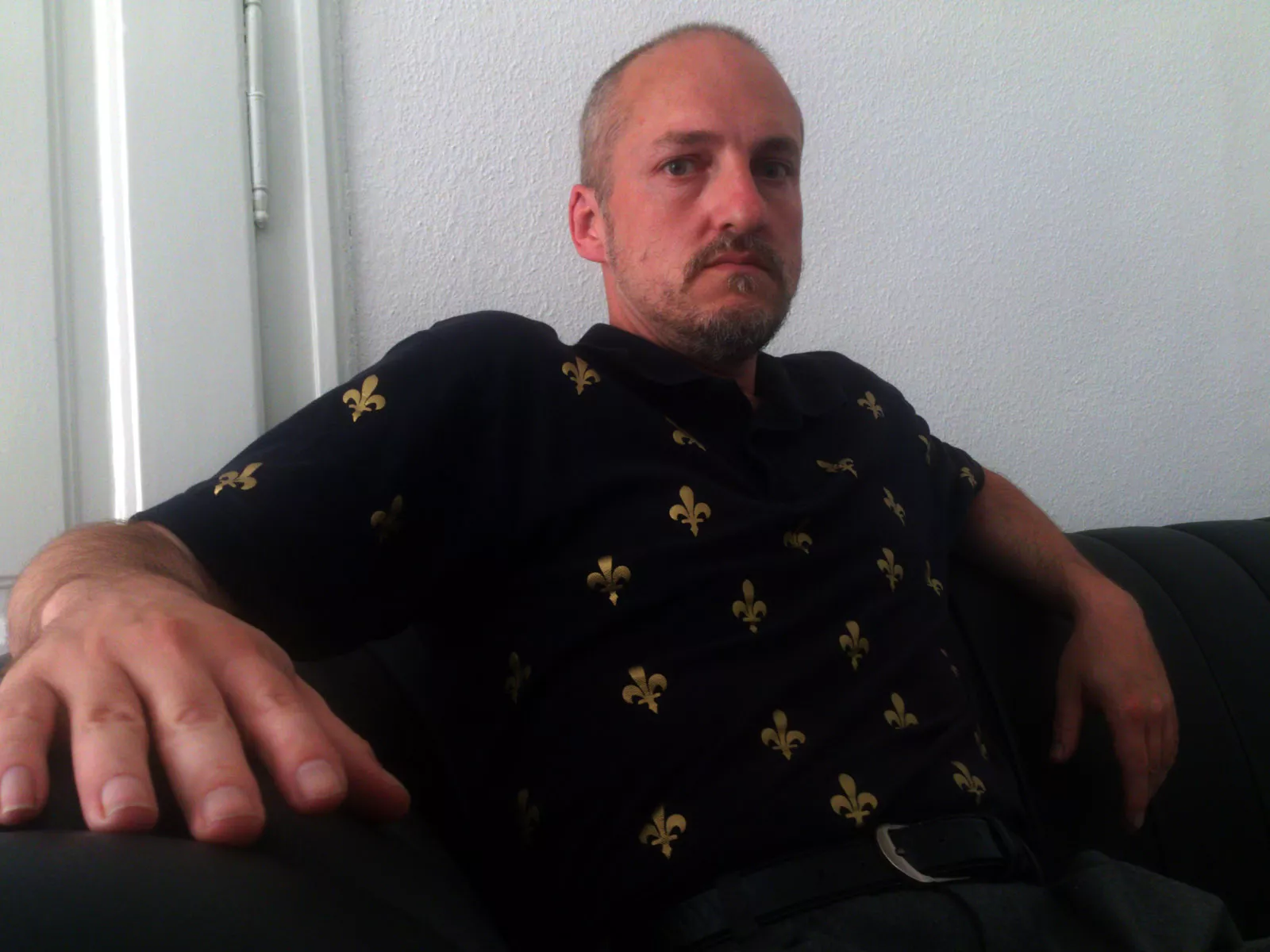
You have forgotten the real fighters, many have been humiliated and disappointed by the authorities, but despite that, for me, Bosnians and Herzegovinians remain the best people in Europe, says in a confession to the BH news agency Patria (NAP) Oliver Schweikard, a native German from Karlsruhe, a soldier, journalist, prisoner of war, special forces soldier, and former fighter of the Army of the Republic of Bosnia and Herzegovina.
His life story is at times unbelievable and miraculous. But he came to the interview prepared - with a "mountain" of documentation, war newspaper articles, photographs, and yellowed war certificates. This 44-year-old has been living in Bosnia and Herzegovina again for the last two years, where he spent the entire war.
He came, as he says for the Patria agency, to finish what he started - a book about the life adventure that marked him entirely. He doesn't have a publisher yet, and he wants to write in Bosnian. The proofreader of the book has promised to be the renowned BH poet Marko Vešović.
When he came to Croatia in 1992, first as a war correspondent, and then to northern Bosnia, he had no idea what awaited him.
- I came to BiH in August 1992. I was with HOS units when the First Krajina Corps attacked the area around Derventa. I came to this area as a journalist and I wanted to write a book then, but I had military education and decorations from the Bundeswehr. During that attack, my life was threatened, and I joined the defense and HOS units. I didn't have and didn't want to seek another choice - says Schweikard in very good Bosnian.

Schweikard in the Army of RBiH uniform: Participated in numerous actions
However, he says he was seriously wounded in the fighting by a mortar shell explosion, after which he was captured. Schweikard clearly emphasizes that it was clear to him from the very beginning who the aggressor was and what was happening in Bosnia and Herzegovina, which he says was not the case with his compatriots and official policy.
- Chetniks, aggressors, attacked us. I have no problem saying that today, because it is the truth and my wish is to repeat and spread that truth as much as possible - he adds.
After being captured, Schweikard, along with other non-Serbs, was taken to concentration camps. First, he says, he was taken to Banja Luka, where he was interrogated, and then to camps in Manjača and Batković. Finally, he was taken to the Kula camp near Sarajevo. He spent more than 14 months, 426 days, in captivity.
- I survived all kinds of torture, except sexual abuse. As I was wounded, they left me to bleed with the intention of losing my leg. However, there were people who helped me. In essence, the decoration from the German army saved my life. That medal was the reason for the Chetniks to believe that I was some important NATO officer, a specialist, and they kept me for exchange and display - Schweikard points out.
Indeed, Schweikard's statements are cited in Reuters reports from 1993 from the Manjača camp. At that time, as they reported, he spoke of hoping for a quick release. However, he had to take care of that himself.
- When I was brought to Kula, I took advantage of the guards' carelessness and escaped. They didn't know how to mine the area properly, so I found my way to Butmir. Without thinking, I put myself at the disposal of the Army of RBiH. They first took my statement, and then I joined the defense - he states.
According to the confirmation of the Army of RBiH dated December 6, 1995, signed by Brigadier Fikret Prevljak, Schweikard voluntarily joined the Army of RBiH on December 17, 1993, after his escape. He was a member of the 101st Motorized Brigade of the 1st Corps of the Army of RBiH. He acted as a special forces soldier, but as he says, due to his military education and experience from the German army, he performed other jobs and tasks. Why, after all this, did he decide to fight in a country that was foreign to him, instead of returning home and healing his wounds, we ask him.
- I had many reasons. I wanted revenge for what they had done. You can't just attack a country and kill people. I chose the right side. I had no dilemmas, although I had big problems later, but I don't regret it. No one agreed with me. UN members told me I had gone crazy - adds Schweikard, emphasizing that his father, who was a member of the Foreign Legion, supported him in what he was doing.

Confirmation from the State Commission that Schweikard was in concentration camps
According to his words, he participated in numerous actions of the Army of RBiH, including the liberation of the Nišići plateau.
- Member of the Presidency of BiH Željko Komšić received the "Golden Lily" and deserved it. I didn't, although I was nominated, because it would have caused me problems in Germany. But it is unlikely that the action would have been successful as the military leadership at the time planned. I had to get involved and give them some advice. I am glad that it was useful - says Schweikard.
After the war ended, Schweikard returned to Germany. But he did not receive a good reception.
- I wanted to publish a book about the war in BiH immediately, but the publishers told me that they could not do it, because I would immediately be prosecuted for participating in foreign military formations. They asked me to change a lot in the book, to introduce censorship, they told me I was promoting a foreign army, that I was calling for war, which I refused - he adds.
In the years after the war, he says he visited BiH several times. He maintains contact with some of his comrades and fellow prisoners of war. He is bitter about some of them due to injustice.
- In 2012, I decided to come again and finish what I started. And now many people tell me not to do it, because I don't know the language or because all this is too strange. But the post-war politics are stranger. Many fighters have been left in the lurch. I am working on the book and trying to earn a living. The only one among the former commanders who helped me was Jovan Divjak - he states.
Schweikard says that he has been living a difficult life in Bosnia and Herzegovina for the last two years, few of his comrades and war friends are still alive. Thus, he states for Patria, he understands very well how most former fighters feel.
- A lot has gone wrong after the war, the youth know nothing, the real fighters are silent, and this is my contribution to the truth - says Schweikard for NAP, expressing hope that his book will see the light of day as soon as possible.
Komentari (0)
Prijavite se za komentiranje
PrijavaJos nema komentara. Budite prvi!
Minuta
Sve →Iz drugih kategorija

High Representative Not Elected: Germans, French and British Sabotaged Americans, New Attempt at End of June

ČOVIĆ WITHOUT MERCY: How Those Who Brought Ademović to Office Created a Political Hell for Him



Sunny Saturday, quite warm



Tragedy in Albanian resort: Two minors drown












