
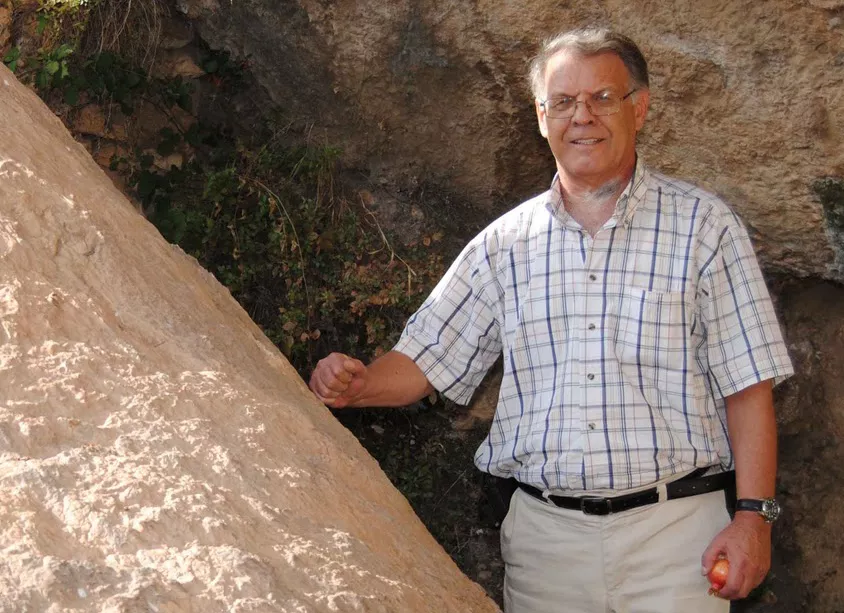
Every Bosniak in Herzegovina experiences the revival of the story about the third entity very painfully. They have already experienced deadly horrors in that same, "premiere" pseudo-state that was called "Croatian Republic of Herzeg-Bosnia" - stated Ibrahim Kajan, a writer from Mostar, in an interview for the BH News Agency Patria (NAP).
- Thanks to that "third entity", Mostar was depopulated and "liberated" from Bosniaks and Serbs – at least 10,000 Bosniaks from Mostar now live in distant countries to which they "went" directly from the disbanded camps of Jadranko Prlić and Mate Boban – says Kajan.
He was born in Mostar, but since his student days, he most often spent time in Zagreb, where, working as a proofreader, librarian, and editor, he became acquainted with the political situation in Croatia.
NAP presents an extensive interview with him, in which he talks about the prospects for a third entity, the establishment of the Croatian Academy of Sciences and Arts in Mostar, and the attitude of democratic Zagreb and Belgrade towards BiH.
Kajan believes that all are to blame for the difficult social, political, and economic situation in the country: first and foremost, the domestic political elite, but also the hypocritical international community.
NAP: How would Bosniaks behave if a third entity were actually formed?
KAJAN: The Bosniaks of Herzegovina are not prepared to be subjected to someone else's will twice in a short period, to be a minority that they cannot protect through instruments of "national vital interest"; they simply do not want to be tenants in their own home.
Bosniaks cannot accept a third entity because they see that they have been hindered at every step during the post-war period. If Stolac is a "great return success", then it is a total political "return failure" that no one alive talks about. In Stolac itself, where there are currently the most Bosniaks, hardly anyone has managed to get a job, because they are "not for them".
Those 300 employees from Stolac work in Mostar, a city that is still the only cultural and political stronghold of the Bosniaks of Herzegovina. No other problem in Stolac has been resolved. Each of them lives now as they lived immediately after the fall of "Herceg Bosna". I can only imagine what kind of future Bosniaks can have in such an entity! Therefore, Bosniaks will not abandon their ideals of freedom at the expense of anyone's interests, neither Sarajevo's, nor Zagreb's, nor the international community's. We will not go to Sarajevo or Zagreb. Why should we leave our home, our Mostar, which we built, from the first to the last stone in the wall!
I do not believe in the model of a third, Croatian entity. Because what does that entity entail? What territory and what population? Nothing separates easily, especially if it is being taken by force! I am sure that conflict would arise, because even without it... the crisis is strong.
I do not believe that RS will secede either. Serbia is in the current political processes of European integration – and that does not imply simultaneous secessionist entrepreneurship in the neighborhood.
NAP: But isn't the establishment of the Croatian Academy of Sciences and Arts in Mostar a step forward towards the creation of a third entity?
KAJAN: Regarding the formation of the Croatian Academy of Sciences, I see nothing wrong with that act. I said the same thing when the Bosniak Academy of Sciences and Arts was formed – I don't know why it was attacked from the first step, and by those who never said a word about the already existing Serbian Academy in Banja Luka?! There are dozens of academies in Italy, so what? In Zagreb, besides HAZU, there is the Academy of Technical Sciences, the Academy of Medical Sciences, etc. Whether an academy will be "used" for other, non-scientific and non-artistic purposes is a question of reality that may yet occur. But the principle of allowing something for yourself and denying it to others is inherently irrational.
NAP: BiH is in an extremely difficult political and economic situation. Who is most to blame for that?
KAJAN: The fact that after the war, economic recovery has not happened, but has even been further destroyed or completely ruined, points to the culprit – to the policy that did not ensure legal regulation for creating an environment for economic recovery, nor protective mechanisms to prevent its dismantling, blatant robbery, and not just for personal, but also for foreign interests. If this is the case, and the panoramas of destroyed facilities are visible to the naked eye, including a factory that was "profitable" for 120 years, the Tobacco Factory Mostar, then this undoubtedly confirms that the BiH "political elite" has produced its own criminal gangs that carry out the dirtiest part of the plundering campaign against the state.
We are all responsible in this country: that's why the resignations of some politicians "for moral reasons", which we have seen in recent days, seem ridiculous to me. What kind of "honesty and morality" are we talking about if someone presided over the highest local authorities – and everything around them was plundered! Did they never see anything? They must have seen it and are living witnesses – and in that sense, they are completely dishonest, because they never tried to address the crime with a single word.
NAP: How much do influences from Zagreb and Belgrade contribute to BiH's suffering?
KAJAN: Influences from the centers of neighboring countries relate primarily to national elites, and their dominant content concerns the future structure of Dayton Bosnia and Herzegovina, just as they related, protectively, to the "fate of their people" during the war. The other day in Mostar, Miroslav Tuđman said, quoting his late father Franjo, that his philosophy towards BiH and Croats in it can be summarized in one sentence: "The aspiration of all Croats is to be within the borders of one state."
Of course, you are familiar with that philosophy from the speeches of Slobodan Milošević about the imperative that all Serbs live within the borders of one state. That philosophy pushed Milošević into aggressive conquest of the entire BiH, and Tuđman into armed infiltration and those malicious projects of "humanitarian resettlement" towards Boban's "Herceg Bosna", a relative of Karadžić's "Republika Srpska". In neither of them was there room left for members of the Bosniak people. As we can see, even 20 years after the Washington Agreement, the main premises of these political philosophies have not been archived...
Of course, there are very strong forces in democratic Zagreb that want and intend to influence BiH's political situation, because these circumstances, in the final analysis, concern Croatia as well and have strong repercussions on it. However, when I think about it, I always remember a meeting with Dražen Budiša, I think it was at the end of 1993, after his return from Sarajevo, where he participated in a meeting with close political thinkers. Conveying his observations to me, he told me that he somewhat didn't understand his Bosniak friends, because if you show them that you support them, they expect you to lead Bosniak politics! They forget, he added, "that I am primarily a Croatian politician."
Therefore, if we recognize great political personalities in democratic Croatian currents as our friends, let's not expect them to lead BiH politics, or, as in this case – Bosniak politics. As authentic Croatian politicians who see BiH as an independent and sovereign state, they are our primary value.
I have no doubt that democratic Belgrade is significantly different from Zagreb.
NAP: Do Bosniaks have the strength, intellect, and wisdom to preserve the integrity of BiH?
KAJAN: Judging by the politicians who were capable of destroying all economic infrastructure, it is difficult to expect them to have (any) wisdom in preserving the integrity of BiH. A large part of the blame should also be attributed to the International Community. Why is "Dayton" a sacred word? Why did they not implement that article about returnees? Why, finally, was the Agreement itself not "temporary" (as foreseen) – but became permanent?
The great sin of the international community is also when it comes to Mostar itself. They imposed the Statute of the City of Mostar, which Bosniaks accepted under pressure and threats, and Croats did not, only for that same Statute to now be treated as unconstitutional! This is a banal mockery, primarily of Bosniaks.
And one more thing: why does the IC prefer and consider it paramount to discuss the state with party presidents, and not with high-ranking state officials? No, I don't believe that is Western political practice... but here, things are bought and sold.
Komentari (0)
Prijavite se za komentiranje
PrijavaJos nema komentara. Budite prvi!
Minuta
Sve →Iz drugih kategorija

High Representative Not Elected: Germans, French and British Sabotaged Americans, New Attempt at End of June

ČOVIĆ WITHOUT MERCY: How Those Who Brought Ademović to Office Created a Political Hell for Him



Sunny Saturday, quite warm



Tragedy in Albanian resort: Two minors drown












