
By: Rasim Belko @rasimbelko
“In some more normal circumstances, it would be natural for such a decision to be made by a nationwide referendum, but unable to do so, our basic institutions (Preporod, Council of Congress of Bosniak Intellectuals, Islamic Community and Merhamet) initiated the convening of this Assembly with the desire that such crucial decisions be discussed as broadly as possible, with representatives of all structures of our society and, if possible, all regions.”
This is how Alija Isaković spoke at the first Bosniak Assembly in 1993, emphasizing the need for the then-Muslims, who at the Assembly reclaimed the name Bosniaks, to gather everything Bosniaks could offer to the fullest extent. Thus, in the besieged city, the then-leadership of the Assembly clearly saw the need for Bosniaks to gather through all segments of their socio-political being when making crucial decisions. But even then, as at the second Assembly in 1994, Bosniaks did not hide in caves of intellectual darkness behind closed doors, but invited representatives of all religions, as well as the diplomatic corps, to events where they defined their future.
Open to the world, united in their diversity of positions and social statuses, with different views, Bosniak social, spiritual, and political intellect knew that there was no salvation in decision-making that lacked broad support and consensus.
Over time, in post-Dayton Bosnia and Herzegovina, those who drew political power precisely from the decisions and benefits of the two Bosniak Assemblies would forget this. First, the SDA did it, and the Social Democratic Party did it even more visibly and disastrously, which from positions belonging to Bosniaks sought to dehumanize Bosniak identity as much as possible, turning it into a concept of rural ridicule. The Party of Democratic Action also did not rely on the principles and views of the first two Bosniak Assemblies.
And then, with further passage of time, Bosniaks rapidly, perhaps even deliberately, forgot what united them during the defense against aggression and what ultimately defended them. The SDA, as the political movement that played a key role in the defense, began to crumble and split into parts and pieces. Parties were formed, and from parties, ego maniacs deluded by their own greatness emerged. In fact, from today's distance, only Haris Silajdžić stands out in that circle of new leader-crats who offered salvation to Bosniaks, believing they were some new Brozes.
The Assembly remained in the past, as did the awareness of the space we live in and the fact that war trumpets have been replaced by war accordions. Perhaps the composers of evil have changed, but the evil notes have remained, hanging like a fatal destiny over Bosnia and Bosniaks.
And during this time, Bosniaks wandered between the extreme ends of right and left political character, completely lost and disoriented in time and space.
“Our struggle for the integration of Bosnia and Herzegovina will largely depend on us, on what we can do. Will we or can we make a modern, democratic, and free country out of the part of Bosnia that we control. Will we know how to do it?”, asked the first president of Bosnia and Herzegovina, Alija Izetbegović, at the second Bosniak Assembly in 1994.
I fear that we still do not have an answer to this question, even from a completely different context today. In fact, we have the answer that in the past 30 years since the second Assembly, Bosniaks have even lost parts of the territory they controlled. Bosniaks, their politics, and their intellect have not moved an inch from the space bequeathed to them by the Army of the Republic of Bosnia and Herzegovina.
Institutions have been and are being destroyed, return has been replaced by internal migrations for political needs, the development of the state and society has been replaced by the creation of clearly separated castes and poor people, patriotism, the war path... have been rendered meaningless.
Like a human herd, Bosniaks have wandered and gotten lost.
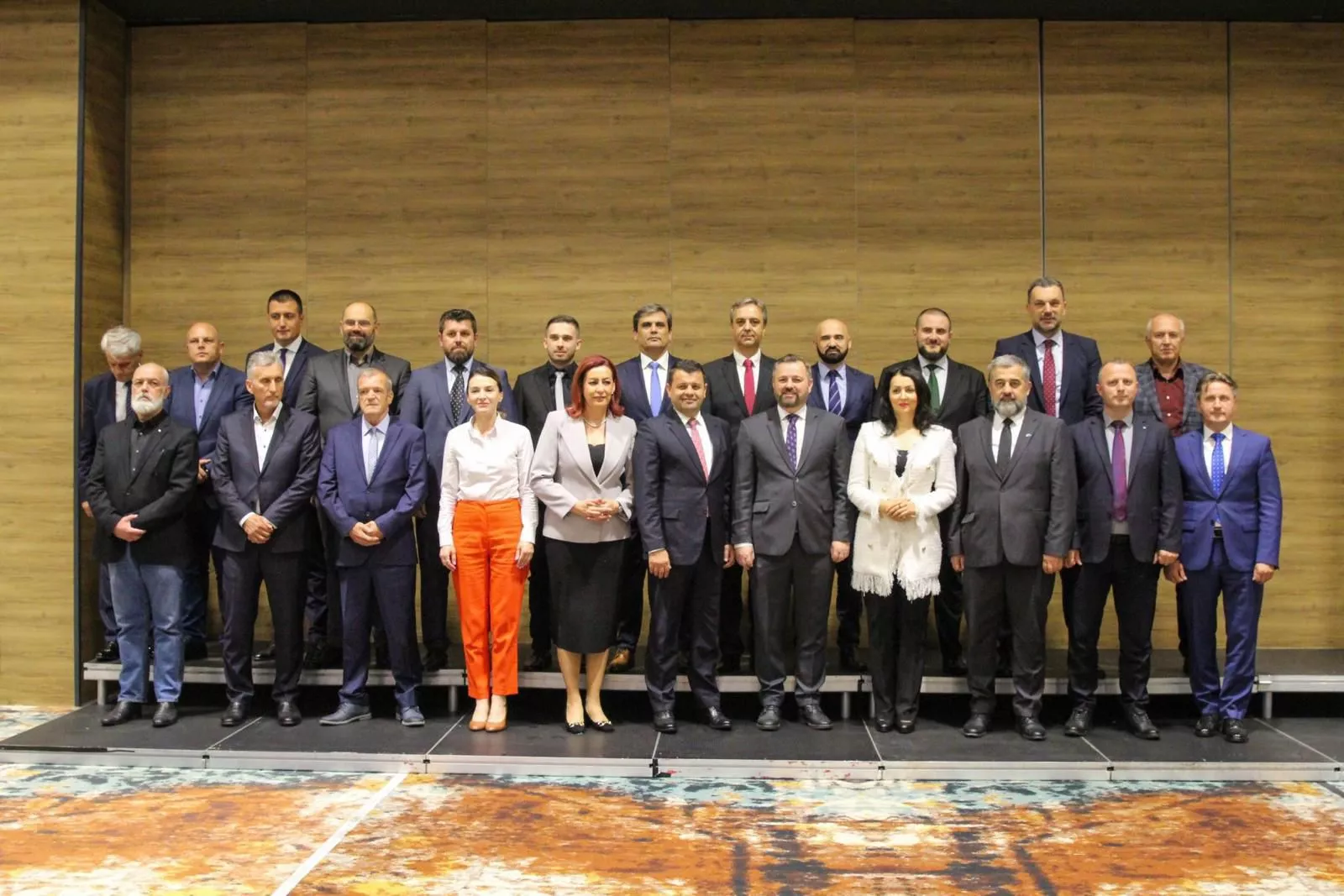
Three decades later, Bosniaks who separated from the parent political movement (SDA) became leaders and led delegations to an attempted assembly that ended with lunch and a discussion behind closed doors that led nowhere.
Instead of the top of Bosniak intellect, politics, culture, religion, instead of guests from the diplomatic corps, new aghas gathered in Ilidža (at Hills). Perhaps they did not drink wine, but behind closed doors, they drank the blood of every Bosniak aware that those gathered were actually just political leeches on public money.
If we look at the political color of those gathered, it is clear that this is not about any gathering for the sake of the destiny of Bosniaks and Bosnia, but rather an attempt at mutual support by under-capacitated forces seeking to take full control of Bosniaks.
The path of Bosniaks and Bosnia over the past three decades has been confined to a space less than 10 kilometers apart. From Enes Duraković and Alija Isaković to Elmedin Konaković, Usame Zukorlić, and Ram Isak.
However, the mistake is not with those who gathered in Ilidža for their personal and party interests. The political short-sightedness of all participants in that para-formal gathering has been proven too much.
The mistake lies with those who withdrew, leaving the space to the aghas in Ilidža. It is the task of politicians, intellectuals, and religious authorities to see clearly after three decades, while they still can and have somewhere to do so.
We have written for too long about the all-Bosniak assembly and its vital need in preserving and strengthening the state of Bosnia and Herzegovina: Since the Academy of Sciences and Arts of Bosnia and Herzegovina could not fulfill this task because it was sabotaged by Ivo Komšić and his superiors, it is clear that something must change.
And it will change when intellect, political thought, and the power of religious authority gather a broader assembly of Bosniaks and define the red lines for the defense of the state and the people. And then, that capacity should be brought into an even broader context of an all-Bosniak assembly in full light, so that in that case, there is no denial of any identity, and that in that gathering lies salvation for both Bosniaks and Bosnia.
This cannot be led by those who see politics as a compromise with Karadžić's politics in Dodik's form. Some new Duraković, Isaković, Konjicija must raise the issue of the third Bosniak and the first all-Bosniak assembly. Because only that guarantees that such an assembly will not be handicapped by the egomania of a political entity that has not yet developed.
Komentari (0)
Prijavite se za komentiranje
PrijavaJos nema komentara. Budite prvi!
Minuta
Sve →Iz drugih kategorija

High Representative Not Elected: Germans, French and British Sabotaged Americans, New Attempt at End of June

ČOVIĆ WITHOUT MERCY: How Those Who Brought Ademović to Office Created a Political Hell for Him



Sunny Saturday, quite warm



Tragedy in Albanian resort: Two minors drown












