
(Patria) - The association "EDUS-Education for All" has been conducting intensive, innovative, science-based intervention programs for children with developmental disabilities aged 18 months to 6 years for many years. In the past eight years, thousands of children have gone through EDUS programs, and experiences have shown that our country lacks basic instruments for monitoring child development, early detection and diagnosis of developmental delays and disorders, as well as tools for effective intervention that would result in fulfilling the potential of every child, it was announced from EDUS.
Research Included 1500 Children
In order to find solutions to this problem, the association "EDUS-Education for All" conducted three major scientific studies over the past two years with the financial support of the Program to Support Marginalized Groups (PPMG) of the United States Agency for International Development (USAID) within the project "Improving the Status of Children with Developmental Disabilities in BiH".
As part of Study 1, research was conducted involving 1500 children and their parents across BiH. The result of the research is the EDUS Developmental Behavioral Scale II, the first validated Bosnian-Herzegovinian instrument for monitoring child development and detecting deviations in accordance with developmental norms in BiH.
"Although instruments for monitoring development and detecting deviations in child development are standard in developed countries, such an instrument did not exist in Bosnia and Herzegovina until we created the EDUS Developmental Behavioral Scales, which showed that 26% of children are at risk of not developing their full potential," said the head of the research team on the project, Dr. Sci. Nirvana Pištoljević.
As part of Study 2, the EDUS Autism Screening Protocol was developed to support specialists in the diagnostic process, given that the research showed that the process of obtaining a diagnosis takes over 18 months. The development of the Autism Screening Protocol was assisted by child psychiatrist Mohammad Ghazziudin (University of Michigan, USA).
"In most developed countries, autism can be detected as early as 18 months and diagnosed at two years with valid measurement instruments. Unfortunately, such tools are often unavailable in developing countries with limited resources, which ultimately results in delayed or incorrect diagnosis. Timely diagnosis of autism is important because it can lead to early intervention, reduce the effect of the disability, improve outcomes, and reduce the burden on families, as well as the state," said Ghazziudin, adding that "to facilitate this process, they created the EDUS Autism Screening Protocol, which consists of behavioral assessment scales with structured interviews/discussions."
Five Hours of Intensive Work for Visible Progress
As part of Study 3, three types of interventions for children with developmental disabilities present in BiH were compared to conclude which type of intervention yields the best results for child development. The research confirmed what global standards state, which is that at least five hours of intensive work with a child per day is needed to achieve visible progress. Namely, children in such a program made twice the progress in five months compared to children who attended programs based on traditional intervention models.
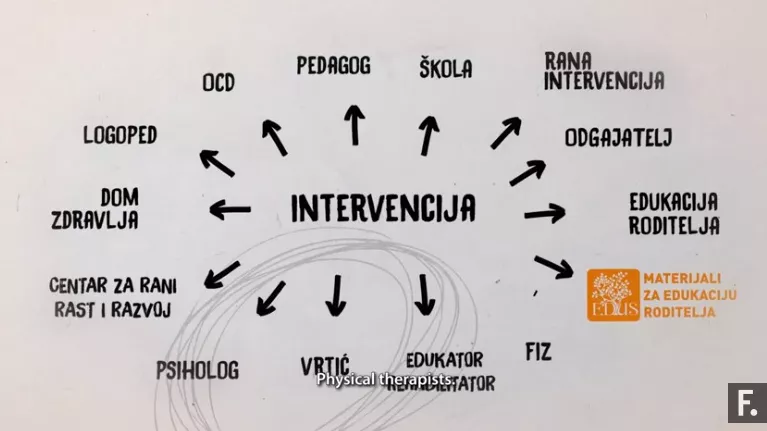
In order to present the main research results and demonstrate a model for improving the early growth and development system in Bosnia and Herzegovina, a video has been published that guides viewers through the steps important for monitoring typical and atypical child development.
Komentari (0)
Prijavite se za komentiranje
PrijavaJos nema komentara. Budite prvi!
Minuta
Sve →Iz drugih kategorija

High Representative Not Elected: Germans, French and British Sabotaged Americans, New Attempt at End of June

ČOVIĆ WITHOUT MERCY: How Those Who Brought Ademović to Office Created a Political Hell for Him



Sunny Saturday, quite warm



Tragedy in Albanian resort: Two minors drown












