
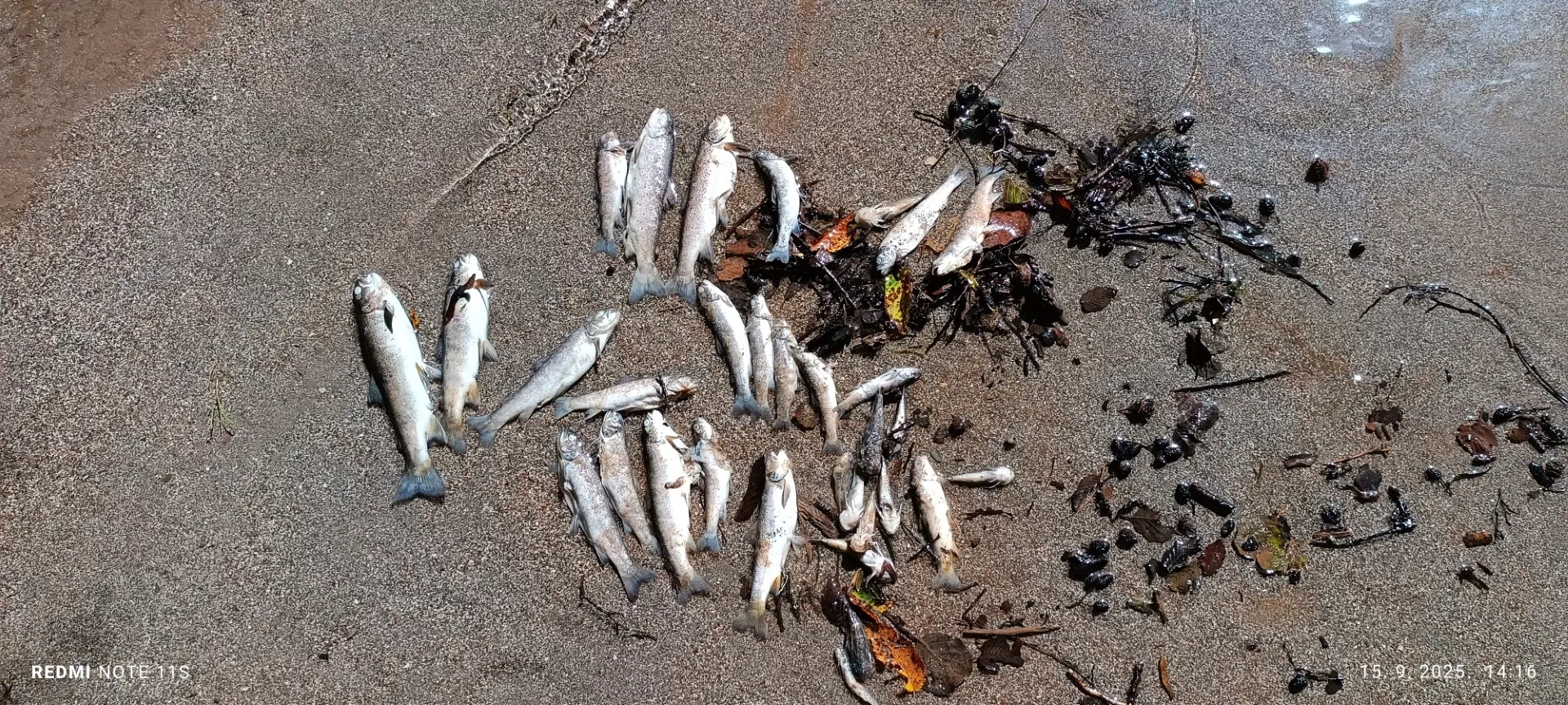
(Patria) - The most valuable part of the Neretva experienced an ecological disaster when water depleted of oxygen was released from HE “Ulog” in September, killing all forms of life along about five kilometers of the river's course. Esteemed European and domestic scientists today presented evidence indicating that such incidents can recur if urgent oversight is not implemented, peak operation is prohibited, and strict adherence to environmental permits is ensured.
We remind you that on September 12th of this year, a mass death of living organisms occurred along approximately five kilometers of the upper course of the Neretva, immediately below the hydroelectric power plant (HE) “Ulog” near Kalinovik, which bisects the most valuable and previously untouched part of this significant river's course. The scenes from the site were terrifying – hundreds of dead individuals of endangered species such as
Marmorkreb and the European brook lamprey, accompanied by an intense smell of rotten eggs, indicating an increased presence of hydrogen sulfide and a severe lack of oxygen.
The key problem could lie in the operating regime of HE “Ulog”, which is prescribed to be run-of-river. Independent analysis indicates that the excessive release of oxygen-depleted water from the reservoir directly caused lethal conditions for sensitive species, a fact also highlighted by scientists who conducted field and detailed scientific research after the aforementioned mass die-off.
Professor Gabriel Singer from the University of Innsbruck explains the cause of the recent ecological disaster in more detail: “The measurements we took on September 28, 2025, 16 days after the fish kill, confirmed that the cause of the die-off was the release of low-oxygen water.
HE ‘Ulog’ is a prime example of how hydropower projects should not be implemented: These observable implications were predictable based on the expected stratification of the reservoir during summer and the current operational regime, and they are incompatible with the ecological health of the Neretva.”
Academician Muriz Spahić, a retired professor at the Faculty of Natural Sciences and Mathematics at the University of Sarajevo and a leading hydrologist in Bosnia and Herzegovina, emphasizes that environmental protection must be included in energy sector development planning. “Our goal is for this case to serve as an example that energy development must be in balance with environmental protection, and that decisions
are made based on scientific facts, not short-term commercial interests. The Neretva is one of the most valuable ecosystems in Southeast Europe, and its protection is a shared responsibility of us all,” stated Prof. Dr. Muriz Spahić.
The scientists who conducted the aforementioned research emphasized the importance of adhering to all provisions of the environmental permit for HE “Ulog,” calling for an urgent review and revision of the Environmental Impact Study and other permits to prevent new catastrophic impacts. Ultimately, it is crucial to prevent the problematic peak operation of this facility, introduce continuous monitoring and real-time reporting on reservoir levels, water discharges, oxygen concentration, and temperature across the entire depth profile and downstream.
“The catastrophe in September did not just kill fish; it destroyed all life in that section, including aquatic insects, mollusks, etc. If HE ‘Ulog’ is allowed to continue operating illegally in peak mode, causing almost daily fluctuations in water levels downstream, the devastating damage will not be limited to the section below the plant, but fish populations throughout the entire
Neretva, all the way to Konjic, will suffer irreparable harm,” stated Ulrich Eichelmann, Executive Director of Riverwatch, an organization that has been campaigning for years in the Balkans with the “Save the Blue Heart of Europe” initiative.
The construction of HE “Ulog” by the private investor “EFT Group” has been accompanied by controversies from the very beginning. In addition to the fact that construction is taking place on geologically unstable ground, the constant shifting of deadlines for completion and amendments to technical specifications are problematic. At the beginning of construction, two workers also died due to the collapse of large quantities of material. Azra Berbić, an activist from the ACT Foundation, an organization whose appeal led to the annulment of the water permit for HE “Ulog” in March 2025, also warns of these dangers.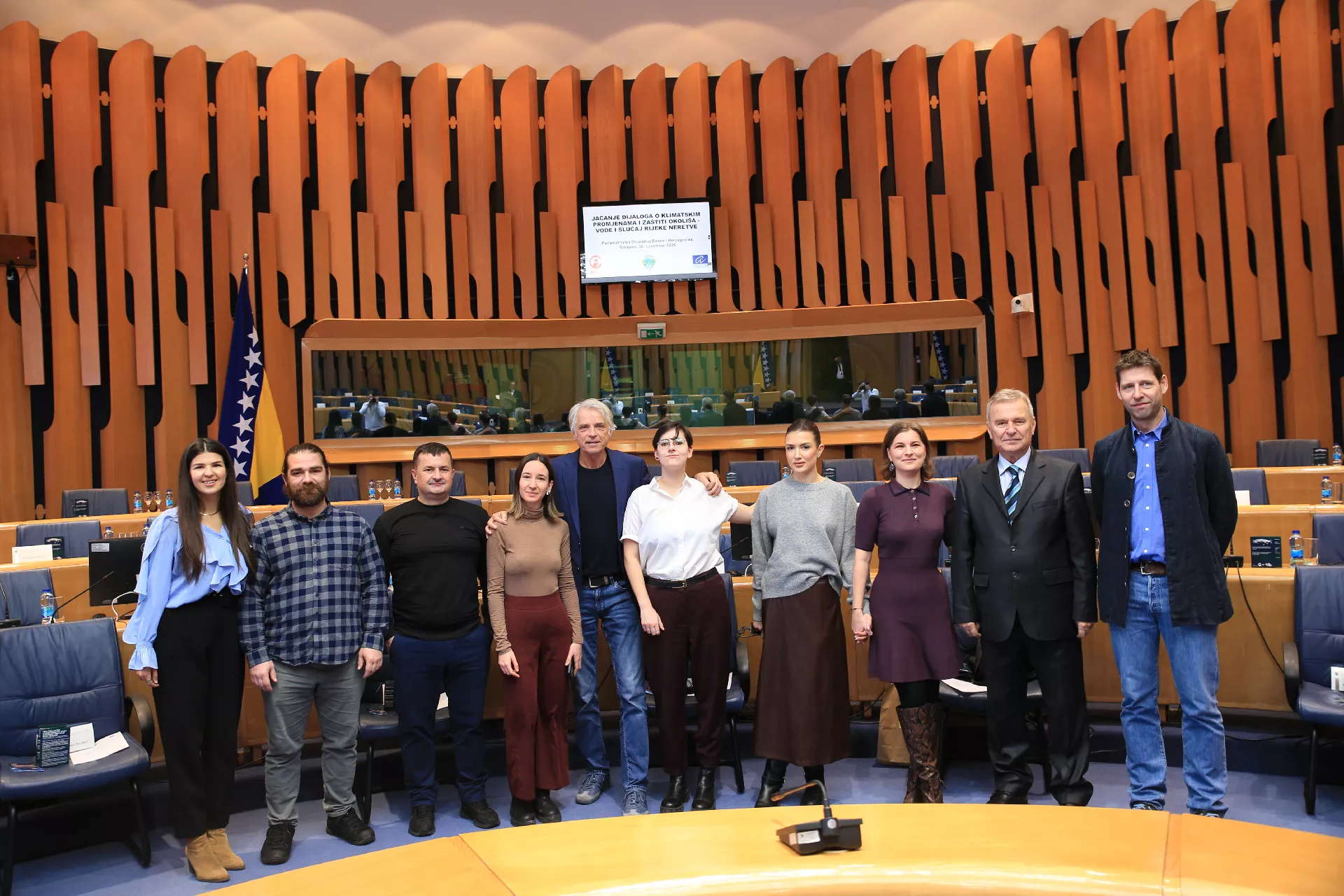
“The issue of protecting our rivers and waters is not a national or ethnic issue; it does not belong to any political option. The protection of rivers, water rights, and the exceptionally rich and unique biodiversity are crucial for the survival of all people living in our country, as well as for all living beings that depend on our rivers. By protecting the Neretva, Una, Pliva, Vrbas, Drina, all our rivers, we are not
only protecting the life within them but also the future survival of the peoples in these regions.”
Scientists from all over Europe, in previous years, while researching the biodiversity in the upper course of the Neretva, discovered entirely new species for BiH and for world science. The Neretva and its tributaries are, moreover, undoubtedly a source of life for all people living in its valley. Therefore, we must not allow ourselves to sacrifice the Neretva or any of our rivers for private capital to continue accumulating through various investments that completely devastate our rivers,
but rather by caring for our rivers responsibly, strategically, and systematically. We must protect our rivers and waters as a common good for us and future generations,” she stated, appealing to authorities at all levels to make greater efforts in protecting the natural resources of our country.
Today, the aforementioned team of international and domestic scientists presented the results of their scientific research on the recent mass death of fish and other living organisms in the upper course of the Neretva at the Parliament of Bosnia and Herzegovina to representatives of the legislative and executive authorities, and to the scientific, professional, and media public within the framework of the conference “Strengthening Dialogue on Climate Change and Environmental Protection – Waters and the Case of the Neretva River.” This event was organized by the Atelje for Social Change Foundation – ACT, the Green Club in Bosnia and Herzegovina, and Riverwatch, with the participation of UNDP in Bosnia and Herzegovina.
Komentari (0)
Prijavite se za komentiranje
PrijavaJos nema komentara. Budite prvi!
Minuta
Sve →Iz drugih kategorija

High Representative Not Elected: Germans, French and British Sabotaged Americans, New Attempt at End of June

ČOVIĆ WITHOUT MERCY: How Those Who Brought Ademović to Office Created a Political Hell for Him



Sunny Saturday, quite warm



Tragedy in Albanian resort: Two minors drown












