
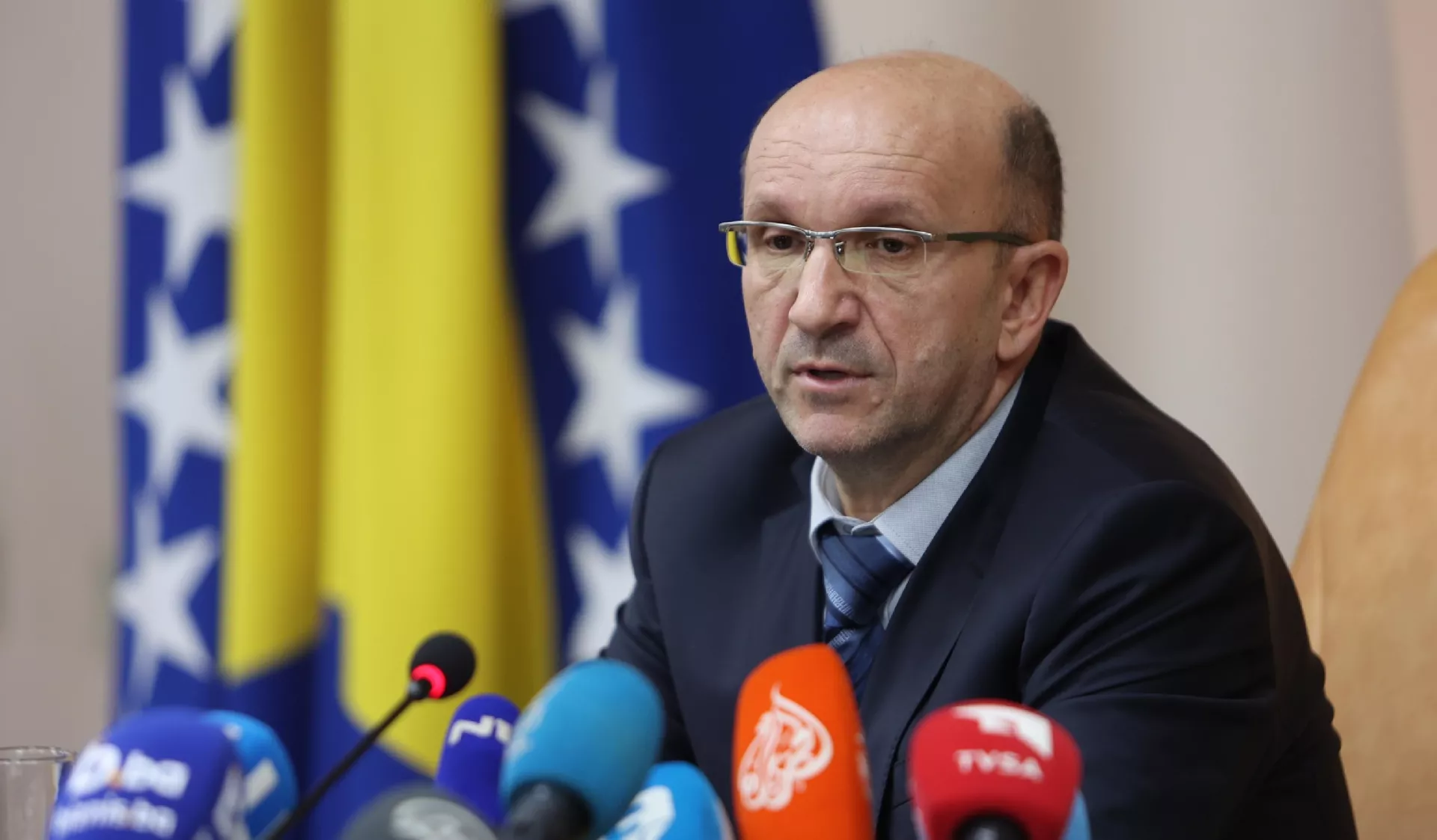
(Patria) - After nine years at the head of the Tax Administration of FBiH, first as acting director, and then as director, Šerif Isović was dismissed from that position.
In an interview with Business Magazine, he spoke about the problems the Administration faces in its work, the results achieved during his leadership, the shortcomings of the tax system, the lack of staff...
"Strange" things
Isović believes that formally and operationally, the Administration should not have been left without a director, and since that is the case, it is a matter for the Government of FBiH.
- "Strange" things are currently happening that do not bode well, and time will tell how things will unfold - says Isović.
He also answered the question of whether he expects to be criminalized, as has become customary, the matrix is the same - anyone who is Bosniak is a thief, and whoever is not, after the SIPA operation, seeks retirement (Galić case).
- I have long since gone through those experiences. Whenever I stood in the way of someone's interests, I was the subject of some media "criminalization" and mostly anonymous reports, and I have been thinking about writing more about it for a long time.
And now I will just mention that I first found myself in a difficult situation when, upon becoming the executive director for finance at BH Pošta and BH Telecom, I stopped the practice of depositing funds without tenders and introduced the practice of depositing money through public tenders.
That's when I first appeared in the media, and BH Pošta, through those tenders and three-year contracts, collected approximately 12 million more in revenue, while at BH Telecom, I think it was around 18 million KM, for which I also received an annual award.
My tax returns were published then, but it was not published that these two companies collected over approximately 30 million KM in revenue from the contracts I implemented. However, if it is known that these contracts remained in effect even after I left these companies, then these effects were much greater.
At that time, it was also not published that the Federal Ministry of Finance had given an opinion that the deposit of funds did not have to be carried out through tenders, which some public companies followed. The second time was when I opposed the Postal Bank project.
The Postal Bank no longer exists today, the employees of BH Telecom and BH Pošta lost about 15 million in invested capital, and I haven't noticed anyone being convicted or sentenced. The third time was when I opposed some things at the Sarajevo Tobacco Factory, which caused me to lose my job for almost four months.
Today, FDS is gone, the annual loss for the country is several hundred million KM, there are no longer 450 employees, there is no film about how FDS was destroyed, there is no data that FDS, with my expertise, managed to recover its 8.5 million KM, nor that I exercised my rights in court with a court ruling in my favor after eight years.
And now, when as the director of the Tax Administration I stood in the way of the interests of big capital, but also of placing the institution under political control, I have again become the subject of criminalization.
Attacks and pressures
Given that the Tax Administration is the biggest thing among all the aforementioned and that it is an institution of security for the country, it is to be expected that the attacks and pressures will be stronger and greater.
The director of the Tax Administration cannot expect to be spared unpleasantness if they insist on applying the law, if the collection of public revenues increases by over 103 percent, if additional obligations of almost two billion KM are determined, if tax evasion through criminal charges amounts to approximately 110 million, if sealing of facilities contributes to the growth in the number of employees, etc.
So I can understand the "attacks, framing, intrigues, intimidation, etc." of those who operate illegally, against whom additional obligations are calculated, criminal and misdemeanor charges are filed, sanctions are imposed, etc., but I can neither comprehend nor understand that obstructions and attacks are carried out by institutions or individuals, and from institutions that should be obliged to assist in the legality of the Administration's work - points out Isović.
He also answered the question of why the accounts of large debtors are not blocked and how it is possible for someone to owe millions in unpaid taxes? We had the case of the Konjic hospital, whose account was blocked due to some 2.5 million KM in debt, and at the same time, we have the hospital in Mostar under Bijeli Brijeg which owes over 70 million and operates normally?
- One of the basic goals and policies of the Tax Administration is the consistent application of laws, regulations, and equal treatment of all taxpayers.
I constantly pointed out these obligations and goals to employees, and on several occasions, I gave instructions and public statements, etc., that all taxpayers should be treated equally, and that due to the constant problem of insufficient staff, activities should be carried out according to their significance - in this specific case, that procedures should be applied to tax debtors with larger debts.
According to the Law on the Tax Administration of FBiH and the Rulebook on Forced Collection, collection and forced collection procedures are carried out by cantonal tax offices, in this specific case, the Cantonal Tax Office Mostar, whose head and employees are responsible for applying the valid regulations and for equal legal treatment of all taxpayers.
When it comes to blocking the Konjic Hospital and not blocking the Mostar hospital, it is an example of how not to work. I have taken all activities available to me in accordance with the valid laws and informed the Federal Prosecutor's Office about it, which forwarded the case to the Cantonal Prosecutor's Office Mostar.
However, according to available information, the prosecutor's office has not taken any significant action, and this example shows how the deep state operates. When it comes to other large tax debtors, these are mines, Railways of FBiH, GRAS, and companies to which financial consolidation laws apply.
Of this group of tax debtors, GRAS and Railways are reducing their old debt and regularly paying their tax obligations, while others, unfortunately, do not, and the Tax Administration does not carry out forced collection procedures against them, because it is limited by financial consolidation laws and conclusions of the Government of FBiH - concludes Isović in an interview with Business Magazine.
Komentari (0)
Prijavite se za komentiranje
PrijavaJos nema komentara. Budite prvi!
Minuta
Sve →Iz drugih kategorija

High Representative Not Elected: Germans, French and British Sabotaged Americans, New Attempt at End of June

ČOVIĆ WITHOUT MERCY: How Those Who Brought Ademović to Office Created a Political Hell for Him



Sunny Saturday, quite warm



Tragedy in Albanian resort: Two minors drown












