
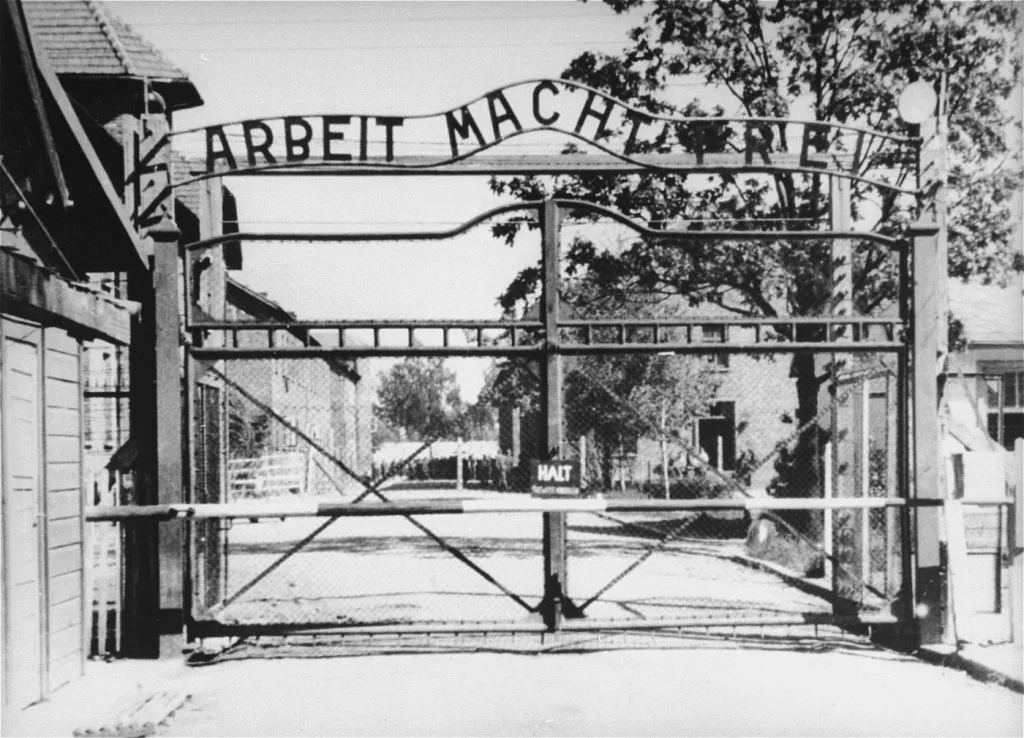
We remembered the persecution of Jews and the terrible Holocaust. It is not at all coincidental that on the same day we witnessed the denial of the Hague Tribunal's verdicts for a joint criminal enterprise by HNS, the Croatian multi-party national association. They claim that such a qualification does not exist in the Statute of the Tribunal. The case law of the Hague Tribunal was born from trials, and this is the greatest legacy of international legal practice.
During the trial of the "Six" (Šestorka), a genocide verdict was increasingly considered, but a milder form – joint criminal enterprise (UZP) – was found as a way out. After this one by HNS, another revisionist outburst occurred in Serbia last week, reviving the figure and atrocities of the Serbian Nazi Dimitrije Ljotić. A text full of historical lies was published in the children's magazine Politikin Zabavnik, meaning the poison of hatred was served to the younger generations.
Dimitrije Ljotić formed the popular movement "Zbor" in 1935, modeled after the Nazi SS units. Politikin Zabavnik writes that Ljotić "condemned the pogroms of Jews," which is a complete lie. In its program guidelines, Ljotić's "Zbor" was racist and opposed "racial mixing." The antisemitic text "The Serbian People in the Claws of the Jews" came from the leadership of Ljotić's Zbor.
The atrocities of the Ustaše against Jews are well-known. Jasenovac is the site of the worst crimes against Jews, Roma, Serbs, Croatian communists, Bosniaks... Less known are the crimes supported and often carried out by the quisling regime in Serbia.
Jaša Alfandari, the president of the Jewish Community of Montenegro, who passed away six months ago, is the author of a letter that speaks about the suffering of Jews in Serbia and the constant attempts to rehabilitate the perpetrators of crimes against his people. Alfandari specifically highlights the crimes of Dimitrije Ljotić.
"Less than half a year after the end of the April War, the German command in Belgrade, along with the city administration, decided to establish a Jewish camp at the site of the Belgrade fairgrounds before the war. Technically, Sajmište was located on the territory of the Independent State of Croatia (NDH), and the NDH gave permission for the camp to be built there. The camp soon began to operate, and thousands of Jewish women and children arrived daily, while men were taken to the Topovske Šupe camp and liquidated summarily. This hunt for Jews was wholeheartedly assisted by the Belgrade secret police of Dragomir Jovanović, as well as the police forces and gendarmerie of Dimitrije Ljotić," reads this letter from Jaša Alfandari. He continues:
"The Jewish population of Belgrade, which consisted of 17,000 souls, was wiped out in less than a year, and all traces of them were erased. Of course, all this was accompanied by the general plunder of Jewish movable and immovable property, according to the racial laws of Nedić's Government." As he was born in Serbia and resided in Montenegro, Alfandari wrote: "I want to explain my right – the right to interfere in the internal affairs of another country, which I unfortunately acquired through 58 members of my immediate family: Alfandari, Talvi, and Albala. Their tragedy gives me the right and obliges me to write these lines... More than seven decades have passed since the gates of that cursed place, the old Sajmište camp, were closed."
Alfandari addressed the commission for preserving historical memory in Serbia: "... I would ask the gentlemen from the commission not to change history, although it is very profitable, because even the monsters who built that camp had two names and two purposes for it. The first name was Jewish Camp Zemun, which, as its name suggests, was intended for the decontamination and deratization of the capital city of Belgrade from Jews and Roma (not all Roma), or as it was colloquially called, the removal of Jews and Gypsies. Even the Prime Minister, 'Mr.' Milan Nedić, whom Serbia wants to rehabilitate, called the period of extermination, i.e., the period between '41 and '44, a 'period of peace' and a 'post-war period.' At a time when all Belgrade theaters, cabarets, cafes, and brothels (one of the larger brothels was in the Belgrade Synagogue) were working at full capacity to create an atmosphere of peace and prosperity, my people – the elderly, women, children, the sick from Jewish hospitals – were suffocated and killed. The job was done with German precision, so much so that a telegram was sent from Nedić's Belgrade to Berlin with the message that Belgrade was clean of Jews," wrote Alfandari.
In war dispatches between the Chetnik general Draža Mihailović, the Minister of War, and Slobodan Jovanović, the President of the Royal Government in exile in London, Chetnik commander Mihailović complains that Ljotić's men were rounding up high school students in Kragujevac and, claiming they were communists, bringing them to be executed by the Nazis. According to Draža Mihailović, the SS men rebelled and refused to kill them themselves, demanding that Ljotić's men also stand in the firing line. Mihailović confirmed to Jovanović in the dispatch that Ljotić's men joined the Nazis in the executions," reads one of Mihailović's dispatches to the President of the Royal Government in exile, Jovanović. Although all these facts are available in Serbian archives, very little or nothing has been written about this in Serbia.
Kosta Mušicki was tried for the executions of Serbian youth in Kragujevac after the war: "When Nedić and Ljotić formed the so-called Serbian Volunteer Command in 1941, with the agreement of the Germans, Mušicki was appointed commander of this military formation... He formed his first units from supporters of Ljotić's fascist party called Zbor. As early as 1941, Mušicki formed 10 detachments, which, under his command, participated with the Germans in all operations against partisan detachments in Serbia. Thus, one of these detachments under the direct command of Marisav Petrović, who was subordinate to Kosta Mušicki, participated in October 1941, along with the Germans, in the execution of seven thousand citizens of Kragujevac," according to the documents of this trial.
The high-ranking police official Boško Pavlović was also accused of the same crimes: "In October 1941, he arrived in Kragujevac on the eve of the execution of 7,000 people, carried out by the Germans with the help of Ljotić's men and domestic police forces. He was in Kragujevac throughout the execution and was in direct and frequent contact with the local (Serbian) police and the German command in Kragujevac. After the execution, he returned to Belgrade," it is recorded in the documents of this trial.
"For every crime committed by the German occupiers, domestic traitors most often assisted in the commission of the crime," the verdicts state: "Most often, both sides committed crimes together. Mass executions in Kragujevac, Kraljevo, and other places in Serbia were carried out jointly (Nazis and Ljotić's men). Both participated in arrests, or rather, in the hunt for people, and afterwards, they were executed by one or the other, or both together. One of their most heinous crimes is the Banjica camp, where about 70,000 men, women, and children were killed. The camp was established on the directive of the Germans, and by order of Nedić's government. The organization of the camp was managed by the accused Dragomir Jovanović together with the Gestapo. The buildings for the camp were prepared by a mixed commission composed of delegates from the Special Police, the Gestapo, and Nedić's Ministry of Internal Affairs," the trial records state.
Kosta Mušicki admitted that one of his detachments under the command of Marisav Petrović, along with the Germans, participated in the mass execution in Kragujevac in October 1941. In the meantime, an apology was issued for the publication in Zabavnik, which was deemed too formal. The fact is that for a long time in Serbia, there has been consideration for the rehabilitation of criminals like Dimitrije Ljotić. Trial balloons have been released into the public for a long time. Even such mass and brutal murders of Kragujevac children, historical revisionists are capable of forgetting and serving lies to children in an entertainment magazine.
Therefore, it is not coincidental that recent verdicts of international courts, such as the verdict for the "Six" of Herceg-Bosna, are being denied, while the worst criminals are being rehabilitated.
The denial of the genocide in Srebrenica and general historical revisionism in both Serbia and Croatia are, unfortunately, the rule rather than the exception /S. O./
Komentari (0)
Prijavite se za komentiranje
PrijavaJos nema komentara. Budite prvi!
Minuta
Sve →Iz drugih kategorija

High Representative Not Elected: Germans, French and British Sabotaged Americans, New Attempt at End of June

ČOVIĆ WITHOUT MERCY: How Those Who Brought Ademović to Office Created a Political Hell for Him



Sunny Saturday, quite warm



Tragedy in Albanian resort: Two minors drown












