
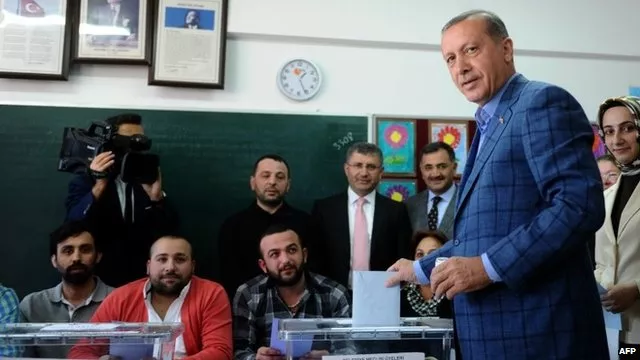
The International Institute for Middle Eastern and Balkan Studies (IFIMES) believes that the presidential elections in Turkey represent an opportunity for Turkish voters to choose between the past and the future, reports the Bosnian news agency Patria (NAP).
IFIMES has prepared an extensive pre-election analysis ahead of the presidential elections in the Republic of Turkey, which will be held on August 10, 2014.
- Recep Tayyip Erdogan has secured a better future for Turkey in the past decade, stabilized it, and returned it to the regional and world stage. He has proven to be a leader of a new era of the Turkish republic. Such a policy has also created opponents who do not want a strong and influential Turkey – the analysis states.
Analysts believe that Erdogan will convincingly win the presidential elections, with most believing he will win in the first round, IFIMES states. For the first time in Turkey's history, three candidates will participate in the elections: besides Erdogan, there are Ekmeleddin İhsanoğlu and Selahattin Demirtaş. Two are conservatives, while the third candidate comes from the Kurdish minority.
The upcoming presidential elections are very important for the future of democracy in Turkey. For the first time in the history of Turkey since its founding in 1923, citizens will be able to elect the President of the Republic in direct elections. Until now, the president was elected by parliament. The term of the current president, Abdullah Gül, ends on August 28, 2014.
- Voters want a continuation of Erdogan's policy from the last decade. Thanks to him, Turkey has become an "oasis of peace" in a troubled region (civil war in Iraq and Syria, Iran's nuclear program and threats from the West, instability in the Black Sea after Russia's annexation of Crimea). Turkish citizens want to preserve all the positive achievements of the current government, from social welfare, good business conditions to high economic growth – the analysis highlights.
The total number of voters in Turkey is 52,695,831, of which 2,750,820 voters are in 126 countries around the world.
The largest number is in Germany, with 1,380,903 Turkish citizens having the right to vote. Voters will be able to vote at 194,310 polling stations in the country and at 56 diplomatic missions abroad, including in BiH, reports NAP.
The elections will have a long-term impact on the future of the country in the coming decades and on the next parliamentary elections, which will be held in 2015, reports NAP. Read the full analysis here.
Komentari (0)
Prijavite se za komentiranje
PrijavaJos nema komentara. Budite prvi!
Minuta
Sve →Iz drugih kategorija

High Representative Not Elected: Germans, French and British Sabotaged Americans, New Attempt at End of June

ČOVIĆ WITHOUT MERCY: How Those Who Brought Ademović to Office Created a Political Hell for Him



Sunny Saturday, quite warm



Tragedy in Albanian resort: Two minors drown












