
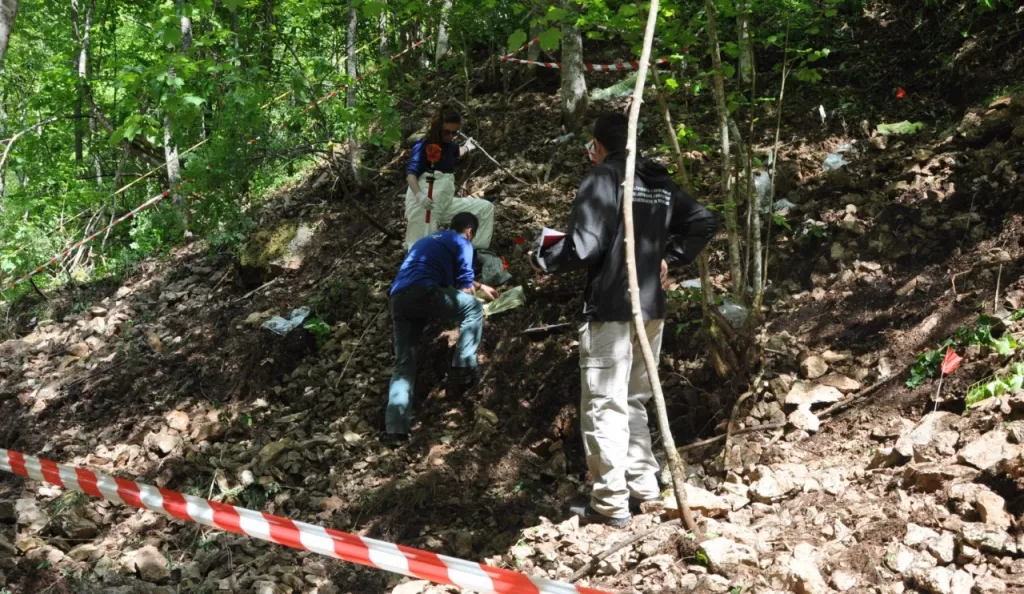
SARAJEVO, (Patria) - The International Commission on Missing Persons (ICMP) is assisting the authorities of Bosnia and Herzegovina (BiH) in identifying human remains exhumed in June 2021 at the Dobro Polje site near Kalinovik. Biological samples were taken from the exhumed remains and compared with reference samples provided to the ICMP by relatives of missing persons who last saw them alive in Srebrenica in July 1995. On December 8, 2021, the ICMP provided the Institute for Missing Persons (INO) with DNA match reports for ten victims from Srebrenica.
"The Kalinovik site represents the first mass grave linked to the July 1995 Srebrenica genocide to be exhumed since the exhumation in Kozluk in April 2016. The Kalinovik site is unusual in that, compared to all graves related to the Srebrenica genocide found to date, this one is located at the furthest distance from Srebrenica. Its location is only a few kilometers from the village of Godinjska Bara near Trnovo, where in mid-July 1995, members of the 'Scorpions' paramilitary unit executed six prisoners of Bosniak nationality from Srebrenica," said Matthew Holliday, Head of the ICMP's Western Balkans Programme.
As a result of the joint work of the War Crimes Department of the BiH Prosecutor's Office and SIPA, human remains were found in the Kalinovik area on May 6, 2021. The location in Dobro Polje is situated in inaccessible terrain covered with stones in the Bistrica river valley, along the M18 road.
The BiH authorities, with the assistance of ICMP forensic experts, began the exhumation on May 31, 2021. The exhumed remains were heavily mixed, scattered over a large area, and covered with soil and construction debris. The remains showed signs of summary execution. Handcuffs were found at the site.
The exhumation process was completed on June 22, 2021. According to the assessment of ICMP forensic anthropologists, based on the number of right tibia bones exhumed at this site, the minimum number of individuals exhumed at this location is ten. As the bodies were so widely separated, the forensic pathologist took 64 post-mortem samples (teeth and bones) for DNA analysis.
Genetic profiles isolated from the samples were compared with reference profiles of over 100,000 relatives of persons missing in the conflicts of the 1990s in the former Yugoslavia, which are stored in the ICMP's database. Ten DNA matches for different individuals were established, and these DNA match reports were submitted to the INO for official identification.
The authorities will determine the cause and manner of death. Additional match reports will be submitted to the Institute for Missing Persons, enabling the reassociation of highly scattered skeletal remains with the remains of the 10 individuals for whom DNA matches have already been established.
Komentari (0)
Prijavite se za komentiranje
PrijavaJos nema komentara. Budite prvi!
Minuta
Sve →Iz drugih kategorija

High Representative Not Elected: Germans, French and British Sabotaged Americans, New Attempt at End of June

ČOVIĆ WITHOUT MERCY: How Those Who Brought Ademović to Office Created a Political Hell for Him



Sunny Saturday, quite warm



Tragedy in Albanian resort: Two minors drown












