
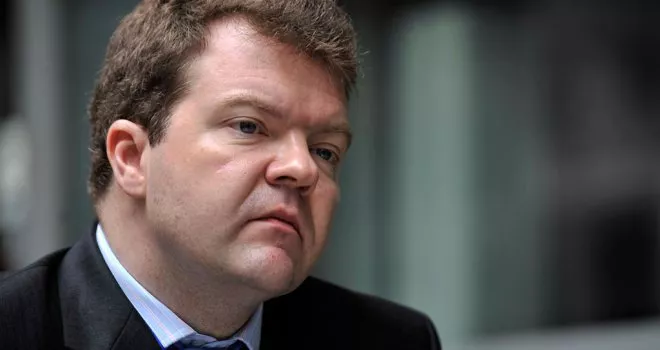
Erecting a monument to Gavrilo Princip in East Sarajevo is the same as erecting a monument to Slobodan Milošević, Radovan Karadžić or Ratko Mladić, says Marko Attila Hoare, a British historian and Balkan expert, in an interview with the Bosnian news agency Patria (NAP).
All of them, as he says, are part of the „pantheon“ of Serbian nationalism. According to his words, there is no doubt, Princip is a „terrorist“, not a freedom fighter.
- The difference between a terrorist and a freedom fighter may be subjective. He certainly saw himself that way, but the murder of Franz Ferdinand and Sophie is a terrorist act. Princip had no mandate or popularity, and he was an agent of the extremist organization „Black Hand“ from neighboring Serbia. I would describe him as a classic terrorist – says Hoare.
NAP: Was his goal a Greater Serbia, as is the case with today's Serbian nationalists?
Hoare: His political stance was pro-Serbian, but he believed in the territorial unification of South Slavs, which included Orthodox, Catholics and Muslims. He and his comrades did not have a political program, but they essentially stood on the border between Yugoslavism and Greater Serbianism. Some members of Young Bosnia, like Vasa Čubrilović, described themselves as Serbo-Croats, meaning they identified with Serbia and Croatia and wanted Bosnia and Herzegovina to unite with them. However, Princip was an agent of Dragutin Dimitrijević Apis and the „Black Hand“, which aimed for a Greater Serbia, and they used Yugoslavism only as a cover. Young radicals like Princip often could not discern the difference between a Greater Serbia and the unification of South Slavs.
NAP: Is erecting a monument to Princip then equal to, say, erecting a monument to Milošević, Karadžić or Mladić?
- Yes, Serbian nationalists, like other nationalists, adapt historical figures to construct their version of history. Regardless of certain differences between Princip and those three, they are all part of the nationalist pantheon of Serbian „heroes“ such as the Karađorđevićs, Njegoš, Živojin Mišić, Vojvoda Stepa, or King Peter. Some Serbian nationalists will have a different selection, right-wingers might add Draža Mihailović or Milan Nedić, and leftists Milošević or Ranković.
NAP: What is the difference between Princip and the aforementioned war criminals?
Hoare: There is a certain difference. Princip is a terrorist, but he did not plan genocide. He seems to have had from childhood some hatred towards Bosniaks and the Sarajevo bazaar, like Radovan Karadžić. But Princip's hatred was above all directed at foreigners, the Austro-Hungarian occupier, not at Bosnians. It would be a mistake to equate the genocidal character of figures like Milošević, Karadžić and Mladić with Serbian historical figures such as Princip, Vuk Karadžić or Ilija Garašanin.
NAP: Members of Young Bosnia, although Serbian nationalists, did not shy away from the name Bosnia. But today's Serbian politics does that and tries to identify with the artificial name Srpska. How do you comment on that?
- Bosnian Serbs, even nationalists, traditionally identified with Bosnia and Herzegovina as their homeland, even if they supported unification with Serbia. In the 19th and early 20th centuries, Serbian nationalists like Vaso Pelagić or Nikola Stojanović expressed a strong patriotic identification with BiH. They had no problem with that as long as they considered Bosnia and Herzegovina a „Serbian land“. Only in the 20th century did Serbian nationalists begin to refuse to recognize BiH as their state.
The reason for this is that they could not establish full control over BiH and assimilate Bosniaks into Serbian national politics. The resistance of the Yugoslav Muslim Organization (JMO), led by Mehmed Spaho, to attempts by Serbian politicians to take control of BiH between the two wars led them to abandon support for the whole of BiH and accept the idea of partition. That support for the integrity of BiH temporarily returned during the period of communism and Titoism. But the emergence of BiH as a common state of Serbs, Croats and Bosniaks, where all have equal rights and Bosniaks are recognized as a nationality, caused Serbs to lose dominance, provoking a new Serbian reaction against BiH in the 1990s.
NAP: How do you comment on the marking of the anniversary of the assassination in Sarajevo and what messages were sent?
Hoare: I was not present and cannot speak to how successful it all was. But using the anniversary of a tragedy to emphasize the importance of peace and reconciliation is good in principle, but if that means accepting the post-Dayton status quo, this can only be preparing the ground for a new tragedy. There will be no genuine reconciliation in BiH as long as BiH is disfigured by the Dayton constitutional order that promotes conflicts among Bosniaks, Serbs and Croats. BiH needs radical change and citizens must fight for it.
Komentari (0)
Prijavite se za komentiranje
PrijavaJos nema komentara. Budite prvi!
Minuta
Sve →Iz drugih kategorija

High Representative Not Elected: Germans, French and British Sabotaged Americans, New Attempt at End of June

ČOVIĆ WITHOUT MERCY: How Those Who Brought Ademović to Office Created a Political Hell for Him



Sunny Saturday, quite warm



Tragedy in Albanian resort: Two minors drown












