
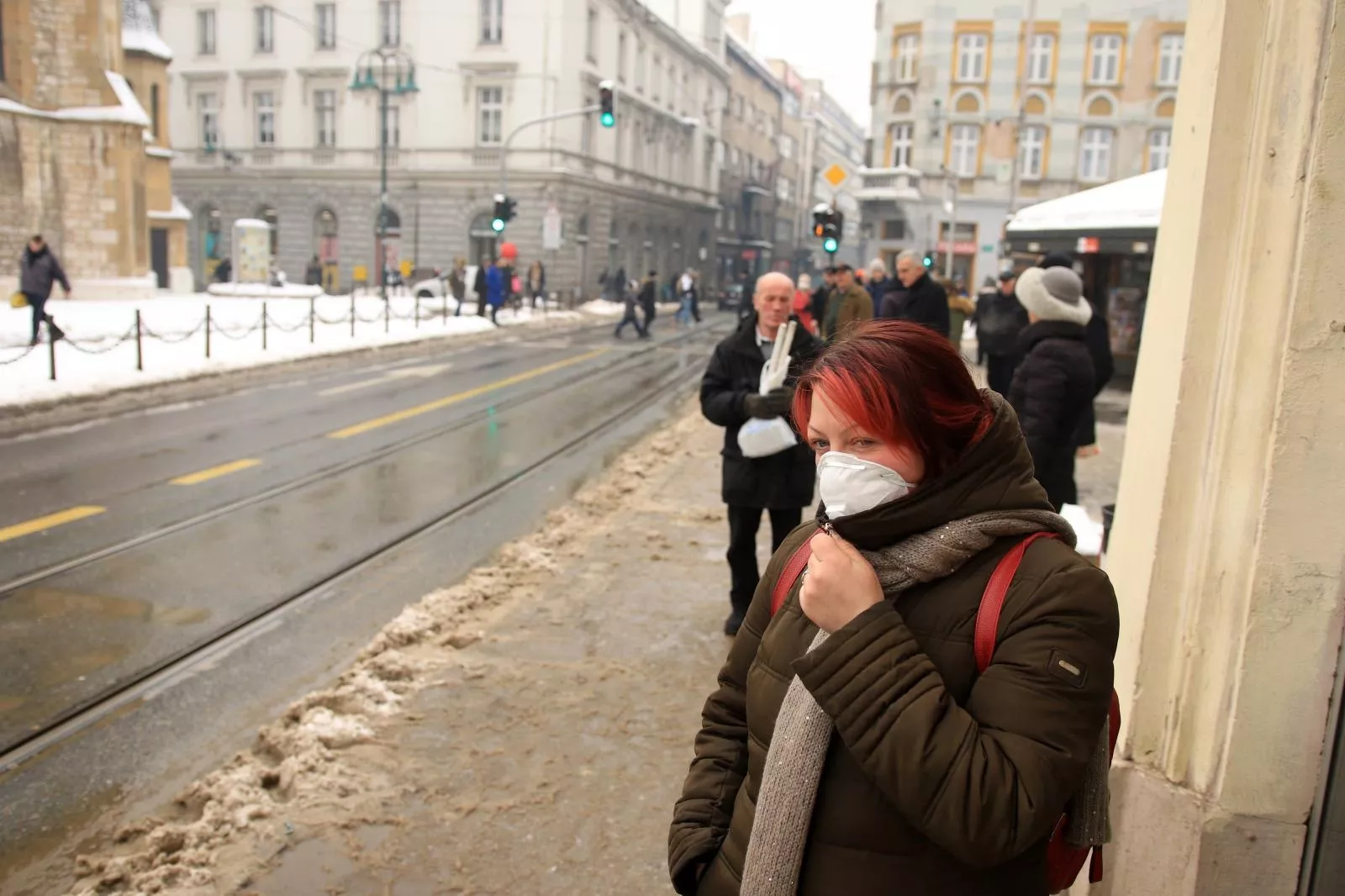
SARAJEVO, (Patria) - The air is extremely polluted, more polluted than in Australia where fires are raging. Eco Action provides adequate answers on the topic of Polluted air and protective masks - which, when, and why?
There is no need to use a protective mask during a short stay outdoors, such as going from home to school or work, going to the store, and the like. Masks are also not needed when staying indoors.
Healthy individuals: if you spend several hours outdoors while the air is "DANGEROUS" according to the Air Quality Index (above 300), exposure can be reduced by wearing a mask. When the air is "VERY UNHEALTHY" or "DANGEROUS" polluted, everyone whose job requires them to be outdoors should wear masks: postal workers, police officers at intersections, construction workers, etc. Individuals suffering from chronic lung or heart disease, the elderly, and pregnant women should either avoid going outdoors altogether or reduce outdoor activities to a minimum when the air quality is already marked as "VERY UNHEALTHY" (Air Quality Index above 200).
If they must stay outdoors, exposure should be reduced by using a mask. If they feel discomfort under the mask, they can remove it and rest.
Elderly people, pregnant women, and individuals with heart and lung diseases who have difficulty breathing even at rest or with minor exertion should consult a doctor before using a mask. Pregnant women in the second and third trimesters of pregnancy may already have breathing problems and reduced lung capacity. If they feel uncomfortable, they should stop using the mask immediately.
Ordinary surgical masks CANNOT effectively filter dangerous fine particulate matter (less than 2.5 microns), although by creating a barrier between the nose and mouth, they reduce the discomfort caused by fog and larger irritating particles also present in the air.
How to choose a mask?
Look for a mask marked EN 149: these are intended to reduce exposure to airborne pollutants: particles, gases, and vapors. Based on their ability to retain airborne particles, they are classified into three classes:
FFP1 can retain 80% of airborne particles
FFP2 can retain 94% of airborne particles
FFP3 can retain 99% of airborne particles.
You must replace the mask as soon as breathing becomes difficult under the mask or when the mask becomes dirty on the inside.
Komentari (0)
Prijavite se za komentiranje
PrijavaJos nema komentara. Budite prvi!
Minuta
Sve →Iz drugih kategorija

High Representative Not Elected: Germans, French and British Sabotaged Americans, New Attempt at End of June

ČOVIĆ WITHOUT MERCY: How Those Who Brought Ademović to Office Created a Political Hell for Him



Sunny Saturday, quite warm



Tragedy in Albanian resort: Two minors drown












