
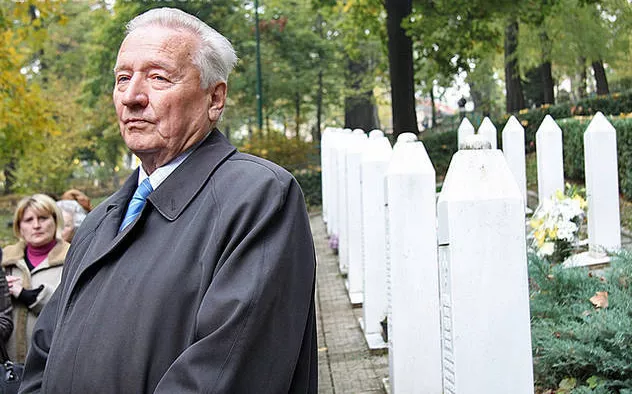
Avdo Hebib regrets that the citizens of Bosnia and Herzegovina do not bring more love and warmth to the celebration of March 1, Independence Day of Bosnia and Herzegovina. For him, it is one of the holiest dates in the country's history, when it gained independence and became internationally recognized in the world.
- It is not just a calendar date significant for some event - says Hebib. March 1 means the birthday of their own country for the citizens of Bosnia and Herzegovina, which does not happen every day. More than 100,000 citizens were killed in BiH because of this date, and about two million residents had to leave their homes. Entire cities were destroyed.
Independence Day of Bosnia and Herzegovina is a national holiday celebrated on March 1 every year, celebrating the independence of Bosnia and Herzegovina from the Socialist Federal Republic of Yugoslavia.
A State of Equal Citizens
Adult citizens of the Socialist Republic of Bosnia and Herzegovina voted on the independence of Bosnia and Herzegovina in a referendum held on February 29 and March 1, 1992. The referendum question was:
- Are you for a sovereign and independent Bosnia and Herzegovina, a state of equal citizens, the peoples of BiH - Muslims, Serbs, Croats, and members of other nations living in it?

Facsimile of the referendum ballot from March 1992
Independence was strongly supported mainly by Bosniaks and Bosnian Croats, while a larger number of Bosnian Serbs boycotted the referendum due to the SDS's call for Serbs not to vote in the referendum. A total of 2,073,568 voters participated in the referendum, representing a turnout of 63.6%. Of those who voted, 99.7% voted for independence, and 0.3% against that decision.
Hebib was the Minister of Internal Affairs of the SR BiH at the time of the organization and holding of the referendum. In an interview with the BiH news agency Patria, he said that he still remembers the euphoria that gripped all of BiH in those days.
- We all knew that this day would be very risky, because the Serb authorities were trying to dispute the referendum in every way - Hebib recalls.
- There were also many technical problems. Only lawyers could conduct polling stations, as the law required.
The referendum organizers did not have enough lawyers in every location, so we had to transfer people from one city to another. Ultimately, all of this was quite risky. People received threats daily, and the very next day after the referendum, Kenan Demirović, one of the organizers of the referendum, was killed at Kobilja Glava in Sarajevo.
How the Referendum Came About
After Slovenia and Croatia declared independence from the SFRY in 1991, representatives of the SDA and HDZ in the assembly of SR BiH, on October 15, 1991, by outvoting SDS deputies, adopted the Act on the Reaffirmation of the Sovereignty of the Republic of Bosnia and Herzegovina.
Following this, the Serb Democratic Party began establishing Serb Autonomous Regions, and on November 9 and 10, 1991, it held a referendum on the establishment of the Serb Republic of Bosnia and Herzegovina as an integral part of Yugoslavia. The authorities of Bosnia and Herzegovina declared this referendum invalid.
With the Brussels Declaration on Yugoslavia of December 17, 1991, based on the recommendations of the international Arbitration Commission, chaired by the Frenchman Robert Badinter, the dissolution of the SFRY was stated, and the then republics were invited to declare their independence by December 23, 1991. The republics were promised international recognition by January 15.
On January 9, the assembly of Bosnian Serbs proclaimed the Serb Republic of Bosnia and Herzegovina as an integral part of Yugoslavia.
On January 15, 1992, the report of the Badinter Arbitration Commission was published, in which the constitution of Bosnia and Herzegovina as a sovereign and independent state was conditioned solely by a referendum of its citizens, as the other conditions from the December Declaration of the European Community had been met.
In response to the Referendum, Serb paramilitary units erected barricades in Sarajevo and other Bosnian-Herzegovinian cities (Bosanski Šamac, Derventa, Odžak) from March 1 to 5, among which Bosanski Brod stood out, around which armed conflicts erupted. Soon, a bloody war that would last four years would begin in BiH.
- Politicians today care about their seats, and in the '90s we were saving the country - says Hebib, writes Patria.
Komentari (0)
Prijavite se za komentiranje
PrijavaJos nema komentara. Budite prvi!
Minuta
Sve →Iz drugih kategorija

High Representative Not Elected: Germans, French and British Sabotaged Americans, New Attempt at End of June

ČOVIĆ WITHOUT MERCY: How Those Who Brought Ademović to Office Created a Political Hell for Him



Sunny Saturday, quite warm



Tragedy in Albanian resort: Two minors drown












