
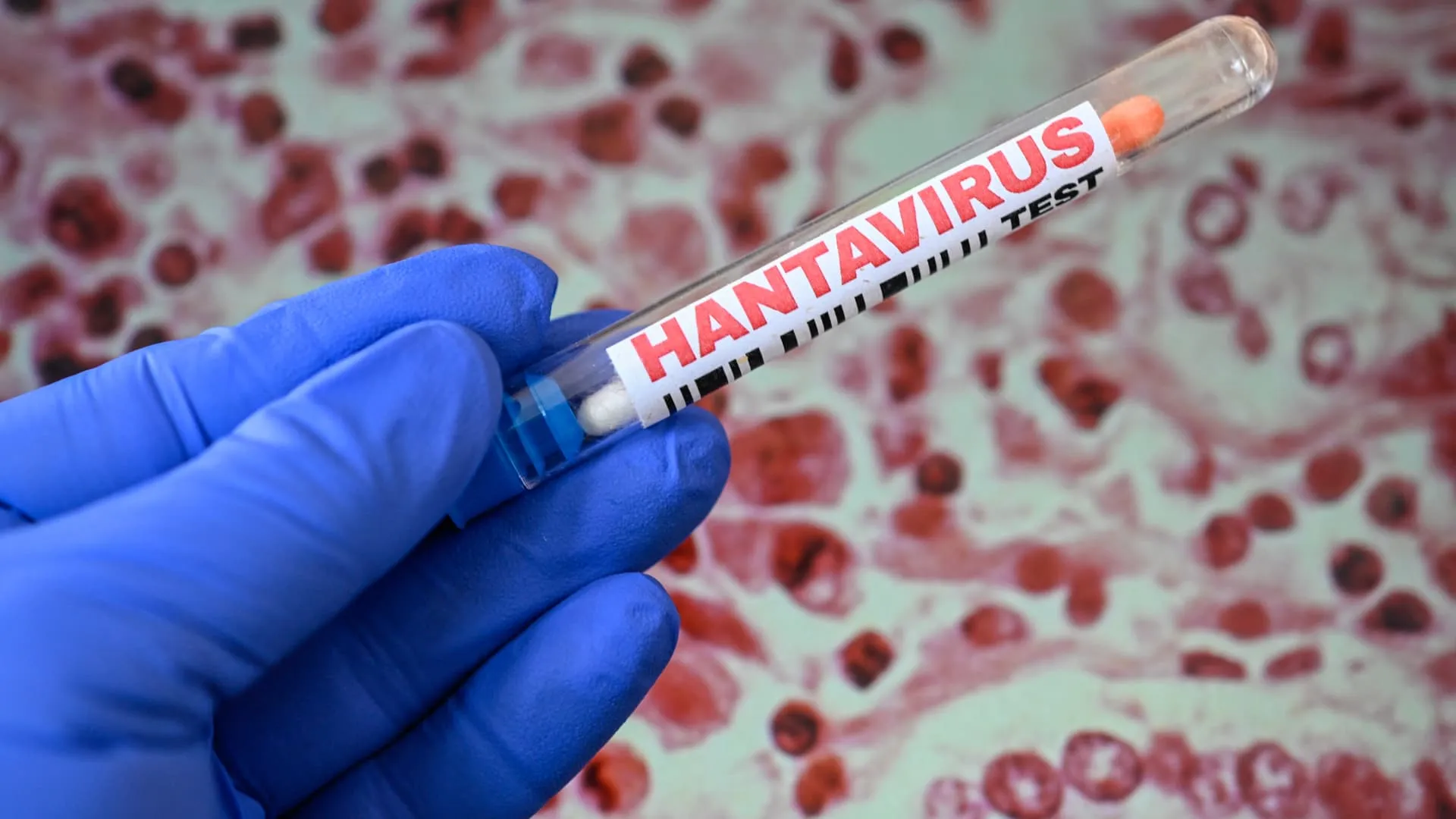
(Patria) - In early May, media reported information from the World Health Organization (WHO) that three people had died following a suspected hantavirus outbreak on a cruise ship sailing the Atlantic Ocean.
Hantaviruses are a family of viruses primarily transmitted by rodents. Although infections in humans are relatively rare, they can cause serious health problems. Given that increased rodent activity often coincides with spring and summer outdoor work, it is important to recognize the risks and take precautions.
The Institute of Public Health of Sarajevo Canton has prepared a brief overview of symptoms, ways this virus can be transmitted, and preventive measures you can take to protect yourself.
Hantaviruses are a family of viruses primarily transmitted by rodents. Although infections in humans are relatively rare, they can cause serious health problems. Given that increased rodent activity often coincides with spring and summer outdoor work, it is important to recognize the risks and take precautions.
What causes Hantavirus?
Hantavirus is the cause of several groups of diseases, the best known in our region being Hemorrhagic Fever with Renal Syndrome (HFRS), popularly known as "mouse fever".
Symptoms usually appear 1 to 2 weeks after exposure (rarely up to 8 weeks) and include:
Sudden onset of high fever and chills.
Severe headache and pain in the back and abdomen.
Nausea and vomiting.
Redness of the face and eyes, sometimes with a rash.
In severe cases, reduced urine output and kidney dysfunction.
How is the virus transmitted?
Humans most often become infected through direct or indirect contact with the excretions of infected rodents (field mouse, wood mouse, vole). The virus is transmitted in the following ways:
Inhalation (Aerogenic): This is the most common route of transmission. When cleaning dusty areas (attics, basements, sheds) inhabited by rodents, the virus enters the air and is inhaled.
Direct contact: Through skin breaks or mucous membranes of the mouth, nose, and eyes if hands have been in contact with rodent excretions.
Contaminated food and water: By consuming food that has come into contact with rodents.
Note: The virus is not transmitted from person to person.
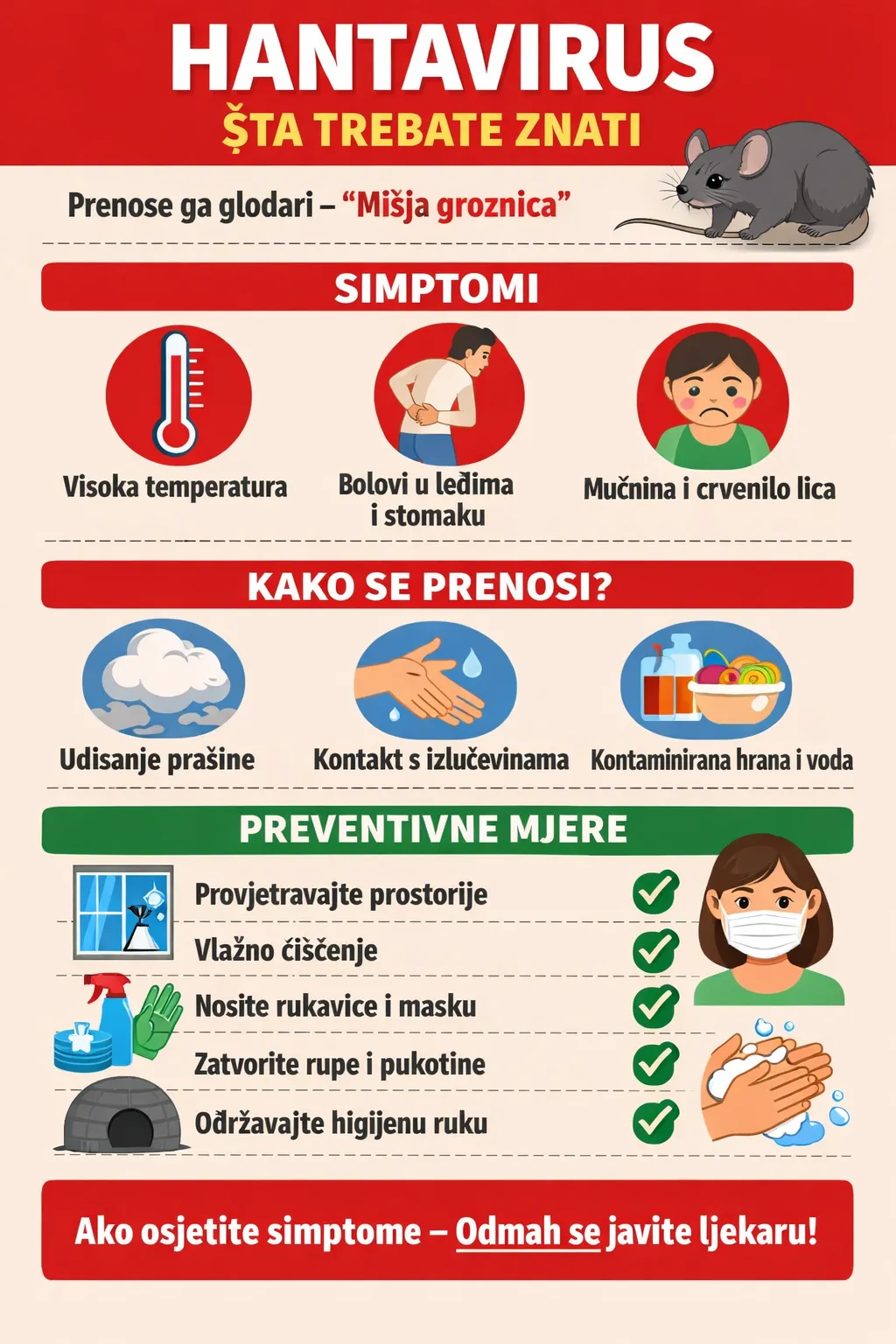
Preventive Measures
The best way to protect yourself is to prevent rodents from entering buildings and to avoid inhaling dust in areas where they have been present.
1. Safe cleaning of enclosed spaces
Ventilation: Before entering enclosed spaces that have not been used for a long time, open doors and windows for at least 30 minutes.
No sweeping or vacuuming: Do not sweep or vacuum dry dust, as this will aerosolize the virus.
Wet cleaning: Spray floors and surfaces with a disinfectant or a solution of water and chlorine (bleach) before cleaning.
Protective equipment: Use rubber gloves and a protective mask that covers the nose and mouth.
2. Maintaining hygiene around the house
Waste removal: Do not leave piles of wood, garbage, or old furniture near the walls of the house, as these are ideal nesting places for rodents.
Sealing openings: Seal all holes larger than 6 mm in the house, garage, or shed.
Food storage: Store food for humans and pets in sealed containers made of metal or sturdy plastic.
3. Protection while outdoors
Hand hygiene: Wash hands regularly with soap or use alcohol-based hand sanitizers, especially before eating.
Safe food disposal: Do not leave food scraps on the ground and do not drink water from unprotected forest sources.
Avoid direct contact with the ground: Avoid lying directly on grass or the ground without a mat.
If a person experiences flu-like symptoms with intense back or abdominal pain after being outdoors or cleaning neglected premises, they should seek medical attention immediately.
Although most hantaviruses are not transmitted from person to person, there is a specific exception that has attracted significant attention from the scientific community. This is the Andes virus.
Andes Virus: A Type of Hantavirus Transmitted Between Humans
When discussing hantaviruses, the basic rule is that they are transmitted from rodents to humans. However, the Andes virus, primarily present in South America (especially in Chile and Argentina), represents a unique exception as it is the only hantavirus scientifically confirmed to be transmissible directly from person to person.
What is the Andes virus?
The Andes virus belongs to the group of hantaviruses that cause Hantavirus Pulmonary Syndrome (HPS). This is a severe and often fatal respiratory illness. It was first identified in 1995 after an epidemic in Argentina, when doctors noticed an unusual pattern of disease spread within families and among healthcare workers.
How is it transmitted from person to person?
Unlike the "mouse fever" prevalent in our region, the Andes virus can jump from animal to human and then spread further:
Close contact: Transmission usually occurs within families or close circles of friends.
Bodily fluids: The virus is believed to be transmitted through saliva or via droplets during close contact (talking, coughing, kissing).
Incubation period: A person can be contagious even before the first serious symptoms appear, making early-stage spread difficult to control.
Symptoms and Severity of the Disease
The illness caused by the Andes virus progresses through several stages:
Early stage: Flu-like symptoms – fever, muscle aches (especially in the thighs and back), fatigue, and headache.
Critical stage: Rapid deterioration of breathing due to fluid accumulation in the lungs. Patients experience severe shortness of breath and suffocation.
Mortality rate: Hantavirus Pulmonary Syndrome caused by the Andes virus has a high mortality rate, reaching up to 35-40% in some epidemics.
How does it differ from viruses in our region?
It is important to emphasize the difference between viruses present in the Balkans and the Andes virus:
Balkan types (e.g., Dobrava or Puumala): Primarily cause kidney problems (mouse fever). They are not transmitted from person to person.
Andes virus: Causes lung problems and can spread among people. Indigenous transmission of this virus has not been recorded in Europe to date; it remains localized to South America.
Prevention and Control
Due to the possibility of human-to-human transmission, protection measures for the Andes virus are more rigorous:
Isolation: Infected individuals must be in strict isolation in hospital settings.
Quarantine: Individuals who have had close contact with an infected person are monitored during the incubation period.
Protective equipment: Healthcare personnel use the highest level of respiratory protection.
Although the Andes virus does not currently pose a direct threat in our geographical area, it serves as a reminder of the importance of continuous surveillance of zoonoses (diseases that spread from animals to humans) and the rapid response of health services.
Komentari (0)
Prijavite se za komentiranje
PrijavaJos nema komentara. Budite prvi!
Minuta
Sve →Iz drugih kategorija

High Representative Not Elected: Germans, French and British Against Americans, New Attempt at End of June

ČOVIĆ WITHOUT MERCY: How Those Who Brought Ademović to Office Created a Political Hell for Him



Sunny Saturday, quite warm



Tragedy in Albanian resort: Two minors drown












