
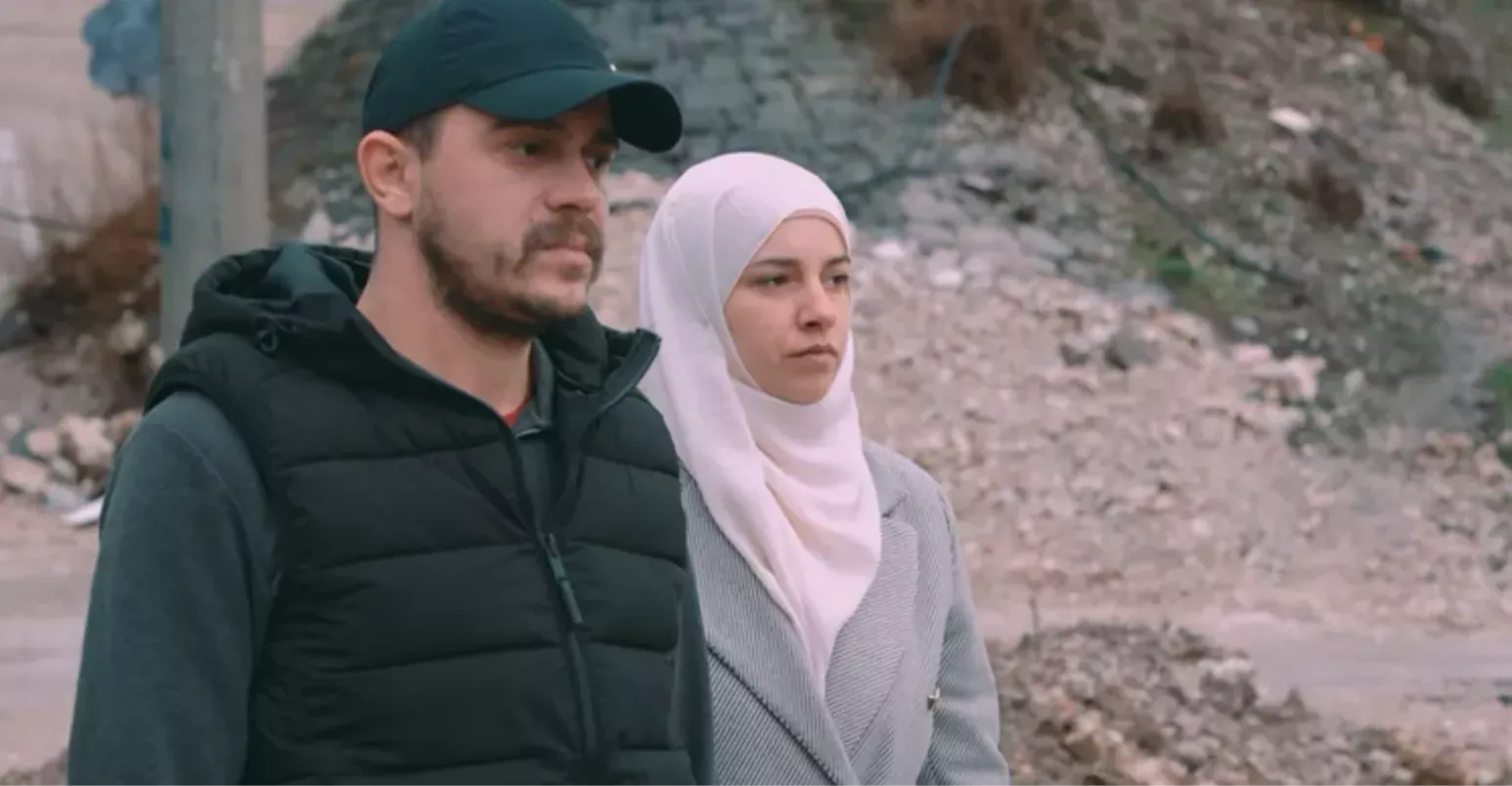
Four months after fighting for her life in her family home, twenty-eight-year-old Hanadi looks at the place where not even her foundation remained, holding her husband Alen's arm. In the floods in which 19 of her neighbors lost their lives, Hanadi lost her baby in the eighth month of pregnancy, writes Detektor.
On the night of the floods in early October, it rained like she had never experienced before. She got up to eat something when she heard a loud bang that woke her husband. In just a few moments – which she remembers through a fog today – the water and mud that filled the room pressed her pregnant body against the ceiling.
“Then I felt that pressure in my stomach, I knew it was it. I just started reciting the Shahada, just waiting for what would happen next. What is it after death, because I thought it was over, it was done,” describes Hanadi.
She and her husband had come to Donja Jablanica from the Croatian island of Hvar, where they worked and lived, for just a few days, to visit Alen's parents in their family home. On the night of October 4th, she was sitting with her family, and then went to bed. She was woken by a severe storm.
“It was raining very heavily, lightning, I don't know when it flashed like that, it was just flashing every second,” recalls Hanadi.
Then the water began to flood in through the windows and doors. As she tried to get out with her husband, the water began to lift them. Her husband then lifted her onto the bed. She remembers thinking she would surely die at that moment. At that moment, the house began to collapse.
“When the house broke, they were scattered all around, but I stayed,” says Hanadi.
Then the debris began to carry her, and she says she just let go because she couldn't do anything. When she stopped, she saw a shelter, but it took her several hours to reach it, even though it wasn't far.
“I didn't feel any pain, but it was so cold, that adrenaline, that fear, in that situation, a person just looks to get out, I was looking to get out – there was nowhere, I just saw some lights shining above, something, but I couldn't scream. I had three broken ribs, I couldn't scream, partly because I couldn't be heard over the flood, and partly because I didn't have enough strength to scream,” she recalls.
At dawn, neighbors found her. That's when she learned that her husband and family had survived. Hanadi had to be taken to the hospital in Mostar for examination.
“I had three broken ribs, a punctured lung membrane, and an emergency C-section,” says Hanadi.
“I didn't see her, I didn't touch her, I didn't feel her, I didn't smell her, nothing,” she says about the daughter she lost in her womb.
For days she couldn't sleep and says the images of the flood, the water, and the house kept coming back to her. She does not plan to return to Donja Jablanica and wants to live in Mostar with her husband.
Three months after the floods, she is frustrated by the attitude of the state she lives in. Data collected by Detektor show that Jablanica and other flooded municipalities have not yet begun to distribute aid to citizens collected through donations.
Apart from medical assistance, Hanadi says they have never received any help from the authorities, even though hundreds of thousands of marks in donations have been collected.
“It is enough for you to know that we had to get all the documents redone at our own expense. Everything – ID cards, driver's licenses, everything that was needed – everything came out of our pockets, not the state's. If they had at least covered that, they didn't even cover that,” says Hanadi.
Komentari (0)
Prijavite se za komentiranje
PrijavaJos nema komentara. Budite prvi!
Minuta
Sve →Iz drugih kategorija

High Representative Not Elected: Germans, French and British Sabotaged Americans, New Attempt at End of June

ČOVIĆ WITHOUT MERCY: How Those Who Brought Ademović to Office Created a Political Hell for Him



Sunny Saturday, quite warm



Tragedy in Albanian resort: Two minors drown












