
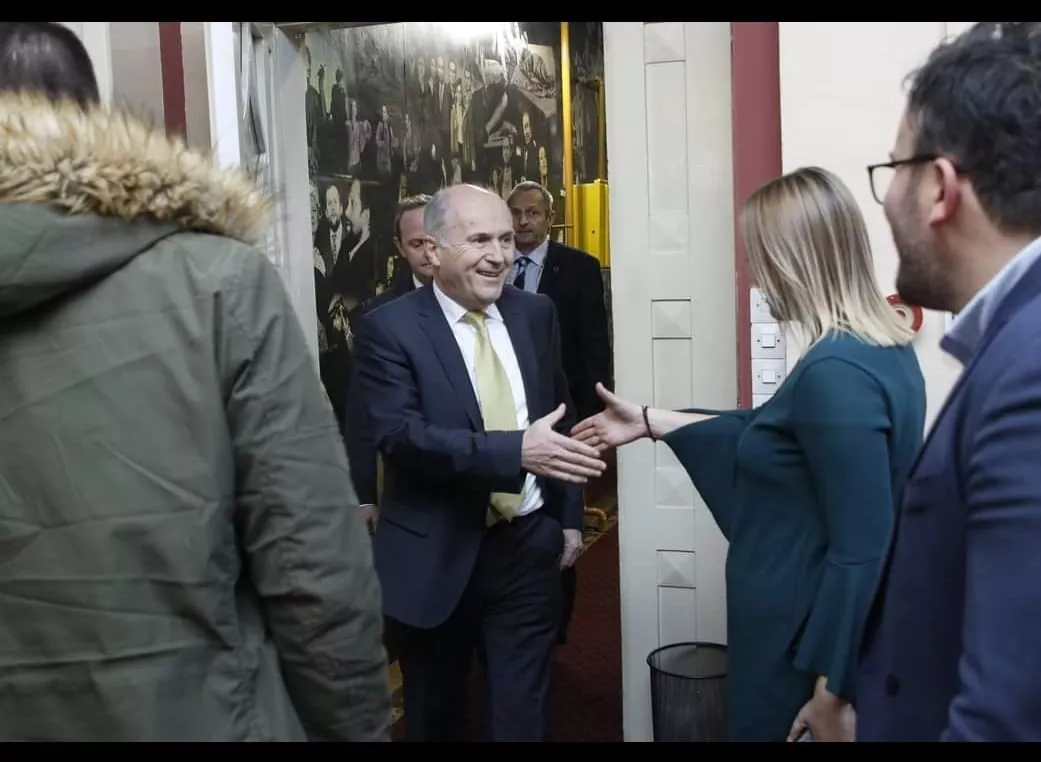
(Patria) - The prominent newspaper Guardian, in its analysis of the situation in BiH, states that EU officials are working behind closed doors to modify the law imposed by former High Representative in BiH Valentin Inzko.
Senior EU officials are working behind the scenes to “fix” a new law in Bosnia and Herzegovina (BiH) that criminalises the denial of the genocide of 8,000 Muslims in Srebrenica, after privately concluding that it could reignite a new regional conflict.
Milorad Dodik, a member of the BiH Presidency, has been accused in recent months of trying to break up the country by pulling its Serbian part out of state institutions.
Dodik's moves to return powers have been condemned by the international community, but published minutes reveal that EU Enlargement Commissioner Olivér Várhelyi concluded that Inzko's law is responsible for the current crisis.
During a meeting with the EU delegation in Bosnia, Várhelyi – who is responsible for strengthening the bloc's relations with BiH – gave a „frank assessment“ that Inzko was „guilty for the current political crisis“ in the country and the „delegitimisation“ of the Office of the High Representative.
„Although Inzko's amendments cannot be challenged from the standpoint of the substance of the law, the fact that they were imposed on the last day of High Representative Inzko's mandate was problematic,“ the minutes state as Várhelyi said at the meeting on 25 November.
“Especially because it was an important decision, it should have been based on a thorough debate in which everyone was present. The question now was how to fix this.”
Várhelyi, a Hungarian close to his country's right-wing prime minister Viktor Orban, told his fellow EU officials that the leadership of Bosnia's Muslims had signalled a willingness to resolve this issue by adopting a new law that could bring Dodik and the Republika Srpska back into the institutions.
The minutes show that Várhelyi said he believed there was a way out of the current crisis and that he approved a special session of the National Assembly of Republika Srpska on 10 December, where members supported a resolution backing the return of powers to the entity.
His condition, however, was that the law seeking to return powers to the state in the areas of tax administration, judiciary, intelligence service, and even the army, in order to create Serbian forces, be postponed for six months to allow time for negotiations.
Várhelyi said that dealing with the genocide law was vital for Dodik to recognise Inzko's successor, Christian Schmidt of Germany, who has said the region is facing its biggest crisis in a quarter of a century, the Guardian writes.
Komentari (0)
Prijavite se za komentiranje
PrijavaJos nema komentara. Budite prvi!
Minuta
Sve →Iz drugih kategorija

High Representative Not Elected: Germans, French and British Sabotaged Americans, New Attempt at End of June

ČOVIĆ WITHOUT MERCY: How Those Who Brought Ademović to Office Created a Political Hell for Him



Sunny Saturday, quite warm



Tragedy in Albanian resort: Two minors drown












