
(Patria) - The political crisis in Bosnia and Herzegovina has reached a level where many claim that peace itself is threatened and that a new war is inevitable, but although the current political crisis is the most serious in the last 20 years, the possibility of a repeat of the war from the 1990s is very small due to a lack of manpower, armament, and motivation, according to an article published on the European Western Balkans portal.
According to author Valentino Grbavac, this does not mean that "sporadic violence" is not possible in the country, but the chance that the war that claimed 100,000 lives in BiH in the 1990s and led to 2.3 million refugees could reignite is very small.
The reason for this is not a lack of hatred or nationalist rhetoric, "as intergroup relations in 2021 are worse than in 1991," he states. The reason, in his opinion, is simply that none of the three constituent peoples have the necessary means to start and wage a war – "manpower, resources, and motivation."
Manpower and Military Material
The author says that in 1995, "Bosniak forces (ARBiH)" numbered "230,000 soldiers (96% of whom were Bosniaks), Croatian forces (HVO) numbered around 45,000 soldiers (mostly Croats, although in 1992, HVO had about 15% Bosniaks), and Serbian forces (VRS) numbered 155,000 soldiers (practically entirely Serbs). In other words, in 1995, there were 430,000 soldiers in the three armies, or nearly an incredible 10% of the total pre-war population of 4.4 million."
The situation is quite different now.
"The Armed Forces of BiH today number around 8,800 soldiers. 20% are Croats, 34% Serbs, and 46% Bosniaks, which roughly means 1,800 Croatian soldiers, 3,000 Serbian soldiers, and 4,000 Bosniak soldiers. The Armed Forces have three multi-ethnic infantry brigades and a small number of support units, but the brigades consist of three ethnically homogenous battalions stationed in different cities, meaning the army is, for all intents and purposes, divided into three separate forces."
When considering police forces, the latest available data from four years ago indicates that there were a total of 7,300 Bosniaks, 2,500 Croats, and 8,500 Serb police officers in the country.
"This would give us 11,300 Bosniaks (42%), 4,300 Croats (16%), and 11,500 Serb soldiers and police officers (42%) out of a total of 27,100 trained armed individuals in the armed and police forces."
The current population of BiH is estimated at just over 2.6 million, of which about 350,000 are Croats, 950,000 Serbs, and 1.3 million Bosniaks.
"While a 60-year-old can pull a trigger just as easily as an 18-year-old, warfare, especially in BiH's rugged and mountainous terrain, requires young people. BiH has experienced an unprecedented increase in emigration in the last decade, and approximately half of young people (15-30) stated in a recent survey that they plan to leave the country. The population is on average more than five years older than in 1991, meaning there are fewer military-capable citizens," he states.
If a scenario of full mobilization like in the 1990s were to occur, "the maximum that all three sides could muster, including current active police and soldiers, would be 20,000 for Croats, 55,000 for Serbs, and 75,000 for Bosniaks, or a total of 150,000."
However, in a realistic scenario, these numbers would be much lower, "given the deep disappointment of young people with their representatives and the fact that it is much easier to emigrate today than it was in the 1990s."
But even in the aforementioned case, it would result in a total of 150,000 people engaged, whereas that number was 430,000 in 1995, meaning "a third of the manpower would cover a front as wide as in the 1990s, which even then was too wide for the available forces."
The quantity of military forces would already be a huge problem, but their quality could be an even more important factor, writes Grbavac.
"All eighteen-year-olds in Yugoslavia had to serve a full year in the army, undergoing both basic and specialized training, which was a major factor in such rapid mobilization of soldiers in the 1990s. Military service in BiH was completely abolished in 2006, meaning that all individuals aged 18 to 33, who constitute the vast majority of the fighting-age population, have no military training."
If these young people were mobilized, it would take several months to establish "even the most basic combat force for static defense, and it would take "at least a year" before any party to the conflict could be ready to launch a real strategic offensive."
Another limiting factor for such a possibility is armament.
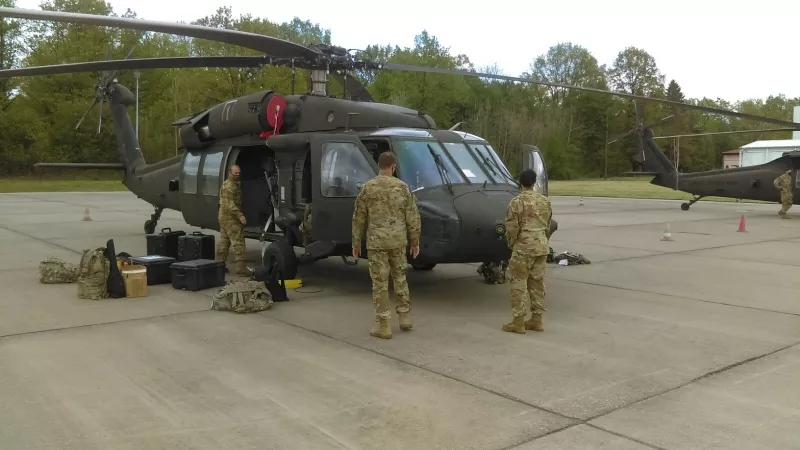
"BiH does not have jet aircraft, and its few operational helicopters are primarily used for transport. There are approximately 40 operational tanks, 80 operational armored vehicles, and about 120 operational pieces of heavy artillery, with the rest being decades old and largely unusable," it states.
For comparison, in 1992 alone, Serbs had 500 tanks, 400 armored vehicles, and about 1,000 pieces of heavy artillery.
"In other words, the war would have to be fought exclusively with small arms. There are about 270,000 registered pistols and hunting weapons, and many people have hidden automatic weapons from the war. However, while AKs (Kalashnikovs), RPGs, and occasional mortars might be sufficient to create violence in a few remaining multi-ethnic cities, they are not enough to wage a full-scale war, even if motivation were high, which would not be the case."
Motivation
The author explained the goal of the war that took place in BiH as "conquering territory" and cleansing "others" from it, creating homogenous areas in BiH.
"Unfortunately, this was very effective. Today, 95% of Serbs live in Republika Srpska (RS), 85% of Bosniaks live in six cantons with a Bosniak majority, and 70% of Croats live in four cantons with a Croat majority. Most cities are mono-ethnic (e.g., Sarajevo today is 82% Bosniak, with Croats and Serbs together making up less than 9% of the population), and a few multi-ethnic cities like Brčko, Gornji Vakuf-Uskoplje, or Mostar are still divided along the wartime front line into two mono-ethnic parts," he states, commenting that "the multi-ethnic character of cities was an additional victim of the terrible war of the 1990s."
However, that tragic reality also means there is a lack of motivation for a new war, "as all sides now control mono-ethnic territories that encompass almost all of their members in BiH."
"Croats, for example, have no reason to fight Serbs, as there are about 5,000 elderly Croats left in RS (out of a pre-war 145,000). Likewise, in the territory of Canton 10, controlled by Croats, there are about 8,000 Serbs left. Simply put, there is no motive for war between Croats and Serbs, and if anything, given their political cooperation over the last decade in BiH, it would be more likely for them to be allies than enemies if a new war were to start."
The author then poses the question – considering the ethnic homogenization of the territory, what could motivate Bosniaks, equipped only with small arms, to march on Banja Luka, which has a 90% Serb population, to confront forces of the same caliber?
However, these are conclusions based on the assumption that Serbia or Croatia would not intervene, but according to the author's assessment, that would most likely not be the case, given the recent rhetoric of the "Serbian World" and the fact that the President of Croatia, a NATO member, was caught on tape saying he would not abandon "Croats in BiH with Bosniaks" if Republika Srpska seceded.
"Would Bosniak forces attempt to capture the West Herzegovina Canton, which has a 99% Croat population, if a new conflict arose? What would they even do with that territory, given that BiH is already one of the least populated countries in Europe? Even if conquered, how would they pacify and govern an area completely populated by another ethnic group? Who is willing to risk their lives and the lives of their families for territory they have no way of effectively controlling without genocide and ethnic cleansing?"
Grbavac assesses that Bakir Izetbegović's recent statement that Bosniaks would mobilize 200,000 soldiers to prevent the breakup of BiH is "simply a political stance aimed at his voters and the international community, rather than a realistic statement."
"Simply put, despite the fears of some, mainly diaspora, voices, the territory has become ethnically homogenized to such an extent that a comprehensive war would lack adequate motivation because there is almost no disputed multi-ethnic territory left. BiH is already clearly divided," he concludes.
But this does not exclude the possibility of "localized violence between Bosniaks and Serbs in Brčko or Bosniaks and Croats in Central Bosnia."
"Despite this possibility, there are no indications that this violence would not remain localized."
International Factor
The EU-led Althea peacekeeping mission currently has 600 soldiers in BiH, states Grbavac, commenting that this mission represents more of a problem than a serious deterrent to conflict, as these soldiers could end up as hostages, as was the case during the 1990s.
"In the event of RS secession (or joint secession of RS and cantons with a Croat majority in FBiH), Bosniaks undertaking military actions to prevent it would risk the involvement of Croatia and Serbia," he states, adding that the current homogeneity of territories and the lack of international forces to stop secession means there is no motivation for war in BiH.
"Small-scale conflicts and terrorist activities are possible, similar to those we have seen in the last 25 years, including bombings in Bugojno and Mostar, and the killing and intimidation of returnees, but that would be far from an all-out war."
However, Grbavac emphasized that the fact that the possibility of war is very small does not mean that the two main political crises in the country, "the Bosniak-Serb one due to the recent OHR decision and the Bosniak-Croat one over electoral law reform," should not be taken seriously.
"BiH is on the verge of a complete collapse of its political system after three years of deadlock, which could lead to its disintegration. As we learned in the 1990s, war does not require two (or three) willing sides, but it does require manpower, military material, and motivation, all of which barely exist in BiH today," he concluded.
Komentari (0)
Prijavite se za komentiranje
PrijavaJos nema komentara. Budite prvi!
Minuta
Sve →Iz drugih kategorija

High Representative Not Elected: Germans, French and British Sabotaged Americans, New Attempt at End of June

ČOVIĆ WITHOUT MERCY: How Those Who Brought Ademović to Office Created a Political Hell for Him



Sunny Saturday, quite warm



Tragedy in Albanian resort: Two minors drown












