
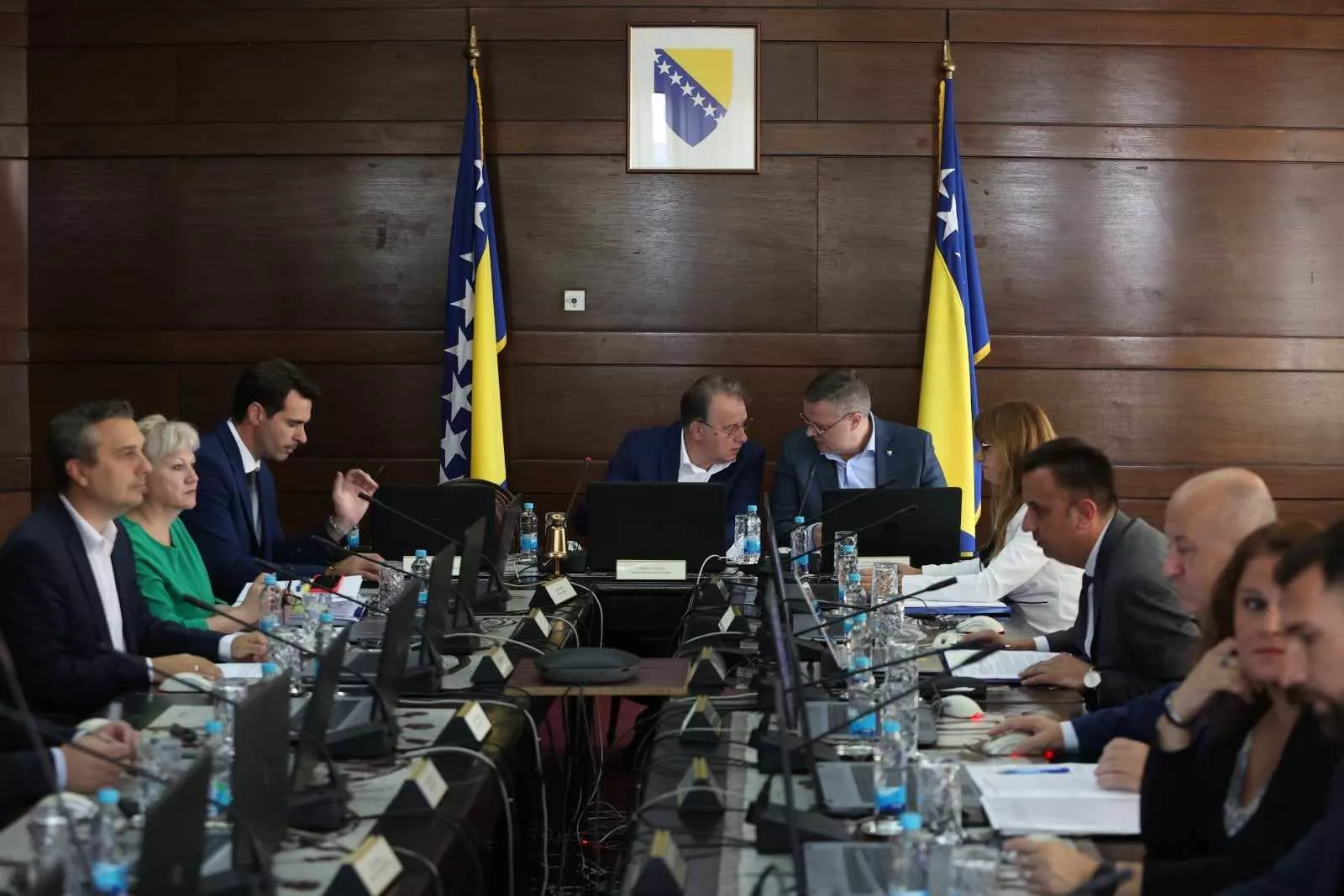
(Patria) - The Law on Transaction Fiscalization in FBiH, proposed by the Federal Ministry of Finance, was presented at the session of the Economic and Social Council for the Territory of the Federation of Bosnia and Herzegovina.
This document will be on the agenda of the next session of the FBiH Government, while its implementation is expected to begin on July 1, 2026, concurrently with the adoption of a set of laws related to reducing the burden on labor.
Federal Minister of Finance Toni Kraljević stated that the goal of the new law is to establish a comprehensive system for the Tax Administration to report on business transactions.
"Two goals are being achieved, namely determining the amount of VAT collected within the Federation and precisely defining other tax obligations arising from these transactions. The draft law contains 90 articles, an increase compared to the previous draft which had 72 articles," said Kraljević.
Prime Minister of FBiH Nermin Nikšić stated that the text of the fiscalization law has been presented to employers and social partners, and it will be sent to the FBiH Government for consideration at the beginning of next week.
"If everything proceeds according to plan, the law will come into effect on January 1, followed by a six-month trial period. From July 1, we will enter the practical VAT and fiscalization system, and we will be in a position to reduce the grey economy to a minimum," stated Nikšić.
He emphasized that in BiH, around 18.6 percent of gross domestic product is attributed to the grey economy, and that Albania and BiH are at the very top among countries facing this problem.
"Fiscalization should create prerequisites for combating the grey economy so that we can continue with reforms. When we made the decision on the minimum wage, we were criticized, but we will not rush headlong. We will decide together what to do next," added Nikšić.
President of the Economic and Social Council of the Federation of Bosnia and Herzegovina Safudin Čengić stated that a significant increase in the minimum wage cannot be expected in 2026. He announced that models for increasing the minimum wage in the coming year will be considered at the ESV session scheduled for November 26.
Čengić emphasized that without growth in production, exports, and overall business activity, conditions for a more significant increase in workers' income cannot be created.
"We must have a quality product and export in order to create new value on the basis of which we can pay employees," Čengić said.
Komentari (0)
Prijavite se za komentiranje
PrijavaJos nema komentara. Budite prvi!
Minuta
Sve →Iz drugih kategorija

High Representative Not Elected: Germans, French and British Sabotaged Americans, New Attempt at End of June

ČOVIĆ WITHOUT MERCY: How Those Who Brought Ademović to Office Created a Political Hell for Him



Sunny Saturday, quite warm



Tragedy in Albanian resort: Two minors drown












